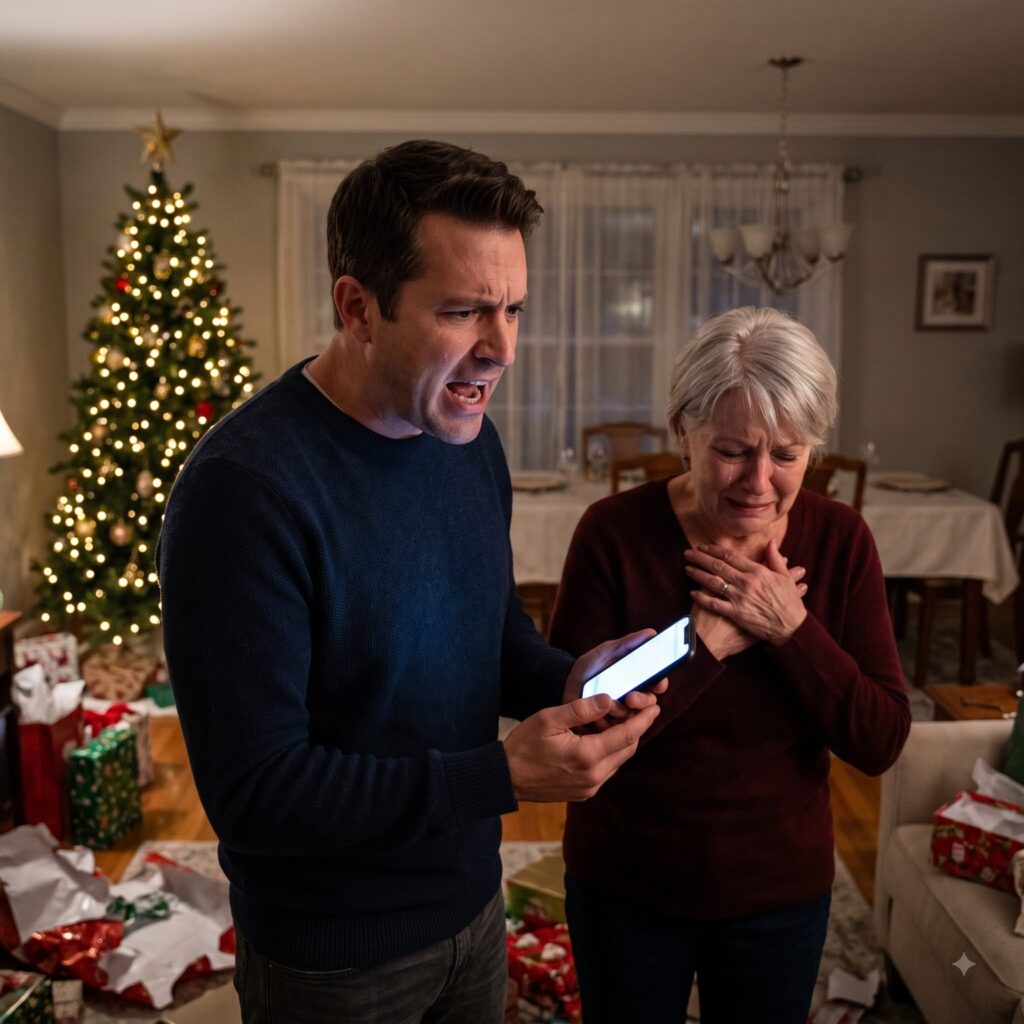
Après des années à être accusée de « gâcher » Noël, j’ai finalement décidé de ne pas participer à la réunion de famille et de couper les ponts avec tout soutien financier. Le soir venu, mon téléphone n’arrêtait pas de sonner, tant la panique était grande.
La vibration de mon téléphone sur la table basse en bois était incessante, un bourdonnement persistant qui n’avait pas cessé depuis vingt minutes. Sur l’écran, le nom de ma belle-mère clignotait sans cesse sous une horloge numérique affichant 18h14. À l’autre bout du pays, dans la banlieue paisible de l’Ohio, la traditionnelle réunion de famille pour Noël était en train de virer au chaos absolu. Depuis sept ans que je suis mariée à David, chaque fête se terminait exactement de la même façon : moi, plantée dans une cuisine impeccable,
une éponge à la main, tandis que David et sa mère me reprochaient d’avoir gâché Noël. Ils m’accusaient d’être froide, de ne pas assez sourire, de ne pas être à ma place et, d’une manière ou d’une autre, de détruire l’esprit des fêtes. Mais cette année, tout était différent. Cette année, je ne suis pas venue chez eux et je n’ai rien payé. Mes comptes bancaires étaient bloqués, le traiteur sur lequel ils comptaient avait été annulé quarante-huit heures plus tôt faute de paiement, et le traditionnel festin de côtes de bœuf dont ils se vantaient auprès de toute leur famille n’avait tout simplement jamais existé. À la place, j’étais assise à des kilomètres de là, dans un appartement tranquille que je louais, une tasse de thé chaud à la main,
à regarder la neige tomber par la fenêtre, dans une paix totale que je n’avais jamais connue depuis que j’étais adulte. Le téléphone vibra de nouveau, brisant le silence. Un SMS de David s’affichait, accompagné de la photo d’une table à manger vide et d’une série de points d’exclamation furieux. Je fixai l’écran, consciente que le bouclier doré que j’avais tendu à leur image de famille pendant près de dix ans venait de se briser en mille morceaux. La panique ne faisait que commencer chez eux, et ils réalisaient enfin que sans mon argent, mon organisation méticuleuse et ma patience silencieuse, toute leur illusion de perfection n’était qu’une coquille vide.
Tous les membres de la famille fixaient David, incrédules, exigeant de savoir pourquoi la dinde n’était pas au four et où étaient passés les coûteux cadeaux de Noël. Mais leur véritable cauchemar n’était pas seulement la salle à manger vide : c’était le document juridique posé tranquillement sur le comptoir de la cuisine, à côté du téléphone qui sonnait.
The screen lit up with another frantic call, this time from my sister-in-law Jessica, whose voice when I finally let it go to voicemail would likely be trembling with sheer rage. In the Ohio dining room, the festive atmosphere had completely evaporated, replaced by the suffocating realization that the annual Christmas charade was dead. For years, everyone in David’s family operated under a convenient delusion. They genuinely believed that David’s modest salary covered the lavish holiday spreads, the expensive gifts, the rented holiday cabin, and the catered dinners. They never knew that every single luxury was funded entirely by the inheritance my grandfather left me, funneled quietly through a joint account that David had slowly begun treating as his own personal ATM. Whenever things went wrong at these gatherings, David and his mother would point their fingers straight at me,
painting me as the miserable outsider who couldn’t appreciate their tight-knit family warmth. They needed a scapegoat to hide the glaring cracks in their own financial reality. But this year, after discovering a string of suspicious withdrawals meant to clear out my remaining private savings for a secret investment David made with his brother, I had quietly severed every single financial tie. I closed the joint accounts, revoked the credit cards, and canceled every reservation in town. By 5:00 P.M., when the thirty invited guests arrived expecting an open bar and a five-course meal, they found a freezing house with bare tables and a bewildered host who had no idea how to explain it. David tried to lie, telling everyone that the catering company made a scheduling error, but Aunt Clara immediately demanded to see the receipts. The tension in the room escalated instantly as accusations began flying among the family members themselves, exposing long-held resentments and hidden debts that everyone had spent years ignoring. David’s mother cornered him near the tree, her face pale with humiliation, hissing that he needed to fix this immediately or the entire family would look like fools. But as David frantically scrolled through his phone trying to access accounts that no longer existed, a sudden knock echoed loudly at the front door. It wasn’t another guest or a late delivery driver. Standing on the porch in the freezing snow was a local process server holding a thick manila envelope addressed directly to David and his mother, containing the legal audit of every single dollar they had siphoned from my business accounts over the last three years. The color drained from David’s face as he read the top page through the glass storm door, finally understanding that my absence today wasn’t just a holiday boycott—it was the opening move of a complete dismantling of their entire fraudulent lifestyle.





