My father pushed his dinner plate away and stared at me across the table.
My younger brother, Derek, leaned back in his chair, smiling.
“Come on, Claire. Just admit you were wrong.”
I looked at the untouched mashed potatoes on my plate.
Twenty minutes earlier, I’d asked Derek why he’d bought a $38,000 pickup truck while claiming he couldn’t afford his business expenses.
He’d laughed and told me nurses were nothing more than overpaid babysitters.
When I told him to stop insulting the profession I’d spent four years working toward, he’d demanded an apology for disrespecting him.
Now Dad was threatening my education.
“Your brother is building a business,” Mom said. “You’re still going to school at twenty-seven.”
“I’m finishing my nursing degree in May.”
“Only because we’re paying for it,” Dad snapped.
Derek lifted his glass.
“Looks like somebody needs to learn some gratitude.”
I studied my father’s face.
For three years, he’d reminded me at every opportunity that my tuition was a sacrifice he and Mom made for me.
I’d worked evening shifts as a nursing assistant at a hospital in Columbus, Ohio, covering my rent, groceries, and car insurance. Dad handled my tuition payments through an account he’d always called the family education fund.
I’d never asked him to pay my other bills.
Still, every family gathering ended the same way.
Derek was ambitious.
I was expensive.
Derek needed support.
I needed to be grateful.
Dad leaned forward.
“Well? Are you going to apologize?”
I folded my napkin.
“Alright.”
Mom blinked.
“That’s it?”
“That’s it.”
Derek laughed.
“See? Wasn’t so hard.”
I stood, carried my plate to the sink, and returned to the small bedroom I’d been staying in during winter break.
Nobody followed me.
At 11:30 p.m., I started packing.
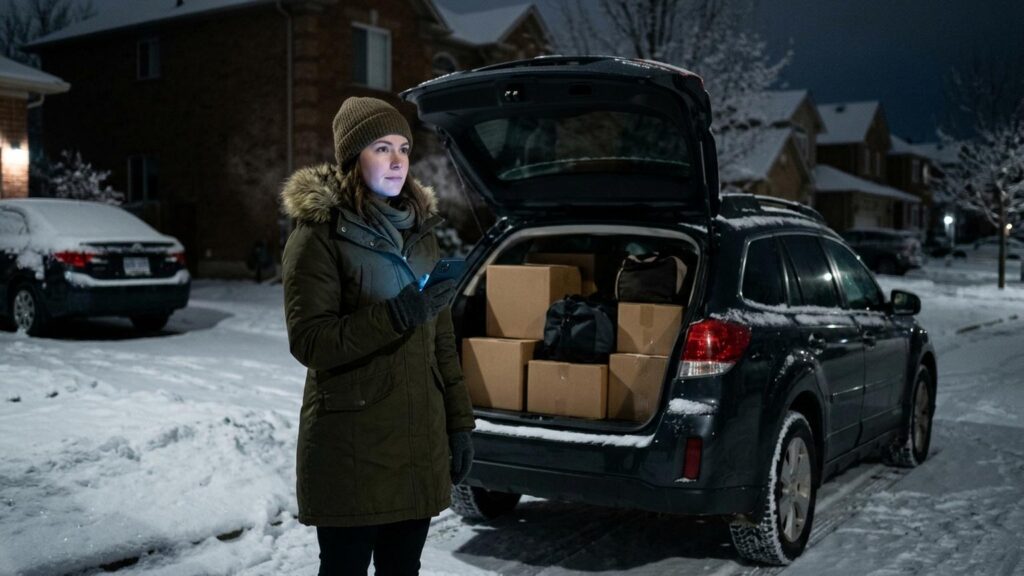
I folded my scrubs, collected my textbooks, and loaded my car quietly. By two in the morning, everything I owned at my parents’ house was in the trunk.
Before leaving, I opened a worn folder containing documents from my grandfather Walter’s estate.
I’d kept it since his funeral eight years earlier.
Inside was something Dad had repeatedly told me not to worry about.
A signed document titled:
THE WALTER BENNETT EDUCATION TRUST.
Beneath my name were three words I’d never paid attention to before.
SOLE CURRENT BENEFICIARY.
And on the next page was a distribution I’d questioned months earlier.
$28,400 — Educational Transportation Expense.
The payment date was three days before Derek purchased his new truck.
I photographed the pages and sent an email.
Seven minutes later, Derek texted.
“Please tell me you didn’t send it. Dad just read the email. He went completely pale.”
Then another message appeared.
“Claire, do you understand what you’ve just done?”
I was sitting in my car outside my friend Lauren’s apartment when Derek’s third message arrived.
Dad says you need to come home and fix this immediately.
I typed two words.
Fix what?
He called.
“Claire, did you send those trust documents to Mr. Harrison?”
Thomas Harrison was the attorney who’d helped my grandfather establish the education trust before his death.
“I sent a request for an accounting,” I said.
Derek swore under his breath.
“Why couldn’t you just apologize?”
“Why does my tuition account show a twenty-eight-thousand-dollar vehicle expense?”
Silence.
Then he said, “Dad was going to explain.”
“When?”
He hung up.
Lauren opened her front door wearing slippers and a winter coat. She helped me carry my bags inside without asking questions.
At eight the next morning, Mr. Harrison called.
“Claire, I received your email. Do you understand that this trust was established specifically for your education?”
“That’s what the document says.”
“Your father is the trustee. He’s responsible for managing the funds according to its terms, not as general family savings.”
I looked down at my notebook.
“Then why does he keep telling me he’s paying my tuition himself?”
Harrison paused.
“That’s something your father will need to explain.”
He told me to preserve my records and recommended that I retain independent legal counsel. Because he had prepared the trust, he could explain its structure, but he wasn’t going to pretend he represented everyone in a dispute.
By lunchtime, Mom had called eleven times.
When I finally answered, she was crying.
“Your father hasn’t slept. You’ve made him look like a criminal.”
“I asked where Grandpa’s money went.”
“You know your grandfather wanted both of you to succeed.”
“Then why did he name only me as beneficiary?”
She didn’t answer.
Dad took the phone.
“You are making a terrible mistake.”
“Then send me the account statements.”
“I don’t owe you an explanation for every decision I make.”
“You’re the trustee, Dad.”
His voice changed.
“Who told you that?”
“Grandpa’s paperwork.”
He went quiet.
Then he said, “If you pursue this, don’t expect us to pay another cent toward nursing school.”





