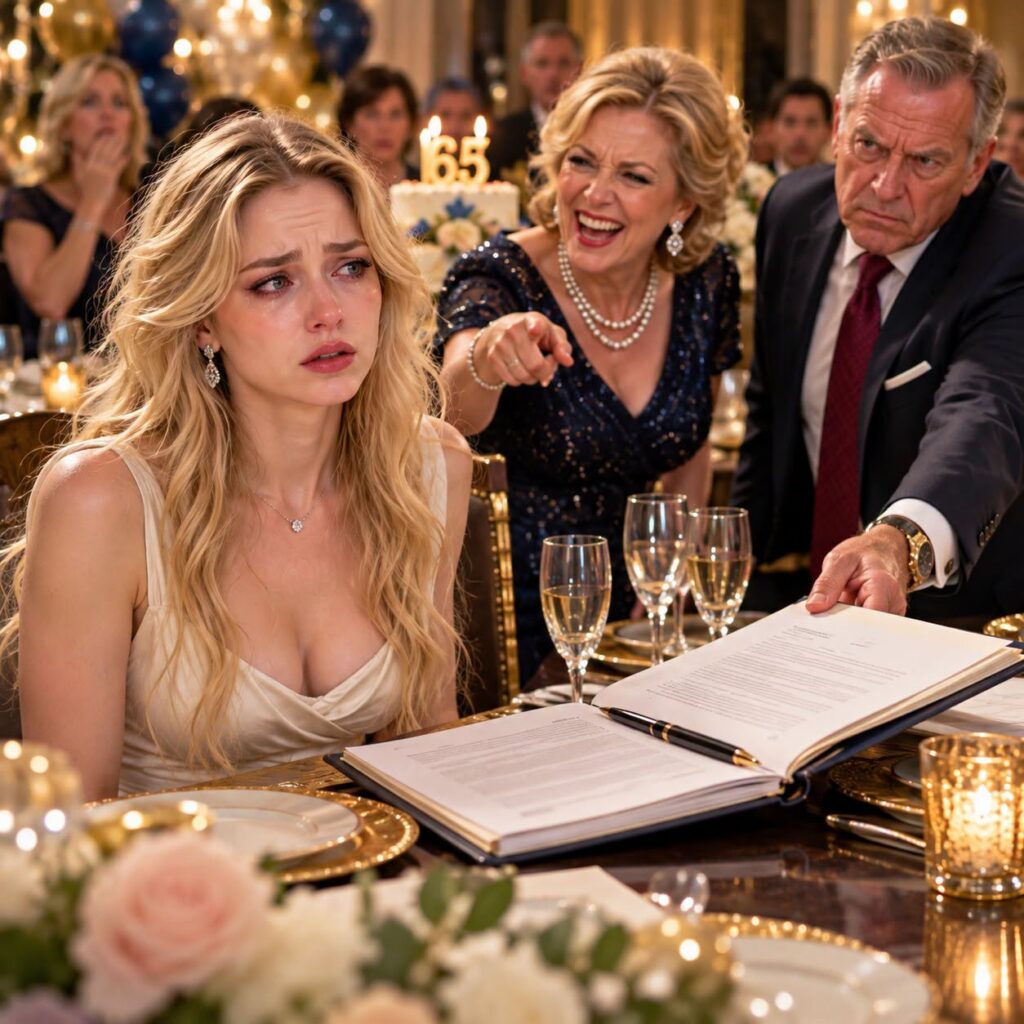
My mother raised her champagne glass at Dad’s sixty-fifth birthday and announced that she had once cooked my pet rabbit for dinner.
Forty guests went quiet. Then she laughed.
“Still crying over that rabbit, Hannah? Pathetic then. Pathetic now.”
I was thirty-seven years old, standing in a private dining room outside Columbus, Ohio. Somehow, the smell of roasted meat dragged me straight back to being seven.
Daisy was a white rabbit with one gray ear. I used to tuck her beneath my sweater when thunderstorms rolled over our house. One afternoon, I came home from school and found her cage empty.
Mom served dinner that night without looking at me. Halfway through, she asked whether I liked the meat.
When I started screaming, Dad slammed his fist against the table.
“Stop acting like a baby.”
For thirty years, they called it a lesson about attachment.
Back at the birthday party, Dad smiled tightly at his friends. “Hannah always did have a dramatic streak.”
My husband, Daniel, reached for my hand. Mom noticed and rolled her eyes.
“Oh, don’t encourage her.”
Then Dad pushed a cream-colored folder across the table.
“Since you’re here, sign these. It’s just paperwork for the orchard.”
My grandmother had left me twenty-two acres of apple trees and an old farmhouse when she died. Dad handled the tenant lease because I lived in Cincinnati. Managing a lease did not make him the owner. Apparently, he had forgotten the distinction.
I opened the folder.
The first page said LEASE AUTHORIZATION. The third contained a deed transferring the entire property to Clearwater Holdings LLC for $410,000.
My grandmother’s land had recently been appraised at more than four times that amount.
“Why is there a deed in here?” I asked.
Mom’s smile disappeared. “Don’t make a scene.”
“You’re asking me to sell my property.”
“We’ve taken care of that place for years,” Dad snapped. “You can show some gratitude.”
Around us, forks stopped moving.
I turned another page. A line identified me as a guarantor on a business loan. My signature was already printed beneath it.
It wasn’t mine.
“Who signed this?”
Dad leaned toward me. “Lower your voice.”
Mom pointed at the pen. “Just sign the real copy, sweetheart. Then everybody can enjoy the cake.”
That was when I understood. They weren’t asking permission. They were trying to repair something they had already done.
I had received a strange notice from a title company eight days earlier. Since then, an attorney had been helping me collect records. Nina had warned me not to sign anything until she traced the buyer. I had hoped there was an innocent explanation.
There wasn’t.
I photographed every page before Dad could take the folder. Then I stood, kissed Daniel’s cheek, and walked out.
In my car, I made one call.
“Nina,” I told my attorney. “Send the notices. All of them.”
Three days later, Dad had called me forty-one times.
I ignored every call until a voicemail arrived from a bank officer.
“Ms. Mercer, we need to discuss the $1.8 million guarantee bearing your signature.”
I had no idea how far my parents had gone, but that message told me the birthday dinner wasn’t simply another act of cruelty. Something much bigger was unraveling, and my father was terrified I would discover who had really arranged it.
I called the bank back through the number listed on its official website, with Nina on the line.
The officer, Ms. Alvarez, confirmed that someone had pledged my orchard as collateral for a construction loan. The bank’s file contained an electronic signature supposedly made by me seven months earlier.
Seven months earlier, I had been in Seattle, presenting at a work conference.
“I never authorized this,” I said.
“We’ve received your attorney’s fraud notice,” Ms. Alvarez replied. “Further advances are suspended while we investigate.”
That explained Dad’s forty-one calls. His company relied on the loan to finish three developments. Without the next draw, his carefully polished birthday empire was suddenly running out of cash.
But the money wasn’t the part that made my hands shake.
Nina sent me the purchase agreement from the title company. Clearwater Holdings was buying my property for $410,000, then assigning the contract to a developer for $2.3 million.
“Who owns Clearwater?” I asked.
“Your mother.”
I stared at the corporate filing. Diane Mercer had registered the LLC under her maiden name. Dad wasn’t just borrowing against my land. Mom had arranged to buy it cheaply and collect almost two million dollars on the resale.
And they had wanted me to smile for the family photographs while signing it away.
My phone rang again.
Dad.
This time, I answered.
“What did you do to the bank?” he demanded.
“I told them my signature was forged.”
“It was a temporary arrangement.”





