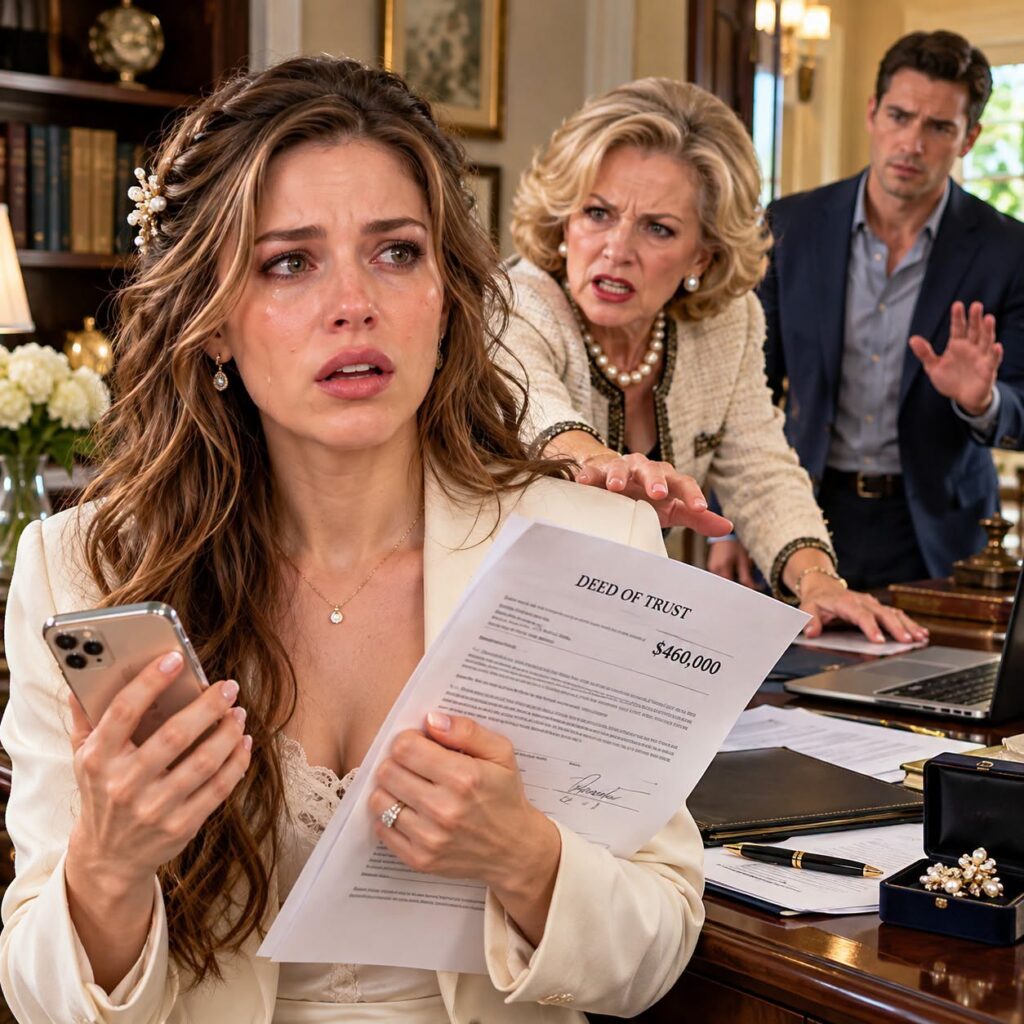
The three words that ended my wedding weren’t “I love you.” They were “Forge her signature.”
And they came from my future mother-in-law’s mouth.
Twenty-six hours before I was supposed to marry Evan Carter, his mother, Judith, called and insisted I stop by her house in Charlotte. She had a pearl hairpin she’d worn at her own wedding and wanted me to carry it as my “something borrowed.”
I should have questioned her sudden generosity. For two years, she’d called my late mother’s house “that drafty old money pit” and asked why I wouldn’t sell it.
The house sat on a corner lot developers kept circling. My mother had paid off the mortgage before cancer took her. Every creaking stair and scratched windowsill belonged to a memory I refused to put a price on.
Evan said he understood.
At Judith’s, she fastened the hairpin into my hair, dabbed at nonexistent tears, and hugged me a little too tightly.
“Tomorrow, we’ll finally be family.”
I thanked her and drove halfway down the block before realizing my phone was still on her kitchen counter.
Her front door was unlocked. I stepped inside and heard Judith speaking in the study.
“Forge her signature.”
I stopped with one hand on the hallway wall. The refrigerator hummed, absurdly loud in that awful, suspended second.
“She signed the sample in blue ink,” Judith continued. “Match it. The lender needs the draw authorization today. After the wedding, she won’t know where the money went.”
I recognized the voice answering through her speakerphone. Soft. Nervous.
Leah.
My best friend. My maid of honor. A licensed notary.
I moved toward the study and saw papers spread across Judith’s desk. A loan packet. A property description. My home address.
And my full legal name beside a signature I had never written.
I snapped three photos before the floorboard complained beneath my heel.
Judith looked up. The color drained from her face.
“Claire. How much did you hear?”
“Enough.”
She grabbed the papers. “You’re misunderstanding something private.”
“Then explain why my house is securing a four-hundred-and-sixty-thousand-dollar loan.”
Her eyes went to my phone. “Give me that.”
I backed into the hallway and called Evan. He answered cheerfully, asking whether I’d picked up his mother’s gift.
“Your mother is forging my name on loan documents,” I said. “And Leah is helping her.”
Silence.
Not confusion. Not outrage.
Silence.
“Claire,” he finally said, “please don’t do anything dramatic.”
I swallowed so hard it hurt. “The wedding is off.”
I ended the call and sent the same message to our wedding coordinator, asking her to pause every remaining payment until we spoke.
Judith hurried after me, slippers slapping the tile.
“You’re ruining his life over paperwork!”
I reached my car before Evan’s truck swung into the driveway.
He jumped out, still wearing the work shirt he’d left in that morning.
“Don’t make this public,” he pleaded.
“Did you know?”
He stared at the pavement.
Then he said something that turned my stomach colder than Judith’s threat.
“Ask Leah what she did on Thursday.”
I drove away with the pearl hairpin still digging into my scalp. My wedding dress hung in a garment bag at home, and somewhere in the county records there might already be a debt with my name on it. Leah wasn’t answering her phone.
I went straight to Leah’s office instead of going home.
Her receptionist said she’d left early. Through the glass door of the conference room, I saw the framed notary commission she had proudly shown me when she got it last spring.
My hands trembled as I called my attorney, Denise Alvarez, the woman who’d handled my mother’s estate.
“Don’t confront the lender alone,” she said. “Send me those photographs. Then check the county recording index.”
In my car, I searched the Mecklenburg County register of deeds website. A deed of trust against my property had been recorded Thursday afternoon.
It listed me as the borrower.
It listed Leah as the notary.
And it pledged my mortgage-free home against $460,000 in private financing.
I hadn’t signed a thing.
Denise called back. “A forged recording doesn’t magically give them ownership. But it clouds your title, and a lender may try to enforce it. We’re moving now.”
She contacted the lender’s fraud department while I filed a police report and preserved Judith’s messages. Then I drove to Leah’s apartment.
She opened the door with mascara streaked down her cheeks.
“I was going to tell you,” she whispered.
“Before or after you helped them take my house?”
She stepped aside. On her table lay a check for ten thousand dollars, made out to her notary-services company by Evan’s construction business.
Leah covered her face.





