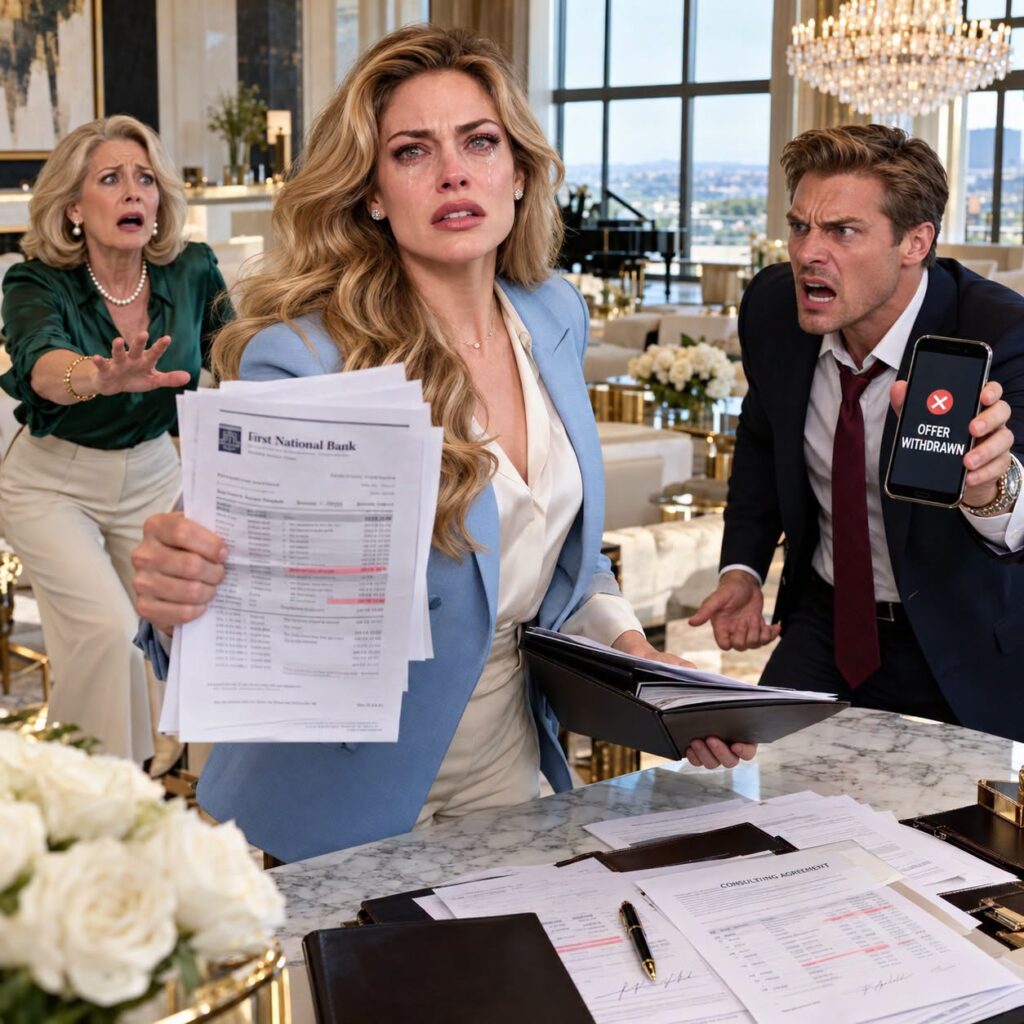
My brother called me toxic before breakfast. Five minutes after I made one phone call, his dream job disappeared.
By the time I saw Ryan’s Instagram post, it had six hundred likes.
“FINALLY BLOCKING MY TOXIC SISTER.”
Beneath it, he’d written, “FAMILY IS BETTER WITHOUT HER DRAMA.”
The photograph showed him smiling in our late father’s blue suit, standing beneath a banner that read FOSTER FUTURES. Our father had founded that scholarship program to help teenagers leaving foster care learn a trade.
I was its volunteer treasurer.
And $96,000 was missing.
My name is Abigail Foster. I’m thirty-five, and until that Tuesday, I still believed there were things a family could survive without destroying itself.
Then my phone rang.
“Ms. Foster?” a young woman asked. “This is Emma. The welding school says my scholarship payment never came.”
I stared at the photograph of my brother’s perfect smile.
“I’m working on it,” I whispered.
Emma was one of twelve students waiting on money our donors had already given us. Some had quit jobs to enroll. One had moved three hundred miles.
Three weeks earlier, our accountant had found payments to a company called Harbor Consulting. The invoices described “community outreach,” but there were no contracts, no reports, and no evidence of work performed.
Ryan had approved every invoice.
He was the foundation’s paid development director. When I questioned the payments, he slammed his fist on my kitchen counter.
“You’ve always hated that Dad trusted me,” he shouted.
The board hired an independent forensic accountant, suspended Ryan’s access, and referred the suspicious transactions to investigators. Ryan told our mother I was orchestrating a witch hunt.
She believed him. Or so I thought.
That morning, his Instagram comments called me jealous, unstable, and bitter. Ryan was liking every one.
I almost typed a response. Instead, I opened the contact I’d been avoiding.
Briarwood Children’s Hospital Foundation had offered Ryan his dream position as senior director of donor relations. The offer was conditional, with reference checks still underway.
The previous afternoon, its general counsel had emailed me a glowing recommendation bearing my name and signature.
“I’d trust Ryan Foster with every donated dollar.”
I had never written it.
My mother had called me crying when she learned the hospital was checking references.
“Please, Abby. Don’t ruin his future.”
Now Emma’s voice was still shaking in my ear, and I finally understood whose future I had been protecting.
I called the hospital’s general counsel.
“Can you verify that recommendation?” she asked.
“No. My signature was forged. The audit materials your office requested are authentic. Our board has already reported the matter.”
She exhaled. “Thank you. That confirms the last outstanding question.”
Five minutes later, Ryan texted a screenshot.
OFFER WITHDRAWN.
Twenty minutes after that, he appeared at my door with our mother behind him.
“You destroyed me!” he screamed.
I stepped aside so the neighbors could hear every word.
“Where are the students’ scholarships, Ryan?”
He threw a folder onto my table.
“Ask yourself. Your signature authorized everything.”
I opened it. My name was there, in handwriting that wasn’t mine.
Then I turned the page.
Our mother lunged for the folder.
“Ryan,” she whispered, “you promised she’d never see that.”
For a moment, nobody moved. My mother’s hand trembled over the page, and my brother’s anger vanished into something uglier: fear. I had spent three weeks trying to understand a stolen fortune. Suddenly, I realized I hadn’t even found the person who planned it.
I caught the second page before my mother could snatch it away.
Harbor Consulting, LLC.
Managing member: Margaret Ellis.
Ellis was my mother’s maiden name.
The signature at the bottom was unmistakably hers.
“Tell me this is another forgery,” I said.
Mom looked toward the window. Ryan stopped shouting.
The document was a vendor agreement, supposedly authorizing Harbor Consulting to recruit scholarship applicants. It had been signed two months after Dad’s funeral. My forged approval was on the first page. Mom’s genuine signature was on the second.
“You don’t understand,” she said.
“Then explain it.”
Ryan reached for the folder. I took photographs before he could close it, then emailed them to the forensic accountant.
“Delete those,” Ryan snapped.
“No.”
My mother began crying. It was the same trembling, practiced sound that had made me apologize my entire childhood, even when Ryan broke something and blamed me.
“Your father left me with bills,” she said. “That house needed repairs. Ryan was trying to help.”
“By stealing tuition money?”
“It was supposed to be temporary.”
I looked at her expensive watch. At Ryan’s new SUV parked outside. At the fresh diamond earrings she’d worn to Sunday dinner.
“Where did it go?”
Neither answered.
So I called the accountant on speakerphone. I read the company name and my mother’s legal name. He was quiet for several seconds.





