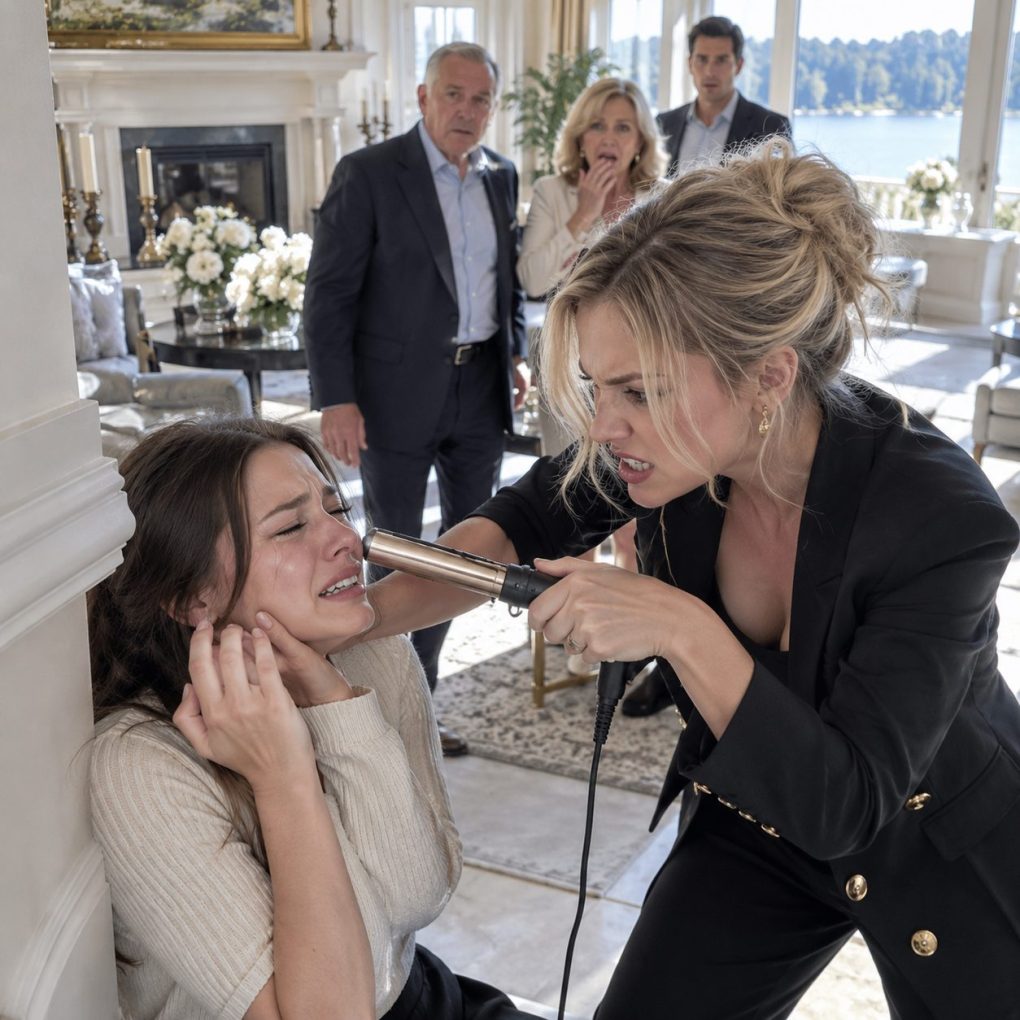
At our family estate, my sister cornered me after Dad announced I would inherit his salon business. “Let’s see who trusts your face now,” she hissed, threatening me with a heated curling iron. I escaped and called for help. Three days later, investigators uncovered her carefully planned betrayal.
“Scarred people make better decisions about family businesses,” my sister whispered, holding a scorching styling iron against my cheek. “The salon empire should have been mine anyway.” I remember the smell of burning hair, the sudden pain, and the sound of someone screaming my name. Three employees rushed toward us as I collapsed against a styling chair. My sister dropped the iron and immediately began shouting that I’d injured myself. But what she didn’t know was that the camera above the reception desk had recorded everything.
My name is Claire Bennett. I’m thirty-six, and for fourteen years, I’d helped my father build Bennett Beauty Group from one struggling salon in Columbus, Ohio, into a chain of four successful locations.
My younger sister, Vanessa, joined the business six years earlier.
Dad gave her the flagship salon to manage. I handled payroll, licensing, contracts, and expansion. Most evenings, Vanessa left before six while I stayed to reconcile receipts and check the following morning’s appointments.
I never resented her for leaving early. I only wished she’d stop telling people I sat behind a desk collecting money she’d earned.
Three weeks before the attack, Dad announced his retirement.
He had already begun transferring his controlling ownership interest to me, subject to the final legal arrangements.
Vanessa would remain a minority shareholder and salon manager.
She didn’t congratulate me.
Instead, she pushed back her chair and said, “So she gets everything because she’s always been your favorite?”
Dad looked exhausted.
“Claire kept this company alive when we nearly lost our second location. You know that.”
Vanessa left without finishing dinner.
The following Monday, she asked me to meet her before opening hours.
I found her standing beside Station Four, the one where Mom used to work before she died.
A curling iron lay heating on the counter.
“Sign over your shares,” Vanessa said, placing a folder in front of me.
I looked at the unsigned transfer agreement.
“Vanessa, we’re not doing this.”
Her expression changed.
“You think you’re better than me because Dad trusts you?”
“No. I think we should talk when you’re calmer.”
I turned toward the door.
She caught my shoulder.
Then I saw the iron in her hand.
The next moments came in fragments: her voice near my ear, the heat against my face, my knees striking the floor, and our receptionist, Hannah, shouting for someone to call 911.
At the emergency department, a physician examined the injury and arranged transfer to a specialized burn center.
Before they covered the wound, I asked whether I could photograph it for my records.
My phone shook so badly that Hannah had to help.
Later, as the ambulance doors closed, she leaned toward me.
“Claire, there’s something you need to know.”
I looked at her.
“Vanessa told me to disable the cameras yesterday.”
She swallowed.
“But I didn’t. And that’s not the only thing she asked me to do.”
At the burn center, a surgeon explained that part of my cheek had suffered a full-thickness burn. I would need specialized treatment, possibly reconstructive surgery, and months of follow-up care. Even with proper treatment, permanent scarring was likely.
I listened while Dad sat beside my hospital bed, rubbing his thumb over the lid of a paper coffee cup.
When the surgeon left, he whispered, “Vanessa told me you grabbed the iron.”
I turned toward him.
“Do you believe that?”
He stared at the floor.
“I don’t want to.”
That answer hurt almost as much as my face.
Hannah had already given the police her account. Investigators requested the original security footage, while the hospital documented the injury, its severity, and my explanation of what happened.
The treating doctors could describe the medical findings. Determining whether a crime had occurred was the investigators’ responsibility.
Vanessa, meanwhile, insisted it had been an accident.
She even posted a statement on the company’s social media page.
Our family is supporting Claire through an unfortunate workplace incident.
I read it from my hospital bed while a nurse changed my dressing.
Not one word about what Vanessa had done.
Two days later, Dad received a call from our company’s attorney, Michael Harris.
“Claire,” he said when he visited, “there’s something wrong with the ownership records Vanessa sent to the bank.”
I carefully sat up.
“What records?”
Michael opened his briefcase.
A prospective buyer had contacted our commercial lender about financing the acquisition of Bennett Beauty Group. Vanessa had presented herself as the company’s authorized president and claimed the shareholders had approved a sale.





