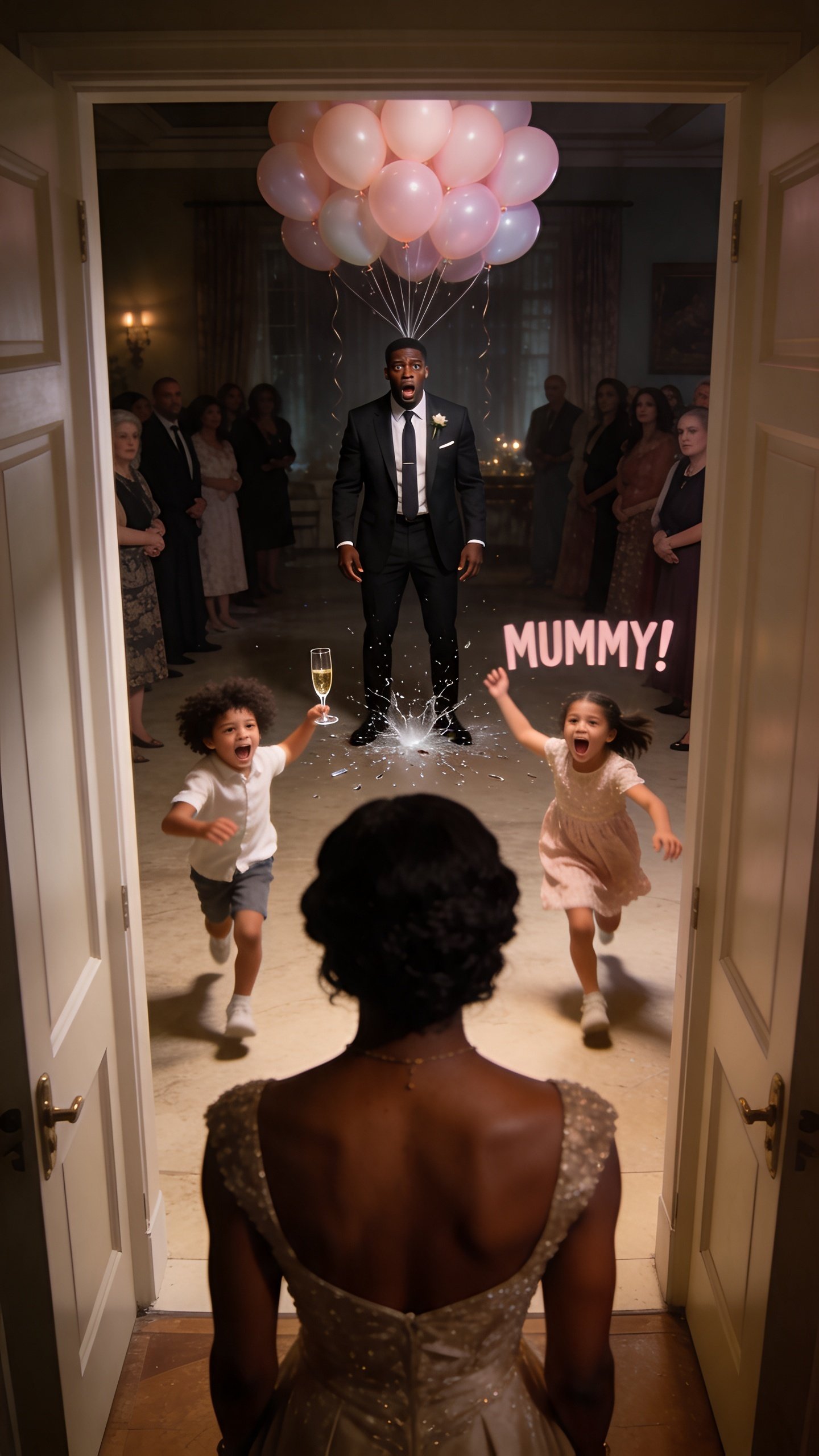
 “I wasted seven years waiting for somebody who couldn’t make that happen.””
My ex-husband said those words with a glass of champagne in his hand, standing beneath pastel-pink balloons at his new wife’s baby shower.
Forty-five people heard him.
His mother sat in the front row. His friends stood around a table piled with gifts. His pregnant wife, Vanessa, wore a white dress that hugged her stomach, one hand resting proudly on the child they had spent months announcing to the world.
And me?
I stood near the back of the room, holding a glass of sparkling water, wondering how a man I had once loved enough to endure seven years of heartbreak could still find pleasure in humiliating me four years after our divorce.
Then Daniel looked directly at me.
He smiled.
“Sometimes,” he continued, raising his glass a little higher, “you have to leave the wrong woman to find the right one.””
A few people shifted in their seats.
Someone coughed.
His sister, Rachel, stared at the floor.
But Daniel wasn’t finished.
“To the woman who FINALLY made me a father.””
Glasses rose around the room.
Not everyone joined in. I noticed that much.
But enough people did.
Enough people smiled awkwardly and lifted their drinks because nobody wanted to be the person who ruined a baby shower by telling the host he was being cruel.
I put my glass down.
I turned toward the hallway.
And that was when I heard footsteps behind me.
Fast footsteps.
Then two little voices, overlapping in their excitement.
“MUMMY!””
I stopped breathing.
Daniel’s glass slipped from his fingers.
It struck the wooden floor, shattered, and sent champagne running beneath the gift table.
His pregnant wife turned around so quickly that one hand flew to her stomach.
And for the first time in all the years I had known him, Daniel looked at me without a smile.
Because what nobody in that room knew was that I had sent a message on Tuesday.
A message that should have made him reconsider every cruel word he planned to say on Saturday.
But to understand why two children had just called me Mummy in front of the man who once accused me of being incapable of giving him a family, you need to understand what happened during the seven years I spent trying to become his wife in every way that mattered.
My name is Claire Bennett.
I was forty-one years old when I walked into Daniel’s baby shower.
I was thirty-four when I married him.
And I was twenty-seven when I first met the man who would eventually make me question whether love was supposed to hurt that much.
We met at a friend’s engagement party in Boston. Daniel was thirty-one, ambitious, charming, and the kind of man who remembered small details about people because he understood that attention could make almost anyone feel special.
He remembered that I drank coffee without sugar.
He remembered that I worked as a pediatric nurse.
He remembered the name of the little boy I had told him about, a patient who had spent six months in the hospital before finally going home.
“You spend all day taking care of other people’s children,” Daniel had said on our third date.
“One day, you’ll have your own running around your house.””
He said it so naturally that I laughed.
“That’s a big assumption.””
“Not an assumption. A prediction.””
“Are you always this confident?””
“Only when I’m right.””
I should have known then that Daniel had a complicated relationship with being wrong.
But at twenty-seven, I mistook confidence for security.
I thought I had found someone who knew what he wanted.
And I thought what he wanted was a life with me.
For the first three years, he was wonderful.
He left notes in my lunch bag when I worked night shifts. He drove forty minutes through a snowstorm to bring me soup when I caught the flu. He once spent an entire Sunday assembling a bookshelf because I had mentioned that I wanted more space for the children’s books I collected.
He would sit on the floor of our apartment, flipping through picture books, asking me which ones I planned to read to our future children.
We chose names long before we chose a house.
For a girl, I liked Lily.
Daniel preferred Grace.
For a boy, we argued over Benjamin until he finally agreed that Ben sounded better.
We talked about the small room we would turn into a nursery. We talked about holidays, birthday parties, scraped knees, school photographs, and all the ordinary things couples imagine when they believe their future is something they can arrange together.
One afternoon, we walked past a children’s shoe store and stopped in front of the window.





