PART 2
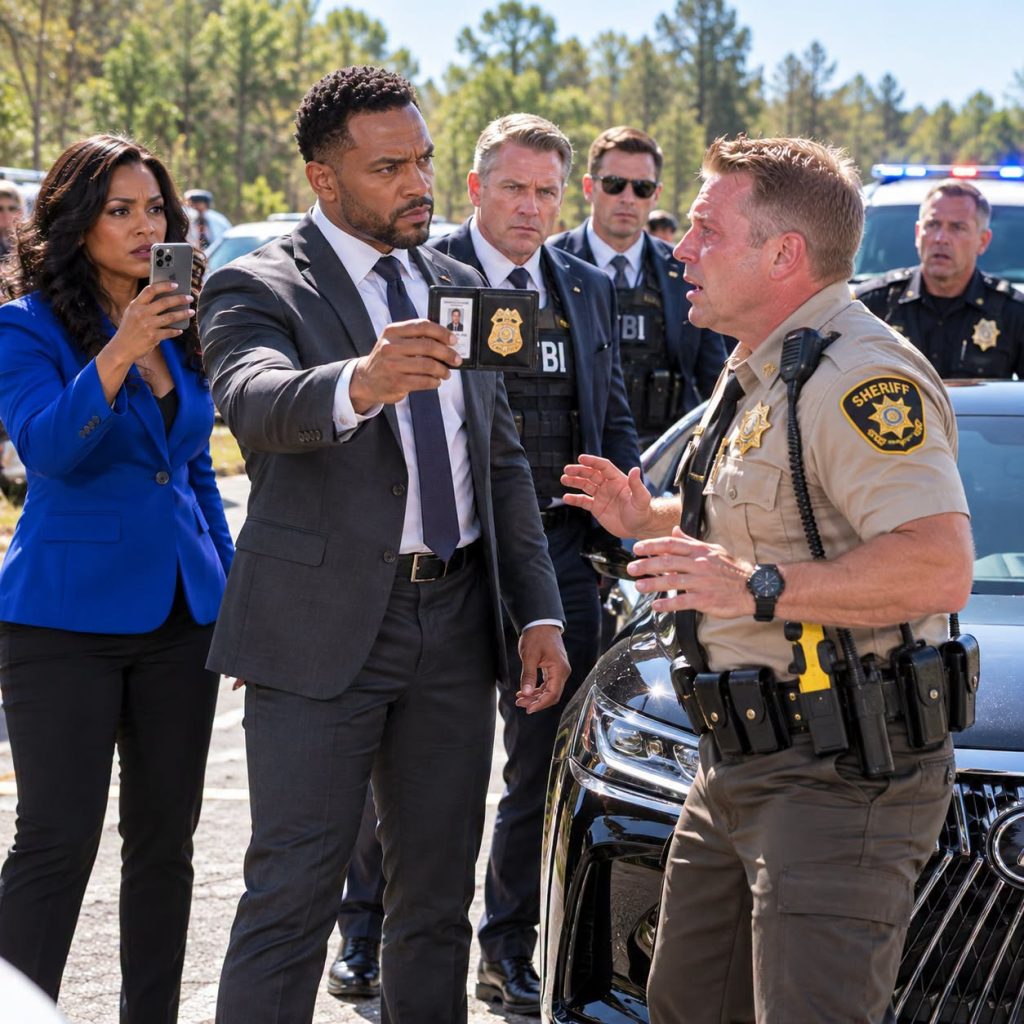
The first cruiser stopped behind Corbyn’s vehicle. The second blocked the shoulder ahead of my Lexus. The third angled across the road. Naomi stepped out before anyone could stop her, phone still recording. “Marcus.” “Stay beside the car.” Corbyn tightened his grip on my arm. “Act normal.” I looked at him. “You lost the right to give me instructions ten minutes ago.” A heavyset deputy climbed from the lead cruiser. Sergeant Dale Mercer. I recognized his name from our investigation files. Two complaints for missing cash after vehicle searches. Both dismissed by Sheriff Raymond Puit. Mercer looked from Corbyn to me. “Problem?” Corbyn swallowed. “Routine stop.” Mercer noticed the credential case in Corbyn’s hand. “What’s that?” Nobody answered.
Mercer reached for it. Corbyn pulled back. “Nothing.” Wrong move. Mercer’s eyes sharpened. “Give it here.” I stepped forward. “That belongs to me.” Mercer shoved me back with both hands. “Nobody asked you.” Naomi moved toward us. Another deputy blocked her. “Don’t touch my wife,” I said. Mercer turned. “Your wife?” He looked her over, then smiled. “Everybody’s somebody tonight.” Corbyn suddenly blurted, “He’s federal.” Silence hit the roadside. Mercer stopped smiling. “What?” Corbyn opened the case.
Mercer saw my shield.
His hand moved immediately toward his weapon.
I moved faster.
I caught his wrist before he could draw, twisted his arm outward, and drove him against the cruiser. Another deputy lunged at me. Naomi shouted, “Marcus!” Corbyn stepped between us. “Stop! He’s FBI!” The second deputy slammed Corbyn into the hood. I released Mercer and backed away with both hands raised. “Nobody makes another stupid decision,” I said. “Federal agents already know where I am.” That was partly true. My government phone was in the center console, and Naomi had sent our location to a colleague minutes earlier. But Mercer didn’t know how much backup we had.
Then Naomi’s phone chimed.
She looked at the screen and went pale.
“Marcus.”
“What?”
She held it where I could see it. A message from an unknown number.
STOP RECORDING OR YOU BOTH DISAPPEAR.
Mercer saw my reaction and smiled. “Phones go down.” “Who sent that?” Naomi demanded. Mercer said nothing. Corbyn whispered, “Sheriff monitors the county emergency network. If your plate got entered, he knows everything.” I turned to him. “Start talking.” Corbyn’s breathing became ragged. “We stop people with out-of-county plates. We search them. Cash, property, sometimes prescriptions. Sheriff gets his cut. Mercer handles the paperwork.” Mercer snapped, “Shut your mouth, Wade.” “I’m done shutting up!” Corbyn shouted.
Mercer drove his shoulder into Corbyn and knocked him sideways. The third deputy rushed me. I pivoted, caught his arm, and pushed him into the rear quarter panel. Naomi grabbed Corbyn’s dropped credential case and backed toward the Lexus. Tires screeched in the distance.
More vehicles.
Mercer laughed. “There’s your cavalry.”
But the approaching lights weren’t county cruisers.
Blue strobes. Unmarked SUVs. State Police.
Then I recognized the black federal Suburban leading them.
Frank Delaney, my field office supervisor, stepped out with six agents behind him.
“Federal agents!” he shouted. “Hands where we can see them!”
Mercer froze.
Corbyn raised both hands.
I exhaled for the first time in what felt like an hour.
Then Corbyn said the sentence that turned the entire case upside down.
“Agent Whitfield, Sheriff Puit knows about your investigation.”
I stared at him.
“How?”
Corbyn looked at Frank.
“Because somebody inside your field office has been feeding him names, warrants, and surveillance locations for months.”
Frank’s face went still.
One of my agents lowered his eyes.
And I suddenly realized the most dangerous person on that road might not be wearing a sheriff’s uniform.
PART 3
Nobody moved. Frank looked across his agents. “Who?” Corbyn pointed with a trembling hand toward Special Agent Evan Rusk, a man who had worked beside me for six years. Rusk’s face changed. That was all the confirmation I needed. “Evan,” I said. “Don’t.” He stepped backward. Frank ordered, “Hands up.” Instead, Rusk spun toward the Suburban. I tackled him before he reached the door. We hit the pavement hard. He drove an elbow into my ribs, twisted free, and scrambled toward the median. I caught his ankle. He kicked, nearly broke loose, then two state troopers pinned him down. Frank cuffed him personally. “You’re finished.” Rusk laughed bitterly. “You think I’m the problem? Puit owns half this county.”
Corbyn started talking before anyone asked another question. Sheriff Raymond Puit had built the scheme over nearly a decade. Deputies targeted drivers unlikely to return to fight charges. Cash was seized, evidence was fabricated, towing companies paid kickbacks, and prosecutors received sanitized reports. Rusk had become their federal warning system after gambling debts made him vulnerable. Every time our investigation approached the truth, he tipped Puit off. That explained vanished witnesses, destroyed records, and targets who somehow moved money hours before federal subpoenas arrived.





