Dad waited until I was on my knees mopping spilled eggnog from his kitchen floor before he lifted his phone. The Christmas tree was still glowing in the next room, surrounded by gifts none of them had asked me to open.
“Look at this failure,” he announced. “She was always our servant.”
My brother, Ryan, laughed so hard he lowered his plate. My sister, Melissa, pointed at my apron. “You missed a spot.”
Dad posted the video to Facebook before I had finished rinsing the mop. The caption was worse than his joke: “Born to serve us. Some children never amount to much.”
Mom stood beside the stove, holding the dish towel I’d given her last Christmas. She glanced at the screen, then asked me to take the trash out. I had cooked since seven that morning. Nobody had asked whether I wanted to sit down.
I was thirty-eight. I managed scheduling for a trucking company in Dayton, Ohio. I had my own small apartment, a twelve-year-old car, and a checking account I’d opened five years earlier for one reason: to help my parents keep their house after Dad lost his job.
Every month, just before the first, I deposited $2,000. Melissa was an authorized signer because Mom had needed help paying bills after knee surgery, and Dad said he never trusted online banking. I thought the money went toward their mortgage, utilities, and groceries.
I worked extra Saturdays to keep those transfers going. Last winter, when my furnace broke, I spent three weeks sleeping in a sweatshirt so I wouldn’t miss a payment.
Dad knew. He used to call on the first of every month and say, “Money came through. Thanks, kid.”
That afternoon, as I stood in his hallway with my coat in my hands, I remembered him teaching me to tie my shoes on those same stairs. He’d made two little loops with the laces and told me, “Try again. I’m not going anywhere.”
“Leaving already?” Mom asked.
I looked past her toward the dining room. Nobody had put away a single plate.
“Yes.”
At home, I watched Dad’s video once. Then I locked the debit card I’d authorized for Melissa through my banking app and requested that the bank remove her signing privileges. I planned to move the balance when the branch reopened.
The next morning, she texted, “WHY CAN’T I WITHDRAW MY $2,000?”
I stared at the word my.
Then Dad called. “Put her access back. You’re going to make us lose the house.”
But the mortgage statement I’d glimpsed beneath his Christmas cards had been stamped PAST DUE.
And the statements from my account showed no mortgage payment in eleven months.
“What do you mean, no mortgage payments?” my friend Lauren asked.
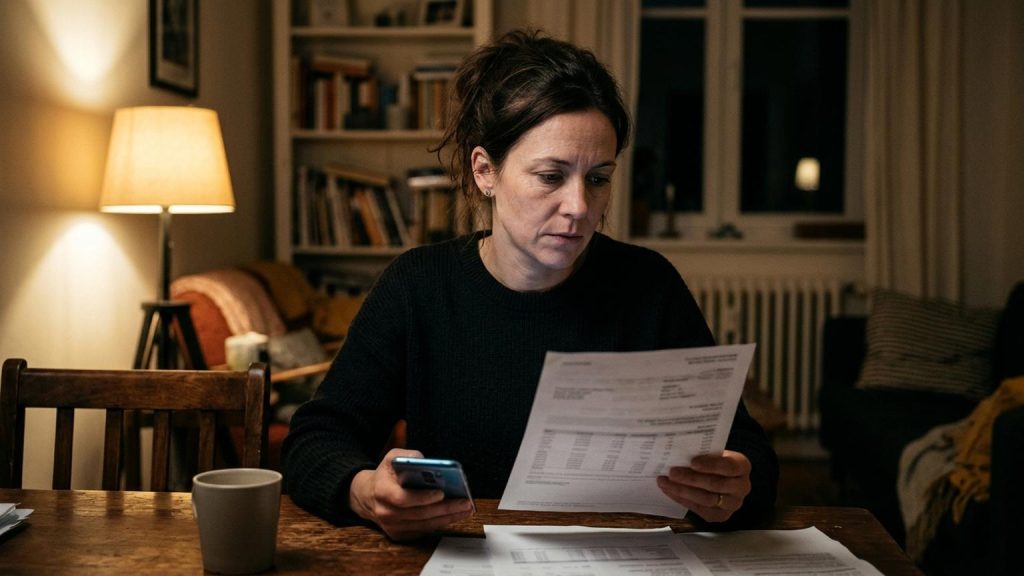
We sat in a diner near my office. I had printed eleven months of statements, circling payments made with Melissa’s card: a salon membership, airfare to Scottsdale, a down payment at Lakeview Motors. Each month, nearly the entire $2,000 disappeared within days of my deposit. My handwritten notes still said: Mortgage. Heat. Groceries.
“Dad told me she was handling the house bills,” I said.
“Did he ever show you a receipt?”
I shook my head.
I called the mortgage servicer with Mom beside me on speakerphone later that afternoon. With her permission, the representative confirmed their loan was four payments behind. They had received foreclosure-prevention notices; nothing was scheduled for immediate sale.
Mom pressed her fingers against her mouth. “I used my savings to cover it for a while. Your father said the bank was making a mistake when the notices started coming.”
“Where was the money going, Mom?”
She didn’t answer.
That night Melissa arrived at my apartment without calling, carrying the purse I’d bought her for her birthday.
“Do you have any idea how humiliating it was to have my card declined?” she demanded.
I held up a statement. “At the dealership?”
She snatched it from my hand. “Dad said I could use what was left after bills.”
“There wasn’t anything left. The mortgage is four months behind.”
She looked down at the paper. For a moment I thought she might finally understand. Then she said, “You don’t even have kids. What do you need all that money for?”
I remembered eating reheated rice at my desk while she posted pictures of mountain resorts. I had liked every one.
“Please leave,” I said.
By morning Dad had posted another video, this one from his front porch. “Our daughter has abandoned her elderly parents,” he told the camera. “All because we asked her to share with her sister.”
People I’d known since high school began sending messages. One called me selfish. Another asked whether Mom had enough medicine.
I saved the video instead of replying. At home, I put my phone facedown and washed the two dishes in my sink.





