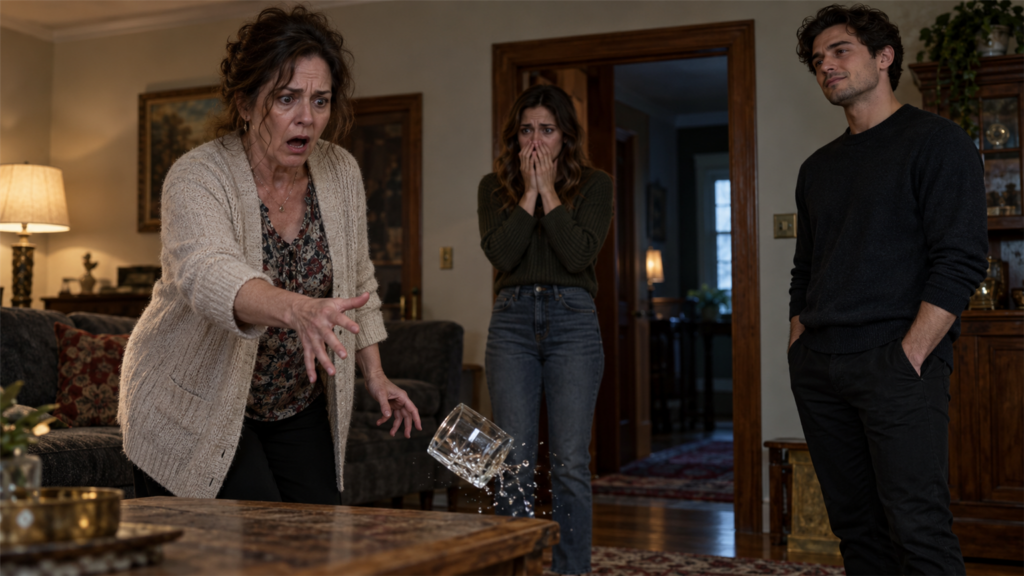
“We finally sold Grandma’s house,” my mother announced halfway through Christmas dinner. “And before you ask, Claire, you were never in her will anyway.”
My younger sister, Madison, laughed into her wineglass.
“Good. She’d just waste the money.”
I was thirty-eight years old, sitting at a table I’d helped set that afternoon, listening to my own family celebrate selling the house where I’d spent nearly every Christmas of my childhood.
Mom watched me carefully, waiting for tears.
Instead, I took a sip of wine.
“Cool. Hope you enjoy the cash,” I said. “Since I’m the one who bought it.”
Madison stopped chewing.
“What?”
“The house. I bought it.”
For a moment, the only sound was my mother’s fork scraping against her plate.
Then she laughed.
“Don’t be ridiculous. We sold it to a restoration company.”
“I know. Hearthline Restoration LLC. It’s mine.”
Mom’s expression changed.
Seven months earlier, when Grandma Evelyn died, Mom inherited her 1927 Craftsman house outside Columbus, Ohio. I wasn’t named in the will. I’d known that for years, and I’d never challenged it.
Grandma had helped Mom financially throughout her life. Leaving her the house was Grandma’s final attempt to give her security.
But for eleven years, I was the one who repaired the porch, replaced leaking pipes, and drove Grandma to appointments when her arthritis made climbing stairs painful.
Madison visited on holidays.
Mom called when something broke.
I came whenever they asked.
When Mom listed the house for sale, I offered to buy it directly. She refused, saying she didn’t want to negotiate with family. So I submitted an offer through the small restoration company I’d operated for four years. It was a legitimate, financed purchase at the listed price. Mom accepted it through her agent without asking who owned the LLC.
The closing took place two days before Christmas.
“That’s impossible,” Madison said.
I reached into my purse and showed her the recorded ownership information on my phone.
Mom didn’t look at it.
“You deliberately went behind my back.”
“You put it on the market. I bought it.”
Madison leaned forward.
“Then the money still belongs to us.”
“I never said otherwise.”
Mom pushed her chair back. “Well, don’t get comfortable. We’re taking everything Grandma owned before you get the keys.”
I looked up.
“Everything?”
Madison exchanged a quick glance with her.
And suddenly I remembered something my real estate agent had mentioned that morning: a request from the seller to remove the original stained-glass dining room doors.
Doors Grandma had spent years teaching me how to restore.
I turned to my sister.
“Madison, what exactly have you done?”
She gripped her wineglass.
Then Mom said, almost proudly:
“Your sister sold those doors for twelve thousand dollars. And the men are coming to take them tomorrow morning.”
For several seconds, I stared at Mom.
The stained-glass doors were almost a century old. Grandma had restored them with her father when she was young. One panel still contained a tiny blue flower she’d painted herself.
When I was twelve, Grandma taught me to replace the cracked wooden trim without disturbing the glass.
Madison knew that.
She also knew those doors were part of the house.
“You sold them?” I asked.
Madison folded her arms. “They’re family antiques. We can sell whatever Grandma left us.”
“Not if they’re fixtures included in a house you’ve already sold.”
Mom waved her hand. “Don’t start talking like some big-shot property developer.”
I took out my phone and opened the purchase agreement. The original doors, staircase, fireplace mantel, and built-in cabinetry were expressly included. Mom had signed that provision herself.
The sale had closed on December twenty-third. Under a separate occupancy agreement, she could remain until the twenty-seventh to finish moving, with fifteen thousand dollars of her proceeds held in escrow against damage or failure to deliver possession.
That agreement didn’t give her permission to dismantle the building.
“Call the buyer and complain,” Madison said sarcastically.
“I am the buyer.”
That finally silenced her.
I stood, carried my plate to the kitchen, and called my attorney, Rebecca Hayes. I sent her photographs from the property listing and screenshots of the messages Madison had shown me about the salvage company.
Rebecca advised me to document everything and immediately notify the sellers, their agent, and the dealer that the fixtures belonged to the property purchaser.
By nine the next morning, the salvage dealer had confirmed receiving the notice.
But Madison wasn’t finished.
At eleven, my phone rang.
It was Mrs. Carter, Grandma’s neighbor of thirty years.
“Claire, there’s a van in the driveway. Two men are carrying tools into the house.”
I drove over.
Madison stood on the porch with her arms crossed while a worker examined the trim around the dining room doors. A second worker had already removed part of the wooden molding.





