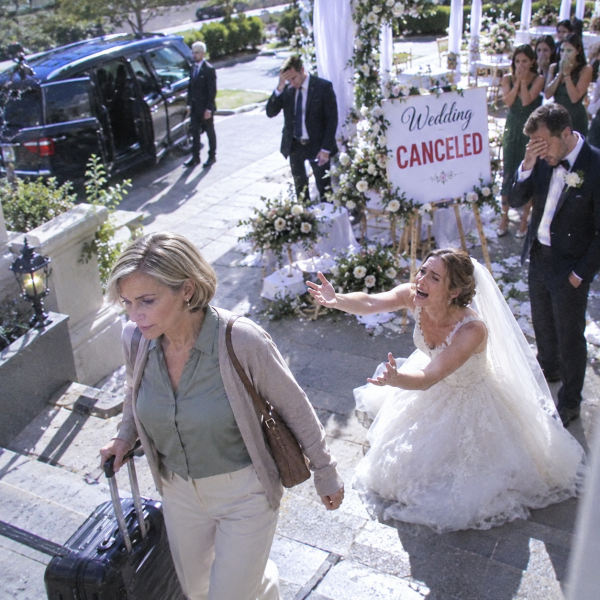
My daughter looked me straight in the eye and told me I wasn’t invited to her wedding.
“Mom, please don’t make this difficult,” Claire said, lowering her voice as if I were the embarrassing one. “Ryan and I decided the ceremony should only include the people closest to us.”
Closest.
That word landed harder than shouting would have.
We were standing in my kitchen in Columbus, Ohio. Morning light spilled across the counter where I had once packed her school lunches, signed permission slips, and stayed awake helping her finish science projects.
I stared at the woman I had raised alone after her father died.
“Am I understanding you correctly?” I asked.
Claire twisted the diamond ring on her finger.
“Ryan’s family is very private. His parents are inviting business associates, and the guest list became complicated.”
I almost laughed.
“Business associates are close family?”
Her eyes hardened.
“Please, Mom.”
There it was.
A warning.
Not an explanation.
I had met Ryan’s parents twice. They owned several car dealerships outside Cincinnati and spoke about people the way some people spoke about furniture—expensive, cheap, useful, replaceable.
I worked as an office administrator for thirty-one years.
Apparently, that didn’t photograph well beside country-club money.
So I nodded.
“All right.”
Claire blinked.
“You’re not going to argue?”
“No.”
Three days later, I booked a week in Charleston, South Carolina.
I refused to sit home imagining my daughter walking down an aisle while pretending her mother didn’t exist.
The wedding was scheduled for Saturday.
Friday afternoon, I was sitting outside a small café near the harbor when my phone began vibrating.
Claire.
I let it ring once.
Then again.
Then seven more times.
Finally, I answered.
For several seconds, all I heard was breathing.
Then—
“Mom.”
Her voice sounded nothing like the woman in my kitchen.
It was small.
Broken.
“Claire?”
“The wedding’s been canceled.”
I sat straighter.
“What happened?”
“Ryan’s payment didn’t clear. The venue says we owe them $74,800. Two vendors are threatening collections, and there’s another loan…”
She stopped.
“What loan?”
Claire began crying.
A waiter nearby slowed as he passed my table.
“Ryan borrowed money for the wedding.”
“That doesn’t explain why you’re calling me.”
Silence.
Then she whispered the words that changed everything.
“Because he borrowed some of it in my name.”
My fingers tightened around the phone.
“How much?”
“Mom… please don’t get angry.”
“Claire.”
“Almost ninety-six thousand dollars.”
The harbor suddenly felt very far away.
Then came the sentence I never expected to hear.
“Can you come home?”
I stared across the water.
Six days earlier, I hadn’t been close enough to attend her wedding.
Now I was apparently close enough to save her from it.
And what Claire still didn’t know was that I had already seen Ryan’s name once before.
On a document sitting inside my attorney’s office.
I flew back to Ohio the next morning.
Claire was waiting outside the wedding venue when my Uber pulled into the circular driveway.
The flowers were still there.
White roses wrapped around wooden arches. Gold chairs stood behind glass doors. A handwritten welcome sign leaned against the wall like someone had abandoned the celebration halfway through a sentence.
Claire wore sweatpants and Ryan’s college sweatshirt.
When she saw me, she ran toward the car.
“Mom.”
She reached for me.
I stepped aside to pay the driver first.
That tiny pause hurt her more than yelling would have.
Inside, Ryan was pacing near the reception hall with his father, Douglas.
Douglas didn’t greet me.
He simply said, “We need to solve this quickly.”
I placed my purse on a chair.
“We?”
Ryan rubbed both hands over his face.
“Evelyn, I made some mistakes.”
“Mistakes usually happen once.”
He looked at the floor.
Claire’s wedding planner handed me a folder.
The numbers were worse than Claire had understood.
The unpaid venue balance was $74,800.
The florist was owed $18,600.
The photographer had received only half his fee.
Then there were two credit cards and a personal loan totaling more than $95,000.
Claire’s name appeared on all three.
Her signature appeared too.
She stared at the papers.
“I didn’t sign these.”
Ryan’s father immediately interrupted.
“Let’s not use dramatic language.”
I turned toward him.
“Fraud is not dramatic language.”
The room went quiet.
Ryan finally admitted he had used Claire’s information because his own credit had collapsed after a failed restaurant investment.
Then I asked the question nobody else wanted to ask.
“Where did the money go?”
Ryan didn’t answer.
I already knew.
Two months earlier, my attorney had shown me documents connected to the sale of a small commercial building my late husband and I had invested in decades ago.
One prospective buyer had submitted financing records.
Ryan Parker.
His application showed unpaid business debts, gambling transactions, and three defaulted private loans.





