Mom tapped the screen. “Listen.”
Before I could, Leah came into the hallway, walking slowly with a nurse. They had cleared her to move about, but they weren’t ready to discharge her.
“Whatever it says,” she told me, looking at the tablet, “I don’t want our baby to be the reason everyone pretends this was fine.”
I pressed play.
Grant’s voice emerged clearly from the recording.
“Come on, Mason. Show her—”
Then I heard the rest.
And I understood why my brother had tried so hard to make that file disappear.
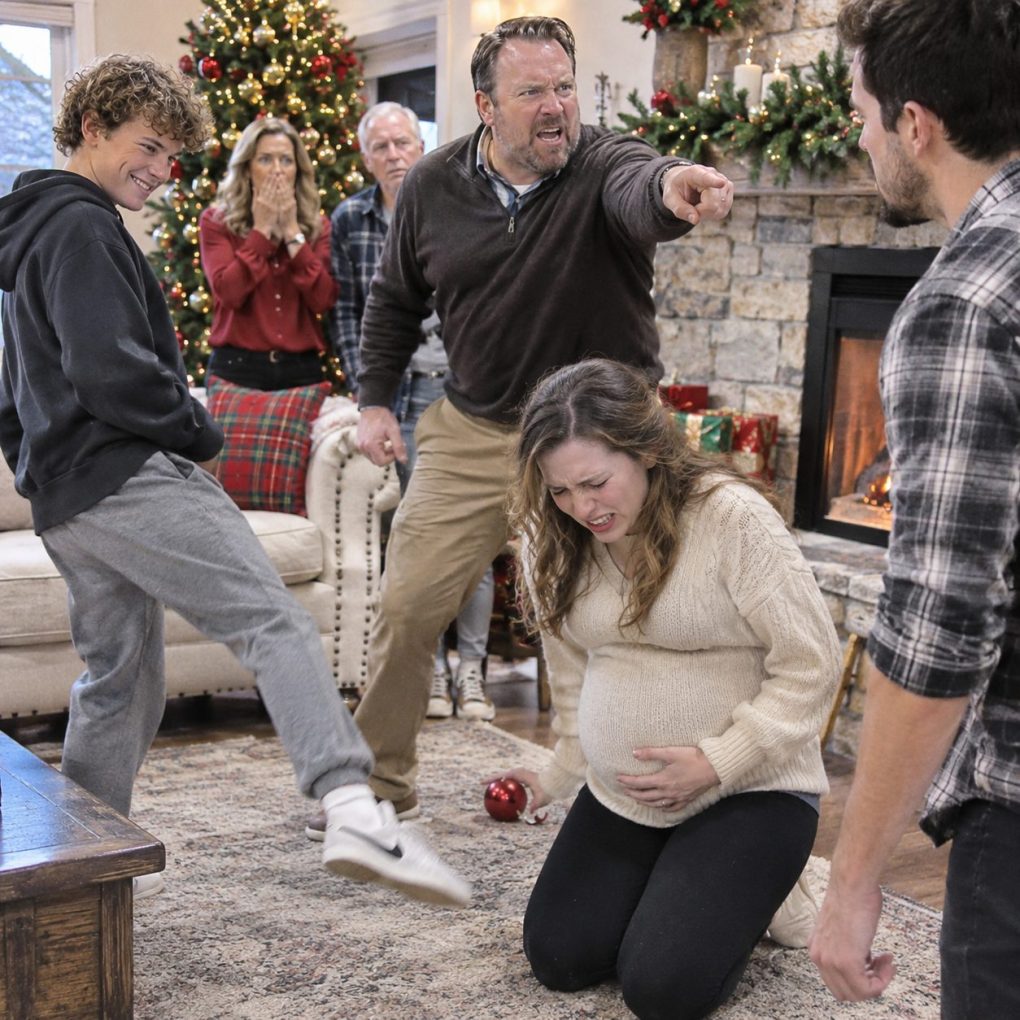
“Come on, Mason. Show her she can’t tell you what to do.”
On the recording, Grant nodded toward Leah. His son looked at him, grinned, and stepped back from the ball.
Leah was standing beside the tree, one hand resting on her belly. She hadn’t raised her voice. She’d only said, “Please take that outside. You might hit somebody.”
Mason swung his foot.
There was no stumble, no accidental ricochet. He looked at her before he kicked. Grant watched him do it.
I replayed the clip once, then stopped. I couldn’t bear hearing Leah’s gasp again.
Mom sat beside me in the hospital hallway, her hands clasped around the tablet.
“I kept thinking your brother would grow out of this,” she said. “Making everything a competition. Teaching that boy that kindness is weakness.”
I thought of the dinners where Grant mocked Leah for asking him not to smoke near her, the afternoons Mason called her “princess” because she needed to rest. We’d left early, laughed awkwardly, tried not to make family gatherings difficult. We had been teaching them, too, that there was no price for humiliating her.
When Leah was discharged the following afternoon, her doctors told us to return immediately for bleeding, pain, contractions, or reduced fetal movement. The monitoring had been reassuring, but she needed follow-up appointments. We drove home slowly, and I stopped twice so she could stretch her legs.
We made a police report and supplied the unedited video. An officer explained that the case involving Mason would be reviewed through juvenile procedures; nobody promised us an arrest or a particular outcome. Grant called it betrayal. He said I was destroying a child over a joke.
“Mason made a decision,” I told him. “And you encouraged it.”
He never answered that.
Our parents stopped hosting Grant’s family. Mom told him she would not delete footage or repeat his version. Dad, who usually begged us to reconcile by Sunday, said simply, “Not this time.”
Months later, Mason wrote Leah a letter through his counselor. He admitted he had aimed at her because his dad had dared him to stand up to her. His case was resolved through a juvenile diversion program that included counseling and community service. We did not agree to a family meeting. An apology didn’t oblige Leah to sit across from him.
Grant stayed angry. His wife eventually called to say she’d moved out with Mason while they worked through what had happened. I didn’t ask her to explain her marriage. I asked only that she keep our address private.
Nine weeks after Christmas, our daughter, Lucy, was born after an uncomplicated delivery. When a nurse placed her against Leah’s chest, I watched my wife count the tiny fingers tucked beneath the blanket. She kissed Lucy’s forehead, once, then again.
That December, Mom visited our apartment with the silver star. She’d straightened its bent point as best she could. Leah hung it high on our little tree, above Lucy’s reach.
I held my daughter while my wife stepped back to see whether it was level.
For the first time in years, nobody laughed when she asked us to be careful.





