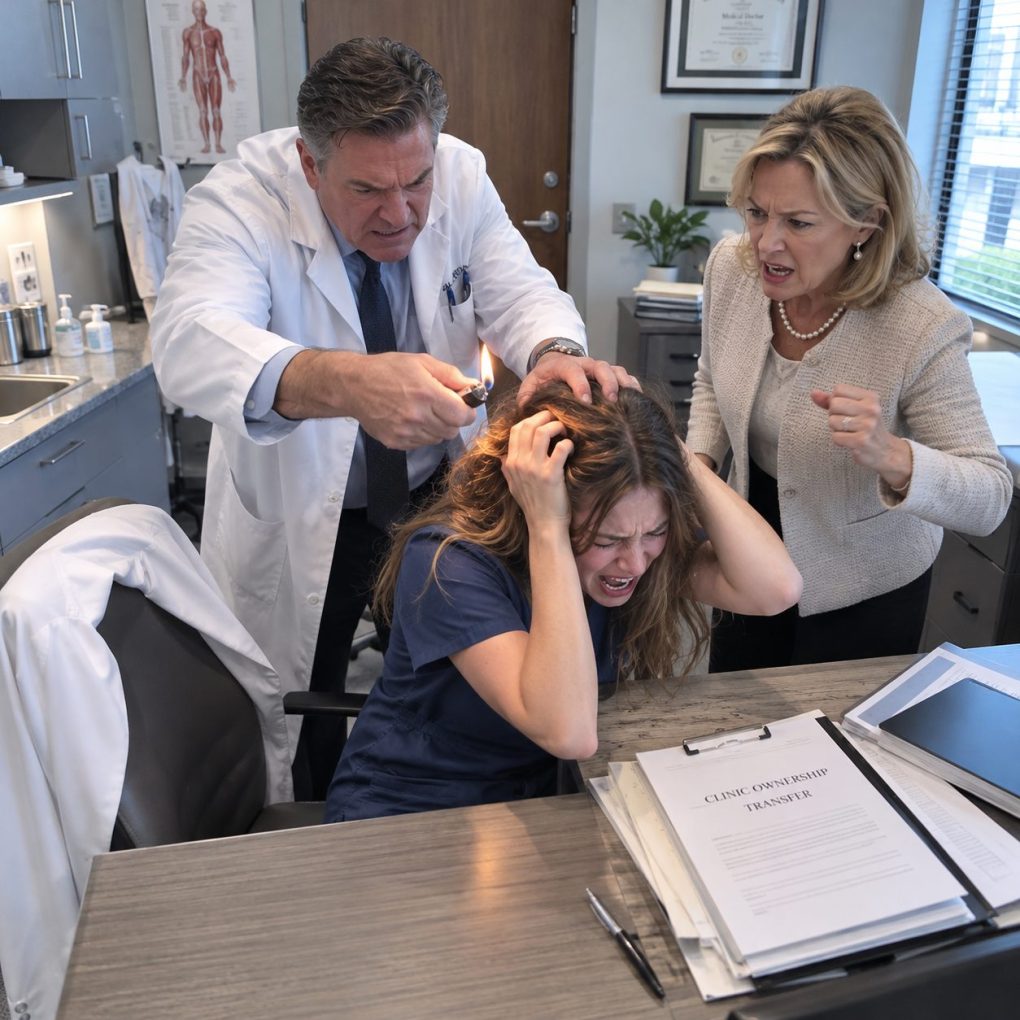
Six months after the assault, I resumed a regular schedule.
One afternoon, I found Grandma Rose’s old photograph in my office drawer. She was standing outside the clinic on opening day, holding a little paper sign she’d made herself.
You built this, sweetheart.
The handwriting was uneven because her arthritis had been getting worse.
I remembered how she’d insisted on staying until the last patient left that evening, even though her feet were swollen.
Dad hadn’t attended the opening.
He’d said the clinic was too small to impress anyone.
I placed Grandma’s picture back on my desk.
That evening, Nora brought me the renewal documents for our building lease.
“Everything looks good,” she said. “You just need to sign.”
For a moment, I stared at the signature line.
I remembered the folder beside my plate at Sunday dinner, my father’s hand gripping my neck, and my mother telling me that pain would teach me respect.
Then I picked up my pen.
I read every page carefully.
And signed my name.
Nobody stood behind me. Nobody raised their voice. Nobody demanded that I surrender something I’d worked years to build.
When I finished, Nora smiled.
“Another five years?”
I looked around the clinic—the waiting-room chairs, the children’s drawings taped near reception, the little plant Grandma had given me on opening day.
“Another five years,” I said.
Later, as I locked the front door, I caught my reflection in the glass. The faint scar along my hairline was still visible.
I touched it gently.
There were things my parents had taken from me that I would never completely recover.
But my name was still on the door.
My patients were still coming back.
And for the first time in my life, being a good daughter no longer meant giving up the right to protect myself.





