I stared at the message.
The old version of me would have called instantly.
She would have solved everything.
She would have accepted another insult six months later.
But I had spent too many years cleaning broken glass for people who kept throwing bottles at my feet.
By Sunday morning, my phone showed sixty-eight missed calls.
Then Nathan called.
His voice was serious.
“Emily, we finished the preliminary review.”
I sat upright.
“There’s something you need to see.”
“What?”
“A transfer Ryan authorized three months ago.”
My stomach tightened.
“How much?”
Nathan paused.
“Seven hundred and forty thousand dollars.”
“Transferred where?”
Another pause.
“To an LLC registered to your mother.”
That was when I realized Father’s Day wasn’t the biggest betrayal in my family.
It was only the moment that finally made me look.
The LLC was called Hartwell Property Services.
I had never heard of it.
According to the documents Nathan sent me, Ryan had approved five payments totaling $740,000 for “consulting and project management.”
There was only one problem.
Hartwell had no employees.
No office.
No active website.
And the mailing address belonged to a townhouse my mother owned in Charleston.
I called Dad.
He answered before the first ring finished.
“Emily, thank God.”
“Did you know about Hartwell?”
Silence.
That was enough.
“Dad?”
“I can explain.”
“No. You can answer.”
His breathing changed.
Finally he said, “Your mother wanted security.”
“So Ryan transferred company money to her?”
“It wasn’t stolen.”
“What would you call paying three-quarters of a million dollars to a company that performed no work?”
He lowered his voice.
“We were going to put it back.”
I closed my eyes.
There it was.
Not denial.
Not confusion.
Admission.
Dad had come to me months earlier claiming Carter Development was suffering from delays and bad market conditions.
He had never told me hundreds of thousands of dollars were being quietly moved out of the company.
And I had used my reputation to help keep it alive.
Monday morning, I met Nathan, our attorneys, and an independent forensic accountant.
The results were worse than I expected.
The Hartwell transfers were only part of it.
Ryan had also shifted company money to cover personal investment losses. Dad had signed documents that understated those withdrawals during financing negotiations.
Whether they considered it “temporary” didn’t matter.
The lender considered it a breach.
By Wednesday, Carter Development’s board received formal notice.
Future funding was frozen.
But I did something my family never expected.
I didn’t destroy the company.
Hundreds of employees had nothing to do with my family’s behavior.
So I proposed a restructuring.
The lenders would continue supporting viable projects—but only if Dad resigned as CEO, Ryan surrendered financial authority, and independent management took control.
My family had forty-eight hours to accept.
That evening, Dad arrived at my house.
No champagne.
No audience.
No laughter.
He looked ten years older than he had on Father’s Day.
“You’re taking my company.”
I stood in the doorway.
“No. I’m keeping your employees from losing theirs.”
“You planned this.”
“No.”
I looked at him.
“You created this. I just stopped hiding it.”
His jaw tightened.
“Family doesn’t do this to family.”
I almost couldn’t believe he said it.
“Thirty-five people watched you call me a mistake.”
He looked away.
“That was different.”
“Why?”
He had no answer.
On Friday morning, the board accepted the restructuring.
Dad resigned.
Ryan lost his executive position and eventually sold his vacation property to satisfy part of his personal guarantee.
The money transferred to Mom’s LLC was returned after lawyers became involved.
Claire stopped speaking to me for almost eight months.
Mom sent me long messages about loyalty, embarrassment, and forgiveness.
I answered only once.
Forgiveness does not require pretending nothing happened.
Carter Development survived.
Under professional management, two delayed projects were completed the following year.
More than eighty employees kept their jobs.
I never became CEO.
I didn’t want to.
My own company was already where I belonged.
Almost a year later, Dad asked me to meet him for coffee.
He looked smaller sitting across from me without the company, the title, or a room full of people waiting to laugh at his jokes.
“I shouldn’t have said what I said that day,” he told me.
I waited.
Then he added quietly, “And I shouldn’t have expected you to save me after saying it.”
That was the first apology he ever gave me without adding an excuse.
I accepted it.
But I didn’t restore the old relationship.
Some things can be forgiven without being rebuilt exactly as they were.
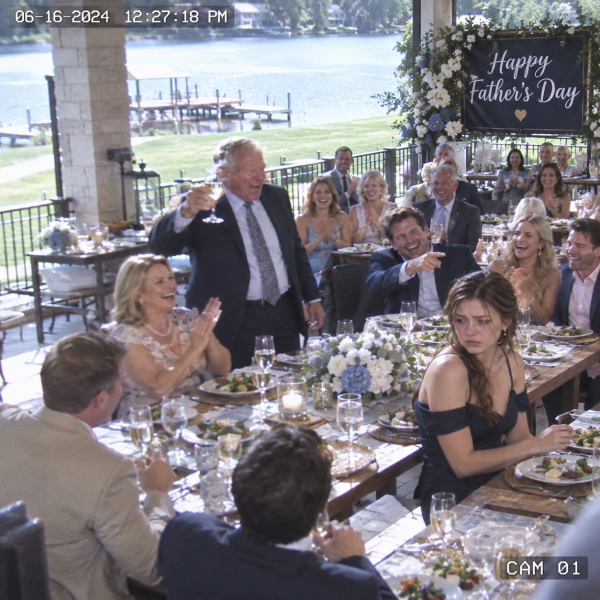
That Father’s Day, my family thought I was powerless because I was sitting alone at the end of the table.
They were wrong.
Power wasn’t the loan agreement.
It wasn’t the money.
It wasn’t even the evidence.





