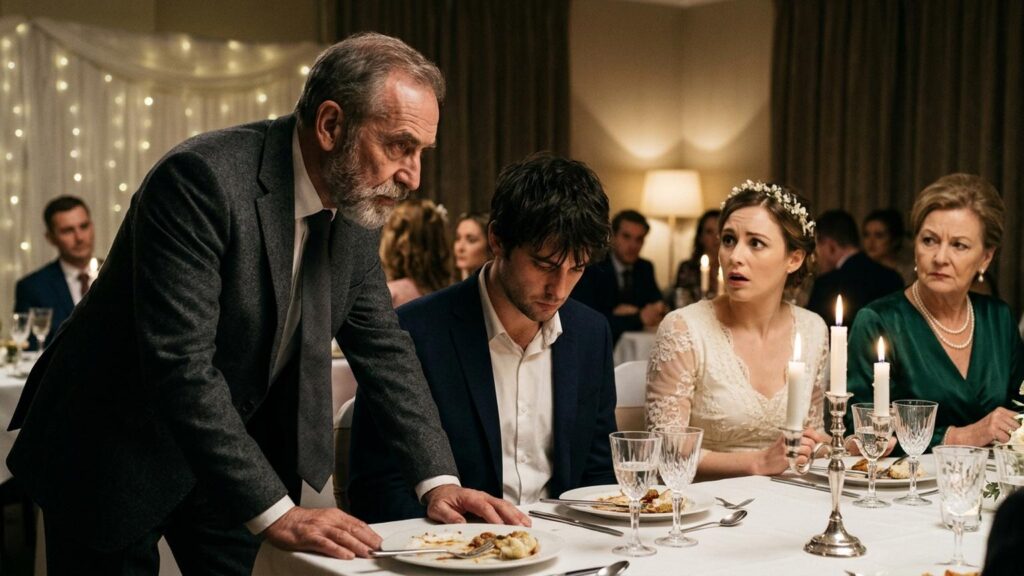
“I was embarrassed about not being able to afford everything I wanted,” she admitted. “And I took it out on you.”
I thanked her for saying it. I didn’t offer any money.
Six months later, Daniel and Madison were renting a small two-bedroom apartment. They’d started counseling, created a budget, and postponed buying a house.
Things between us weren’t magically repaired. Daniel still struggled to talk about the wedding, and there were Sunday dinners when Madison barely spoke.
But he began visiting on his own, sometimes just to mow the lawn or help me carry groceries.
One afternoon, he found me sorting Ellen’s photographs.
He picked up the picture of her holding him on his fifth birthday, the one I’d carried in my jacket at the wedding.
“Mom would have been disappointed in me,” he said.
“She would have wanted you to learn from it.”
He sat beside me for a while, holding the picture by its worn corners.
Then he asked, “Do you think we could ever try again? With the house, I mean?”
I looked at him.
“Maybe someday. When you’re ready to buy a home you can afford, we’ll talk about what help makes sense.”
He nodded.
And for once, he didn’t ask how much.
Before he left, he put Ellen’s photograph back on the shelf, straightening the little silver frame until it stood perfectly upright.
I still have the ninety thousand dollars.
I may help Daniel with a home someday. I may need some of that money myself as I get older. Either way, nobody else gets to spend it before I’ve made that decision.
At the wedding, four people called me cheap because I wouldn’t give them another $20,000.
These days, my son calls me on Sunday mornings, sometimes just to ask how I’m doing.
Last week, he called because he’d made his first real contribution to their house savings.
It was $300.
He sounded prouder of that $300 than he’d ever sounded about the $90,000 he thought I owed him.
I think Ellen would have smiled at that.





