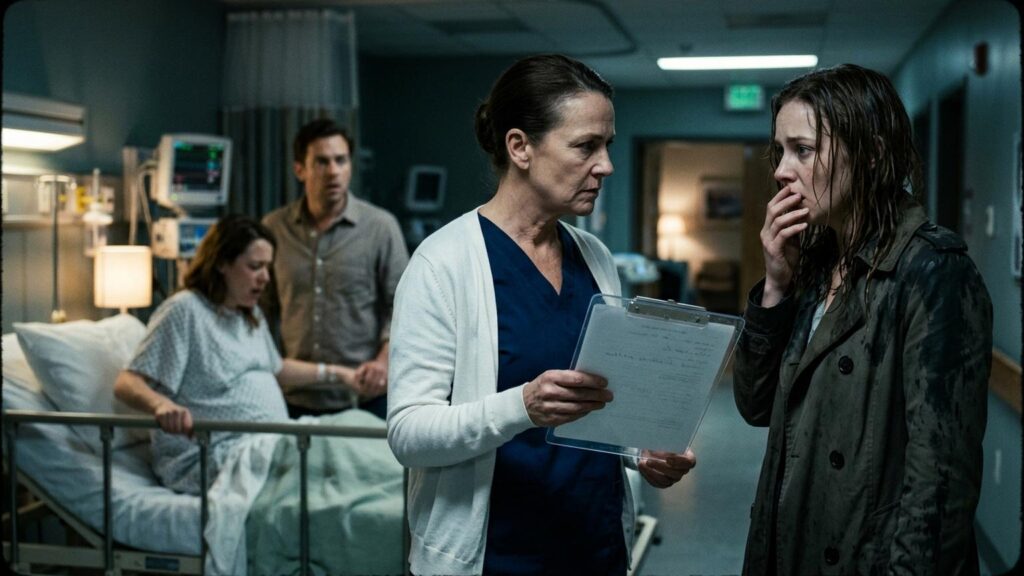
Another contraction came, stronger than the last. I gripped his wrist until it passed. When I opened my eyes, he was wiping melted ice from the blanket with the edge of his sleeve.
The obstetrician came in to assess me. Labor was progressing, and she reassured us that the team would keep unwanted visitors away.
Adam silenced the family chat. Then he took the blue folder from our overnight bag—the one we had packed in case the hospital needed information from our fertility clinic.
He opened it to a page bearing both our signatures.
“Lauren thought this would end our marriage,” he said.
At the top of the page were four words she had never imagined seeing.
Consent to Donor Insemination.
Adam didn’t show the folder to the nurse or ask her to explain our marriage to his sister. He simply closed it and took my hand.
Six years earlier, chemotherapy had saved his life and left him infertile. We’d learned that after eighteen months of appointments, disappointing tests, and the particular quiet that settled over our kitchen every time another pregnancy test came back negative.
One evening, I found him washing the same coffee cup twice.
“You could have a baby with someone else,” he told me without looking up.
I took the cup from his hands. “I want a life with you. We’ll decide what that life looks like together.”
We chose donor insemination after months of counseling. Adam attended every appointment and signed every consent form. He assembled the crib, learned how to install the car seat, and read bedtime stories to my stomach, stumbling over the funny voices.
There was never a secret father. There was a donor, a medical process we had chosen together, and a child we were already loving.
Lauren had never been told. But that spring she’d spotted an envelope from the fertility clinic on our kitchen counter, then asked to see our records. When we refused, she’d decided that secrecy meant betrayal.
Her document wasn’t a real paternity test. She had no sample from our daughter, who hadn’t even been born. Nurse Evelyn had recognized the impossible collection date, not revealed anyone’s confidential medical history.
At 7:26 that evening, after a long and difficult labor, our daughter arrived crying furiously. The nurse placed her against my chest. Her hair was damp, her fist no larger than a plum, and Adam stood beside us making a sound I’d never heard from him before.
“Hi, June,” he whispered. “It’s Dad.”
He helped the nurse pull on the little yellow socks. One slipped off almost immediately. He kept trying to tuck it around her heel, blinking so hard I wanted to cry for him.
When we were resting, Adam sent one message to the family chat: Lauren’s report is fabricated. Nora hasn’t betrayed me. We made our fertility decisions together. Please delete the picture and don’t contact us about it.
His mother called to apologize. A cousin deleted her forwarded screenshot. Others said nothing.
Lauren sent twelve messages, first accusing me of turning Adam against her, then claiming she’d only tried to protect him. Finally she wrote, You cut me off the minute she got pregnant.
Adam answered once. We stopped paying your rent. That’s not the same as abandoning you. What you did to Nora while she was in labor was cruel. Don’t contact us again.
We gave hospital security a written account and saved the messages. Lauren was barred from visiting during our stay. After we came home, we changed the lock she’d once had a spare key to. We didn’t seek a grand punishment; we wanted the harassment to end.
Three weeks later, I was standing at the kitchen sink eating toast over a paper towel when June began crying. Adam emerged from the bedroom, took her gently, and rocked beside the window until she settled.
One yellow sock slipped onto the floor.
I picked it up and watched him kiss her forehead.
Nobody who saw his face in that moment could have told me he wasn’t her father.
And I finally understood why he had never needed a test to know.





