“My wife gets to come home from the nursing facility next week,” he said. “Our apartment has room for her chair.”
“I’m glad,” I told him, and meant it.
Michael leaned close. “What is all this?”
On the wall, a framed photograph showed Helen and me in front of the school, both of us holding rolled-up blueprints. Beneath it was a small metal plaque.
Michael read the words aloud: “Founded by Robert and Helen Bennett.”
Before I could answer, the program director stepped to the microphone.
“Today,” she said, “we finally get to thank the man who spent ten years making sure families wouldn’t have to choose between care and a place to live.”
When people turned toward me, Michael stepped back as if he’d walked into the wrong building. I could see him reading the plaque again, one finger tracing Helen’s name.
There was no secret fortune, no company jet. Helen and I had run a heating business for thirty years. When we sold it to our employees, we had enough to retire comfortably. She wanted some of that money to help older neighbors stay near their families, especially those whose homes had stairs they could no longer manage.
We began with a grant application, donated time, and drawings spread across our dining table. After Helen died, I kept going. The nonprofit raised the rest from local donors and a housing-development program. The school had been renovated into eighteen accessible apartments, with rents set under its affordable-housing rules. I was its volunteer board chair, not its owner.
I told the gathering about Helen, who believed that a person’s dignity shouldn’t depend on whether they could carry their own groceries. I said her name once, then had to look down at the invitation in my hand until the room came back into focus.
Afterward, Michael found me beside the coffee urn.
“You built this?” he asked.
“A lot of people did.”
“Why didn’t you tell me?”
“I invited you to the planning meetings. Three times.”
He rubbed the bridge of his nose. “I thought you were just keeping busy after Mom died.”
“I was.” I looked around at the people taking photographs in their new apartments. “But I was doing something she cared about.”
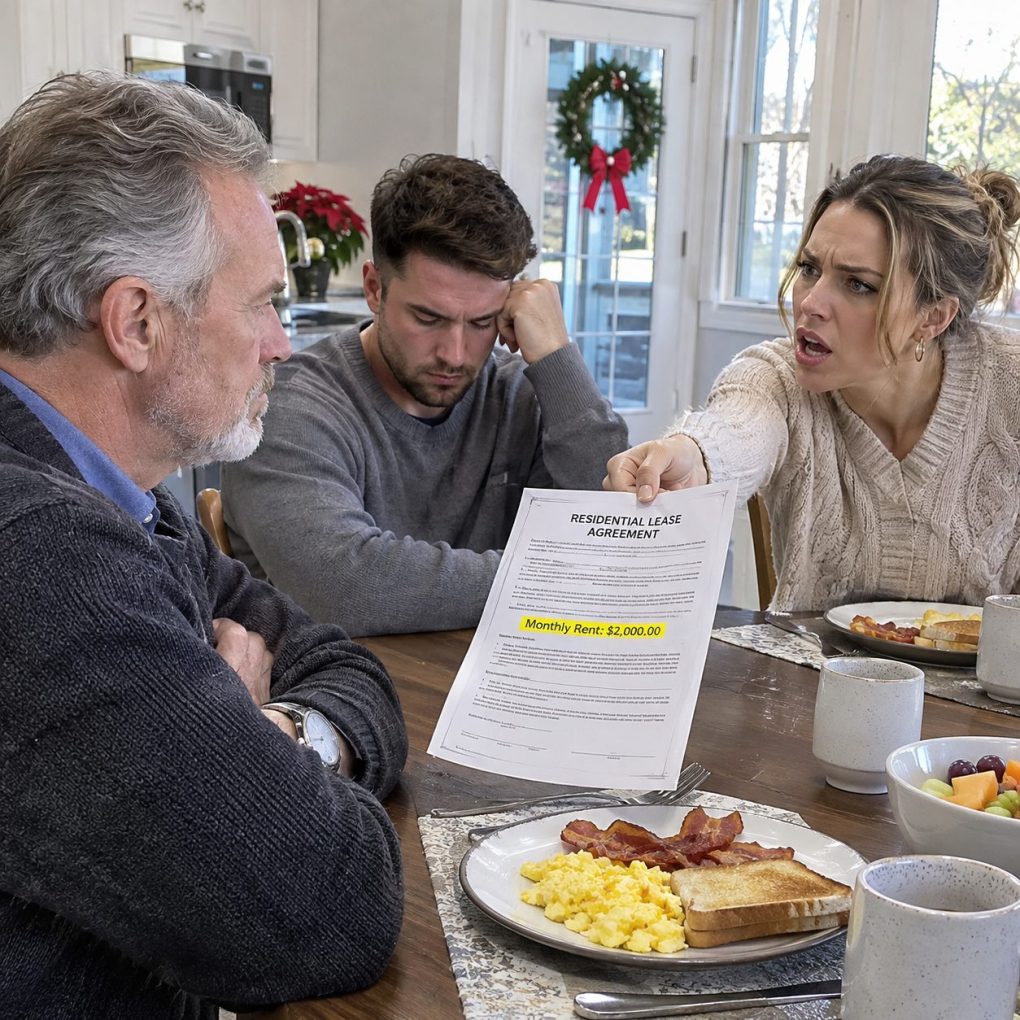
He asked where I was going to live. I showed him the brass key from Helen’s box. My own small condo, purchased with the money from selling our old house, was ready two miles away. I’d arranged the move before Rebecca put the lease on the table. The Lincoln was simply a ride to the dedication.
Michael’s shoulders dropped. “You weren’t depending on us.”
“I depended on you to mean it when you said I was welcome. That’s different.”
He sat down heavily. “I should’ve said something Sunday.”
“Yes,” I said. “You should have.”
Two weeks later, Michael came to my condo alone. He brought the old wooden toolbox he’d kept since high school and offered to repair the loose kitchen cabinet. I handed him a screwdriver and stayed beside him while he worked. There was no speech about forgiveness. When he finished, he asked if Lily could visit on Saturday.
“She can,” I said. “But I won’t be your regular childcare plan anymore.”
Michael nodded. He and Rebecca arranged after-school care. Rebecca sent a short apology for the lease and the back-rent invoice; I accepted it without inviting another discussion about money. We didn’t suddenly become a happy family. Michael visited, listened, and gradually began asking about the years he’d missed. Rebecca kept her distance.
That spring, Lily came over with a fresh drawing. It showed me in front of the schoolhouse, surrounded by people with canes and walkers. She’d given me blue hair again.
At the bottom she’d written, GRANDPA ALWAYS COMES BACK.
I pinned it beside Helen’s photograph. Then Lily took my hand and asked if we could make pasta, just the two of us.





