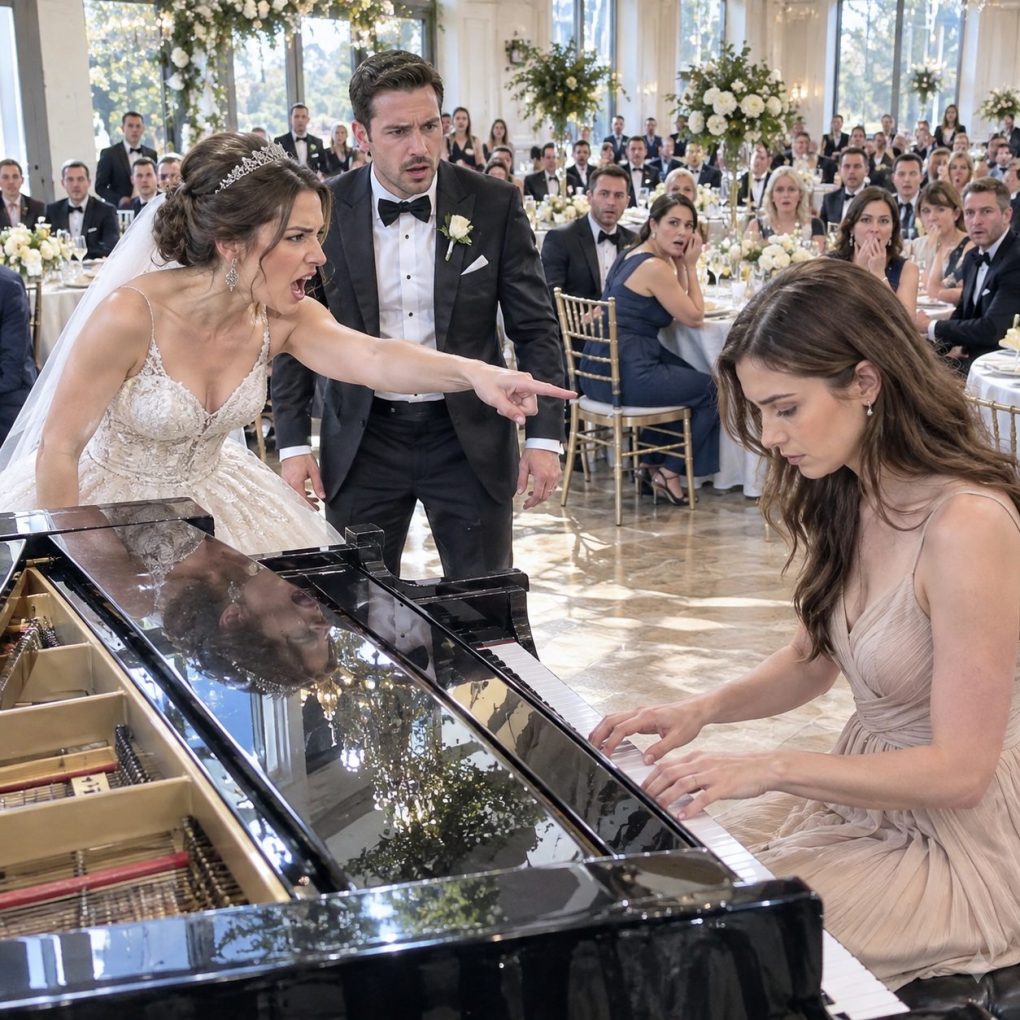
“The shared folder had both,” I told him.
He shut his eyes. “I should have checked.”
Sophie caught his sleeve. “Tell them this is a misunderstanding. We can sort it out after the honeymoon.”
“You told me you’d explain it to her,” he said.
She looked toward the photographer, who had lowered his camera.
Then Ben opened an email Sophie had sent him the morning after I first confronted him. He stared at its first line, swallowed, and turned the screen toward me.
It read: “I know Mara wrote it. If she loved you, she’d let me have this one thing.”
For a moment, the only sound came from the air conditioner rattling above the dance floor.
I read the email twice. Beneath those words, Sophie had written that admitting the truth would cost her the graduate fellowship she had won with the piece. She asked Ben to keep me quiet until the wedding was over.
“You knew she admitted it?” I asked him.
Ben’s face went red. “I thought I could convince her to correct the program privately. I didn’t want to ruin the wedding.”
“You let me sit through dinner while she called me useless.”
He lowered his eyes. “I did.”
Sophie reached for the email, but Ben put his phone away. “I shared Mom’s recording because I trusted you,” he said. “You used it to win something, and then you tried to make Mara feel ashamed for knowing how to play it.”
Her father urged everyone to return to dinner. The coordinator quietly restarted the reception music. Nobody applauded. I gathered my papers and went outside.
Ben followed me to the parking lot. The hem of his trousers brushed against the wet pavement.
“I’m sorry,” he said. “I should have believed you the first time.”
“You did believe me, Ben. That’s what hurts.”
He didn’t try to deny it.
On Monday I wrote to Sophie’s music school. I sent copies of my manuscript, the earlier licensing agreement, our recording, and the published recital program crediting her as composer. Ben supplied the original email and explained how Sophie had accessed the shared files.
There was no instant public disgrace. The school opened an academic-integrity review. Sophie was given an opportunity to respond, and I was asked for additional documentation. During those months, I continued teaching my students. Most evenings, I came home with pencil marks on my cuffs and a plastic container of leftovers in my bag.
Eventually, Sophie acknowledged submitting my composition as her own. Her fellowship offer was withdrawn, the recital archive was corrected, and the school required her to complete a formal disciplinary process. She retained credit for her piano performance, but not for writing the piece.
Ben moved out six weeks after the wedding. He told me the marriage had exposed a problem he could no longer dismiss: when confronted with what she’d done, Sophie was more concerned about being embarrassed than making it right. They began divorce proceedings later that year.
He and I didn’t immediately become close again. We met for coffee occasionally. Sometimes we talked about Mom; sometimes we sat watching traffic because there wasn’t much either of us knew how to say.
One Saturday, Ben arrived at my apartment carrying Mom’s old piano bench. He had repaired the loose leg, but the seat still squeaked.
“I thought you might want it,” he said.
I helped him carry it inside. We set it beside my upright piano, the one I’d bought with years of teaching money.
Ben stood there while I played the four notes Mom used to hum. Then I finished the phrase she’d always forgotten.
He pulled out the bench and sat beside me, careful not to interrupt.
The wood squeaked under his weight, exactly as it had on that first recording.
This time, neither of us asked for another take.





