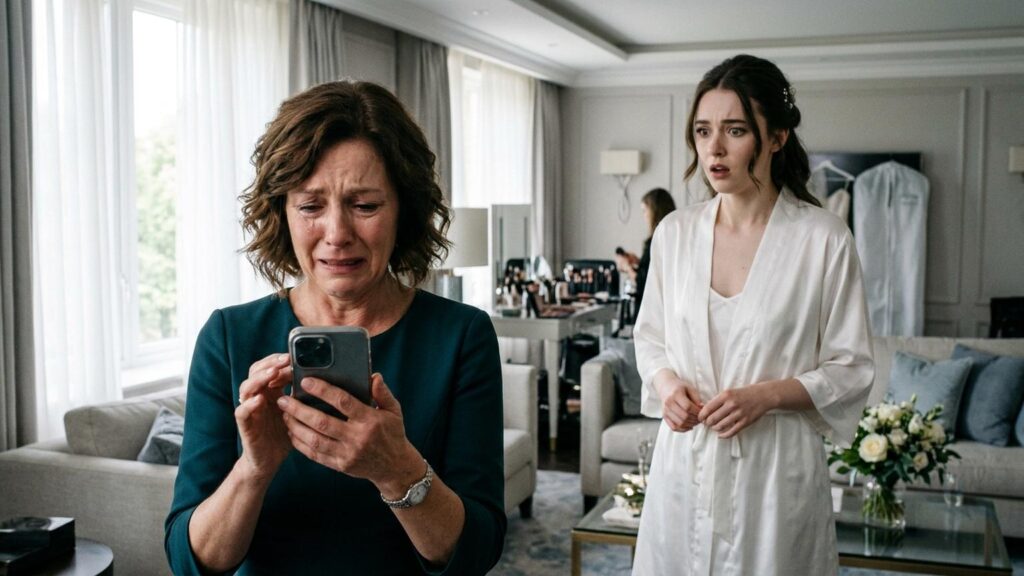
At Sunday dinner, my sister announced I wasn’t welcome at her wedding because I’d ruin the family photographs. Everyone agreed. I quietly folded my napkin and said, “Understood.” Three weeks later, the wedding planner discovered whose name was on the venue contract. Mom called me crying.
“For a perfect wedding, please stay home.”
That was the message my younger sister sent me five weeks before her wedding.
I was sitting in my car outside the bridal boutique, holding the garment bag containing the veil I’d spent three months restoring for her.
At first, I thought she’d sent it to the wrong person.
Then another message appeared.
Mom and Dad agree. Your face will draw attention in the photographs, and I don’t want people asking questions on my wedding day. Please don’t make this difficult.
I stared at the screen until the words stopped making sense.
My name is Hannah Mitchell. I’m thirty-six, and the scar running from my left cheekbone toward my ear has been there since I was seventeen.
I got it the night our car slid off an icy road outside Pittsburgh. My sister, Olivia, was ten. When the passenger-side window shattered, I threw myself across her to shield her face.
She walked away with bruises.
I needed forty-three stitches.
For years afterward, Olivia used to touch the scar gently and whisper, “You got hurt because of me.”
I’d always tell her the same thing.
“I’d do it again.”
Now she was twenty-nine, marrying a man named Daniel, and apparently the face that had protected hers was too ugly for her wedding photographs.
I called Mom.
She answered immediately.
“Hannah, please don’t upset your sister. She’s already overwhelmed.”
“Did you know she was going to uninvite me?”
A pause.
“She wants everything beautiful. Can’t you understand that?”
I looked at the garment bag resting on my passenger seat. Grandma Rose’s wedding veil was inside, carefully repaired by hand after years of storage.
“What about everything I’ve paid for?”
Mom sighed.
“Don’t turn this into a money argument. A gift is a gift.”
I had spent $12,600 on deposits for Olivia’s venue, photographer, and reception arrangements. I’d taken overtime shifts and postponed replacing my aging car because she’d cried when the first venue fell outside her budget.
I hadn’t asked for recognition.
I’d only wanted to see her happy.
“Okay,” I said quietly.
Mom sounded relieved.
“Thank you for being mature.”
I ended the call and typed one word to Olivia.
Understood.
That evening, I emailed the wedding planner to withdraw from further financial arrangements. I would honor deposits already paid, but I wouldn’t authorize additional expenses.
Twenty minutes later, she called.
“Hannah, I’m glad you contacted me. There’s something strange in your file.”
I sat down at my kitchen table.
“What is it?”
She hesitated.
“Someone submitted a new payment authorization under your name yesterday.”
Then she told me the amount.
$24,800.
And the authorization carried a signature that looked exactly like mine.
I asked the planner, Melissa, to send me the document.
When it arrived, I recognized my signature immediately.
Not because I’d signed it.
Because it had been copied from the PDF of an old vendor agreement I’d sent my mother months earlier.
The supposed authorization committed me to the remaining reception balance, upgraded flowers, and an additional photography package.
Melissa confirmed the new authorization hadn’t been accepted or processed. I disputed it in writing, and she flagged the account so no further charges could be made without fresh verification.
“Does Olivia know about this?” I asked.
Melissa was silent.
Then she said, “The request came from the email address your mother gave us.”
I sat looking at the document while the dishwasher hummed behind me.
My mother had just told me I wasn’t welcome at my sister’s wedding.
Yet she still expected me to pay for it.
When I confronted her, she didn’t even sound embarrassed.
“Hannah, you’ve already helped this much. Why would you abandon your sister now?”
“Because you told me to stay home.”
“That doesn’t mean you stop being family.”
I closed my eyes.
For seventeen years, I’d told myself that being the older sister meant understanding, sacrificing, and forgiving before anyone asked.
When Olivia needed help with college tuition, I sent money. When her car broke down, I lent her mine. When she cried over wedding expenses, I promised we would figure something out.
Somewhere along the way, my family had stopped noticing what those promises cost me.
“Mom, I won’t pay another dollar.”
She lowered her voice.
“Then don’t expect to be welcome at Christmas either.”
I hung up.
Over the next three weeks, I received angry messages from Olivia, my father, and two aunts. They accused me of sabotaging the wedding, although the planner had explained that the original bookings remained available if Olivia and Daniel completed valid payment arrangements.





