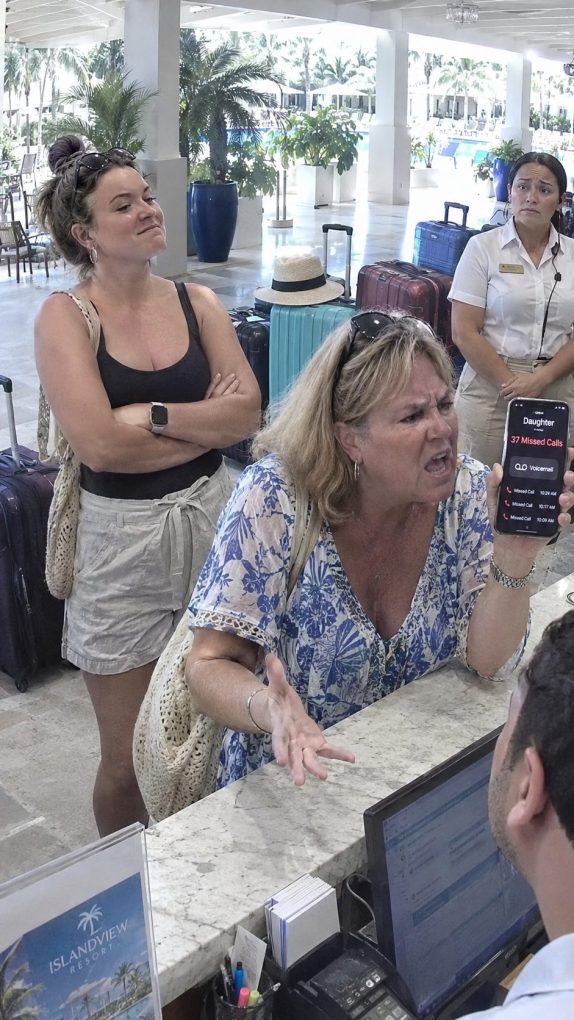
“Your sister told me you’d pay when we arrived,” Mom said, breathless. “The children are sitting with the luggage. We can’t get into the room. Please call the front desk.”
I thought that was the whole story. Then I heard Vanessa behind her, loud enough for the recorder to catch:
“Tell her the kids are crying. She’ll give in. She always does.”
I sat on the cottage steps with the phone in my hand. Owen was crouched at the edge of the water, holding up a shell as though it were treasure. Lily was filming him, her hair blowing across her face. For the first time in months, neither of them was looking over a shoulder to see whether someone wanted them somewhere else.
Mom called again. I answered.
“Please,” she said. “There are two children here.”
“I know. And they deserve a room and a safe place to sleep. So call your bank, use another card, or find somewhere you can afford.”
“Vanessa says you planned this.”
“I told you nineteen days ago that I would not pay the balance. You chose to come anyway.”
Her voice lowered. “You could at least take us in.”
“Our cottage sleeps three. I’m not taking space away from Lily and Owen.”
There was a pause, followed by Vanessa shouting about the money I’d supposedly stolen from the family. I looked at the $950 deposit on my statement. That money was gone; it had paid for the booking they’d made without us. I wasn’t getting it back, and I had no intention of pretending otherwise.
I said, “You didn’t invite my children. You invited my credit limit.”
Mom made a small sound, almost like a cough. Then the line went quiet.
They found a small motel farther inland, stayed one night, and flew home early. It cost them money they hadn’t planned to spend. Vanessa told relatives I’d stranded them. I forwarded the dated message about the payment deadline to anyone who asked, but I didn’t post the argument online. Her children didn’t deserve to become evidence in our fight.
We stayed five days. Owen learned that tiny crabs live beneath the sand. Lily read a whole novel on the porch and stopped checking her phone every time it buzzed. One evening, we bought a grocery-store apple pie and ate it in paper bowls while a storm moved across the water.
“Mom,” Owen said, saving his crust, “is this the better vacation?”
I brushed sand from his knee. “What do you think?”
He looked toward his sister, who was laughing at something she’d read. “I think nobody here wants us to leave.”
A month after we came home, Mom asked to visit. She came without Vanessa and brought the little paper airplane Lily had left at her house on that Sunday. Its wings had been flattened, but she’d kept it.
“I let your sister decide who belonged,” Mom said. “And I let you pay for it. I’m sorry.”
Lily took the airplane but didn’t hug her. Owen stayed behind my chair. Mom noticed and, for once, didn’t demand that they make her feel better. Mom offered to repay the $950 deposit in installments. I asked her to put that promise in writing; three months later, she had paid it back. We agreed future visits would be short, and no family expenses would go on my cards again.
It wasn’t a reunion that fixed everything. Some apologies are a beginning, not a return ticket.
The airplane now sits on Lily’s shelf beside a white shell from Florida. Sometimes I catch Owen examining them both, turning the shell over in his palm.
He never asks whether he’s invited into our family anymore.
In this house, he already knows.





