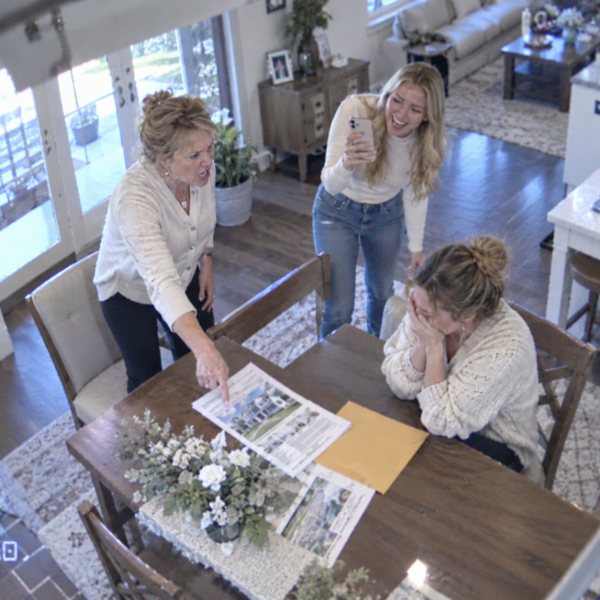
My mother didn’t raise her voice when she told me I was losing my home.
That made it worse.
She slid a glossy real-estate listing across Grandma’s oak dining table, the same table where I had spent three years crushing pills into applesauce, sorting medical bills, and pretending not to notice how scared Grandma looked near the end.
“We’re selling,” Mom said. “You have sixty days to leave.”
For a second, all I heard was the refrigerator humming behind me.
My younger sister, Lauren, lifted her phone before I even answered. A red recording light blinked on the screen.
“Finally,” she said, laughing. “Good luck, loser.”
Mom didn’t tell her to stop.
The listing showed our house in Maplewood, New Jersey, photographed in perfect spring light. Four bedrooms. Original hardwood. “Rare family estate.” Asking price: $1.18 million.
My coffee went cold between my hands.
“Since when do you own Grandma’s house?” I asked.
Mom’s mouth tightened. “Since I’m her daughter. Don’t make this ugly, Emily.”
I looked at Lauren’s phone. Then at the listing. Then at the empty chair where Grandma used to sit.
People reveal themselves when they think you have nowhere else to go.
I stood, walked upstairs, and pulled a cream envelope from the back of my dresser drawer. Grandma had handed it to me six weeks before she died.
“Not yet,” she had whispered. “Take this to Daniel Reeves when you need it.”
Daniel was her estate attorney.
I had never opened it.
Forty minutes later, I was sitting across from him in a quiet office above a bank in downtown Morristown. Rain tapped the windows. My hands wouldn’t stop trembling, so I placed them beneath the table.
Daniel broke the seal.
Inside were three pages and a small brass key taped to a note.
His eyes moved across the first page once.
Then again.
The color drained from his face.
Without explaining, he stood, crossed the room, and locked the office door.
The click sounded much louder than it should have.
“Ms. Somers,” he said carefully, using the formal voice lawyers save for moments that matter, “you need to sit down.”
“I am sitting.”
He looked at me.
Then he turned the document around and pointed to one line.
The house my mother had just listed for sale was not hers.
It had never been hers.
And according to the document in front of me, Grandma had made sure it belonged to me.
Daniel let me read the sentence three times before he spoke.
Six months before her death, Grandma had transferred the Maplewood house into the Eleanor Somers Living Trust. Daniel had prepared the documents, two unrelated witnesses had signed them, and the deed had been recorded with the county. Under the trust, I became successor trustee at Grandma’s death and sole beneficiary of the house.
Mom inherited cash, jewelry, and Grandma’s investment account.
She did not inherit the property.
“She knows about the trust?” I asked.
“She was sent notice after your grandmother died.”
That hurt more than the threat at the kitchen table.
Mom hadn’t misunderstood.
She had counted on me not knowing.
Daniel opened his laptop. “There’s something else.”
That morning, a title company had contacted his office because someone was trying to prepare a sale. Mom had represented herself to the listing agent as the property’s owner. No sale could close without the trust’s authorization, but Daniel said we needed to stop it immediately.
My phone buzzed.
Lauren had posted part of her recording online.
There I was at Grandma’s table, pale and silent, while Mom announced I had sixty days to leave. The caption read:
SOME PEOPLE NEED TO LEARN WHEN THEY’RE NOT WANTED.
Comments were already appearing.
I stared until the words blurred.
Daniel asked, “What do you want to do?”
For one reckless second, I wanted to post the trust document beneath Lauren’s video and humiliate them both.
Instead, I locked my phone.
“Nothing online.”
By five o’clock, Daniel had sent formal notice to the brokerage, title company, Mom, and Lauren. The listing had to be withdrawn. Nobody had authority to sell, mortgage, or transfer the property without my signature as trustee.
Mom called twelve times.
I answered the thirteenth.
“What did you do?” she shouted.
“Exactly what Grandma told me to do.”
Silence.
Then her voice changed.
“You manipulated her. You were with her every day. You filled her head with things.”
My fingers tightened around the phone.
I remembered bathing Grandma when she could no longer stand. Sleeping on the couch when her breathing became uneven.
“You can challenge the trust,” I said. “Talk to your lawyer.”
Mom laughed once, but there was fear beneath it.
Then Daniel slid another file across his desk.
On top was a notarized statement from Grandma’s physician confirming her mental capacity on the day she signed.





