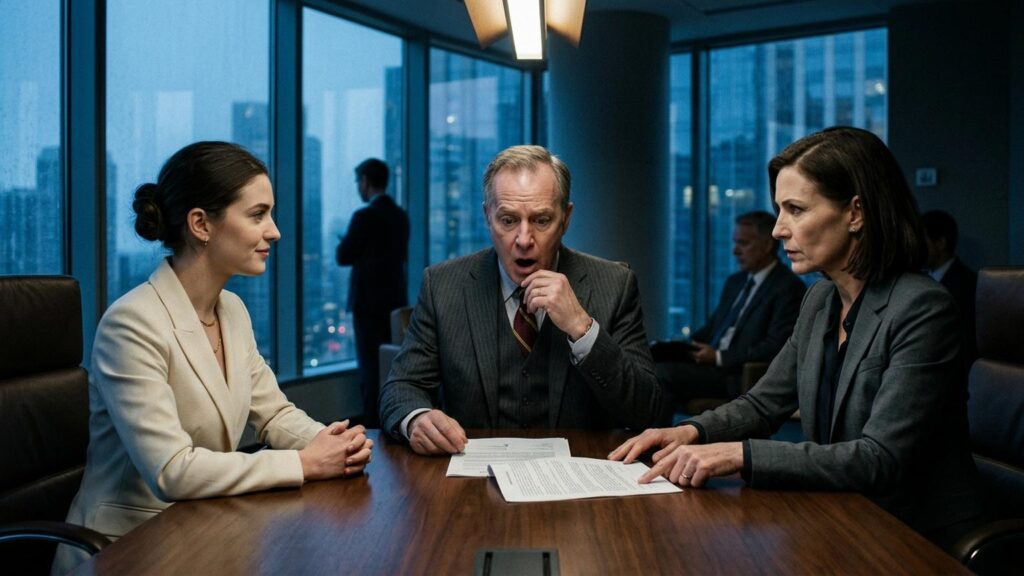
Mom pressed her lips together.
Dad reached for the receipt, but Mr. Reynolds pulled it away.
“You’re telling me you accepted money for a house you couldn’t legally sell?”
Dad pointed at me.
“She interfered with a perfectly legitimate family arrangement!”
Then he turned toward Susan.
“My father needs assisted living. We were doing this to protect him.”
I remembered Grandpa telling me how much he missed his garden while lying in the hospital. He’d asked whether the tomatoes were getting enough sunlight and whether someone had remembered to fill the bird feeder.
He’d never asked to move.
Richard opened his laptop.
“Henry anticipated that explanation.”
My mother went still.
The attorney explained that Grandpa had also executed a new, limited financial authorization allowing me to manage specified bills while he recovered. It did not transfer ownership of the house or permit me to sell it.
“Your father wanted his home protected,” Richard said. “Nothing more.”
Jason suddenly stood.
“We’re leaving.”
“Sit down,” Dad snapped.
But Richard wasn’t finished.
“There’s another matter. Henry asked me to preserve the messages your mother sent him after receiving notice that the power of attorney had been revoked.”
Mom’s expression changed.
“I was trying to help him.”
Richard turned his laptop toward the table.
“Then perhaps you can explain this.”
An email appeared, dated the morning after Grandpa’s surgery.
I recognized my mother’s address.
And beneath the subject line, I saw the beginning of a sentence that made my hands go cold.
“We have to finish the sale before Henry gets home, because if he finds out what Jason did with the money…”
Richard scrolled through the email.
Mom had forwarded a message to Grandpa without realizing she’d included an earlier conversation with Dad and Jason.
The rest of the sentence was there for everyone to read.
“…we won’t be able to put the money back. Jason already used his share for the truck, and we used the rest to cover our overdue business loan.”
My father stared at the screen.
The Reynolds couple sat motionless.
I looked at Mom.
“You told Grandpa the money was going toward his medical care.”
She opened her mouth, then closed it.
Dad rubbed his forehead.
“We were going to replace it after closing.”
“With money from selling his home?”
Neither answered.
Richard explained that Grandpa had become suspicious when Mom repeatedly asked him to sign documents at the hospital. He’d requested legal advice because he believed his family was making plans he hadn’t approved.
The notarized revocation was only part of his preparations.
Grandpa had also instructed his attorney to notify the title company and preserve the correspondence showing that my parents knew their authority had ended.
He hadn’t been confused.
He’d been protecting himself.
Mrs. Reynolds began crying quietly.
“We sold our old house because you promised us this one.”
Her husband squeezed her hand.
Dad looked away.
Susan explained that the closing could not proceed and that the Reynolds would need independent legal advice about recovering their deposit and any other losses.
The buyers left without shaking anyone’s hand.
For the first time, Jason seemed to understand that the money he’d spent wasn’t simply an advance on an inheritance.
It belonged to people who had trusted our family.
In the following weeks, the Reynolds hired an attorney. My parents negotiated repayment of the $24,000 they’d collected, including the money Jason had spent.
Jason sold his truck to raise his portion. Dad arranged a personal loan to cover the remaining balance.
Grandpa’s house was never used as collateral.
The buyers eventually recovered their deposit through a written settlement. The failed transaction cost them time and legal expenses, and they decided not to pursue a further lawsuit after reaching the agreement.
My parents’ relationship with Grandpa changed permanently.
He refused to restore Dad’s power of attorney and instructed his attorney that future financial matters were to be handled only through arrangements he personally approved.
Two weeks after the failed closing, Grandpa came home.
I was standing on the porch when the medical transport vehicle pulled into the driveway.
He looked smaller than I remembered.
His cardigan hung loosely around his shoulders, and he needed both hands to steady himself as he climbed the steps.
But when he saw the white house, he smiled.
“Still standing, isn’t she?”
I laughed, although my eyes were burning.
“Yes, Grandpa.”
Inside, his favorite chair was back beside the window. I’d retrieved his knitted blanket from storage and folded it across the armrest.
He touched it with trembling fingers.
“Thought they’d thrown this away.”
“I wouldn’t let them.”
He lowered himself carefully into the chair.
For a while, we sat without speaking.
Then he looked at me.
“Did your father ever apologize?”
I shook my head.
“Not properly.”
Grandpa nodded.





