But fear didn’t excuse what he’d done.
I told Daniel I needed time and that any rebuilding of our relationship would depend on honesty.
That summer, I decided to stay in the brick house.
I hired someone to repair the porch steps and planted lavender beside the walkway.
I also took a short trip with my oldest friend, Susan.
It was the first time I’d traveled without Robert in nearly forty years.
I cried on the plane.
Then I watched the clouds through the window and kept going.
One evening in September, I found an old note tucked inside Robert’s recipe book.
It was written on the back of a grocery receipt.
Margaret likes the porch light left on when she comes home late.
I stood in the kitchen holding it.
He’d written that years before he became ill.
Such a small thing.
Such an ordinary kindness.
Robert hadn’t been perfect. Neither had our marriage.
But he’d known I needed a place where I felt safe.
And in his final months, he’d tried to make sure I didn’t lose it.
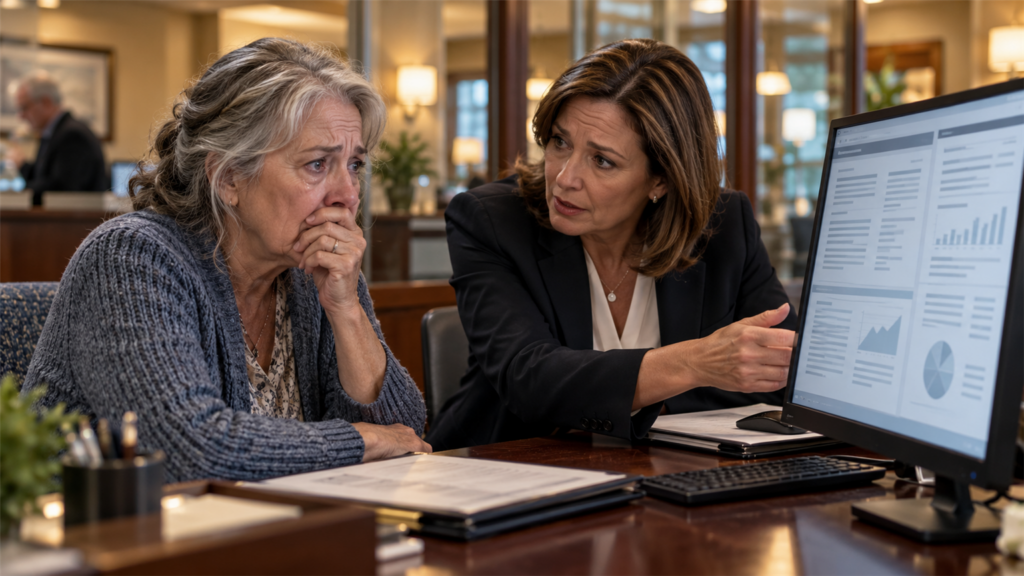
Six months earlier, I’d walked into a bank believing I was simply changing my address.
Instead, I discovered that my son had been preparing to take control of decisions I hadn’t agreed to make.
I almost lost my home because I was too exhausted by grief to question the people who said they were helping.
My husband left me savings, a house, and one final warning.
But the most important thing I recovered wasn’t money.
It was the right to decide what happened to the rest of my life.





