I’d almost closed the file when Leah touched my arm.
“Wait. There’s more.”
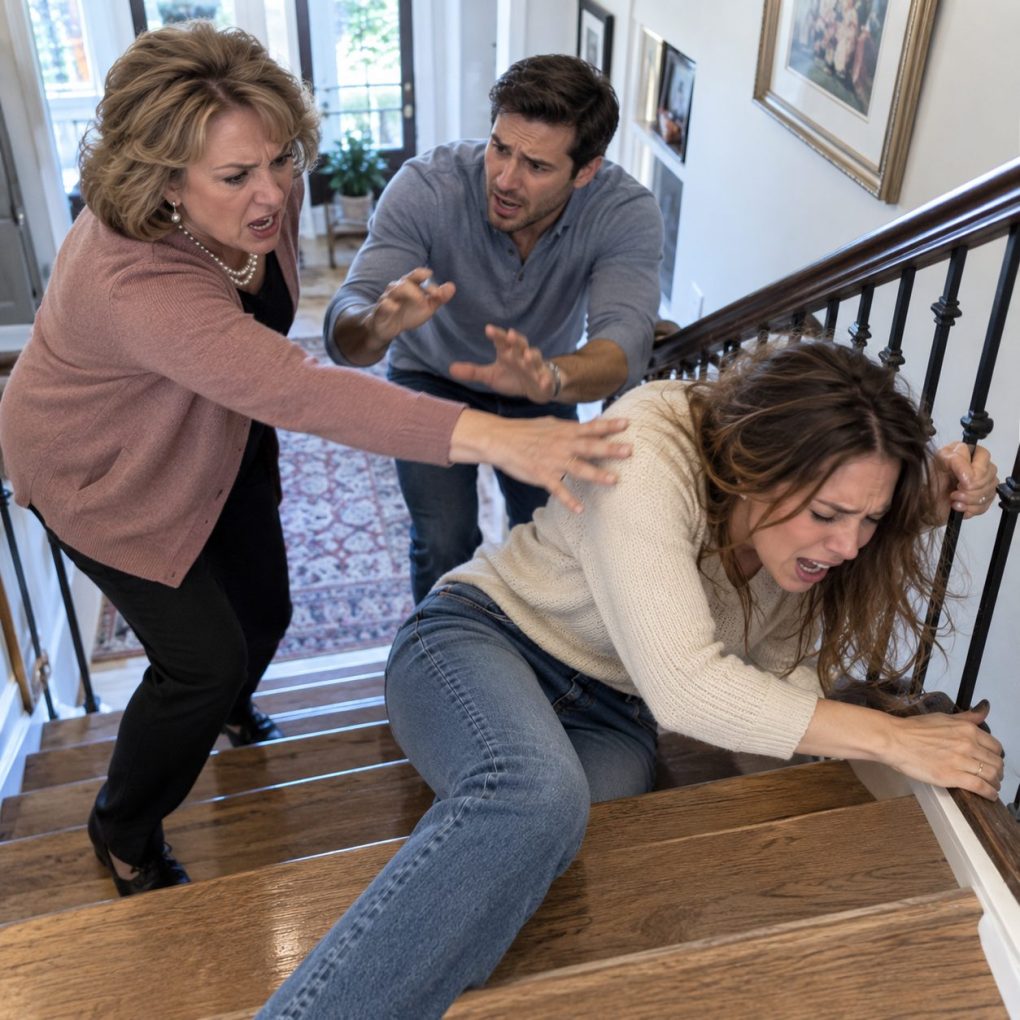
After the ambulance took me away, the camera kept recording. Patricia walked back into the kitchen. Daniel followed, closing the door behind him.
He glanced up toward the blinking camera.
And I heard him say something that told me this hadn’t simply been another moment when he failed to protect me.
He’d known what his mother was doing all along.
“I told you not to touch her where people could see,” Daniel said on the recording.
Patricia dropped the dish towel onto the counter.
“She provoked me.”
“You did the same thing in October,” he replied. “Now there are witnesses. I’ll tell them she fell, but you need to stop.”
I watched his face on the laptop screen.
For weeks I’d wondered whether he’d understood how frightened I was when his mother shoved me into the laundry-room doorframe. I’d believed he hadn’t realized how hard she pushed.
He’d known. And he’d been more worried about witnesses than my injuries.
Leah closed the laptop. She didn’t reach for a speech or tell me I was strong. She made toast, set it beside my medication, and waited while I found the courage to eat.
My attorney helped me preserve the original video and provide it to the investigating officer. Leah and two Thanksgiving guests gave statements. The hospital supplied records documenting the fresh fractures and the older healing injury. Those images supported the timing of my injuries; they could not, by themselves, establish who caused them.
Patricia was charged with assault. Months later, she accepted a plea agreement that included probation, counseling, and an order barring contact with me. Daniel’s recorded conversation and his misleading account became part of the investigation, although he wasn’t automatically charged merely for what he’d told hospital staff.
I filed for divorce.
Daniel showed up at Leah’s door once, carrying the blue recipe box he’d rescued from the garage.
“Abby, I love you,” he said. “I didn’t know she’d hurt you this badly.”
I held the door partly closed.
“You knew she’d hurt me before.”
He looked down at the box.
“I thought keeping everybody calm was the right thing.”
“Everybody except me.”
He set the box on the porch. For a moment, his fingers rested on its chipped handle. Then he walked away.
Over the next several months, we dealt with our jointly owned house through lawyers. I rented a small apartment close to work. My ribs healed slowly; I learned to sleep on my left side again and stopped wincing when I reached for the top shelf.
Some days, I still caught myself rehearsing apologies for things I hadn’t done. Counseling helped me recognize the habit before I acted on it.
The following Thanksgiving, Leah came over with grocery bags and a lopsided pumpkin pie.
I used Mom’s recipe cards to make the stuffing. One had a little butter stain beside her note: Add more broth if it seems dry.
For years, I’d kept those cards in a drawer because Patricia called them clutter. Now they stood openly on my counter, held upright by a chipped ceramic mug.
As I took the turkey from the oven, Leah reached across me for a serving spoon.
I flinched before I could stop myself.
She noticed, stepped back, and waited.
“Sorry,” I said automatically.
“You don’t have to apologize,” she replied. “I’ll wait.”
We ate by the window while late sunlight stretched across the table. There were no raised voices, no demands to keep peace, no one explaining why another person hadn’t meant to hurt me.
Leah cut the pie and pushed the larger piece toward me.
“Your mom would’ve liked this place,” she said.
I glanced at the recipe box on the shelf, then at the quiet kitchen.
For the first time in a long while, I took a deep breath without stopping halfway.
“Yes,” I said. “I think she would.”





