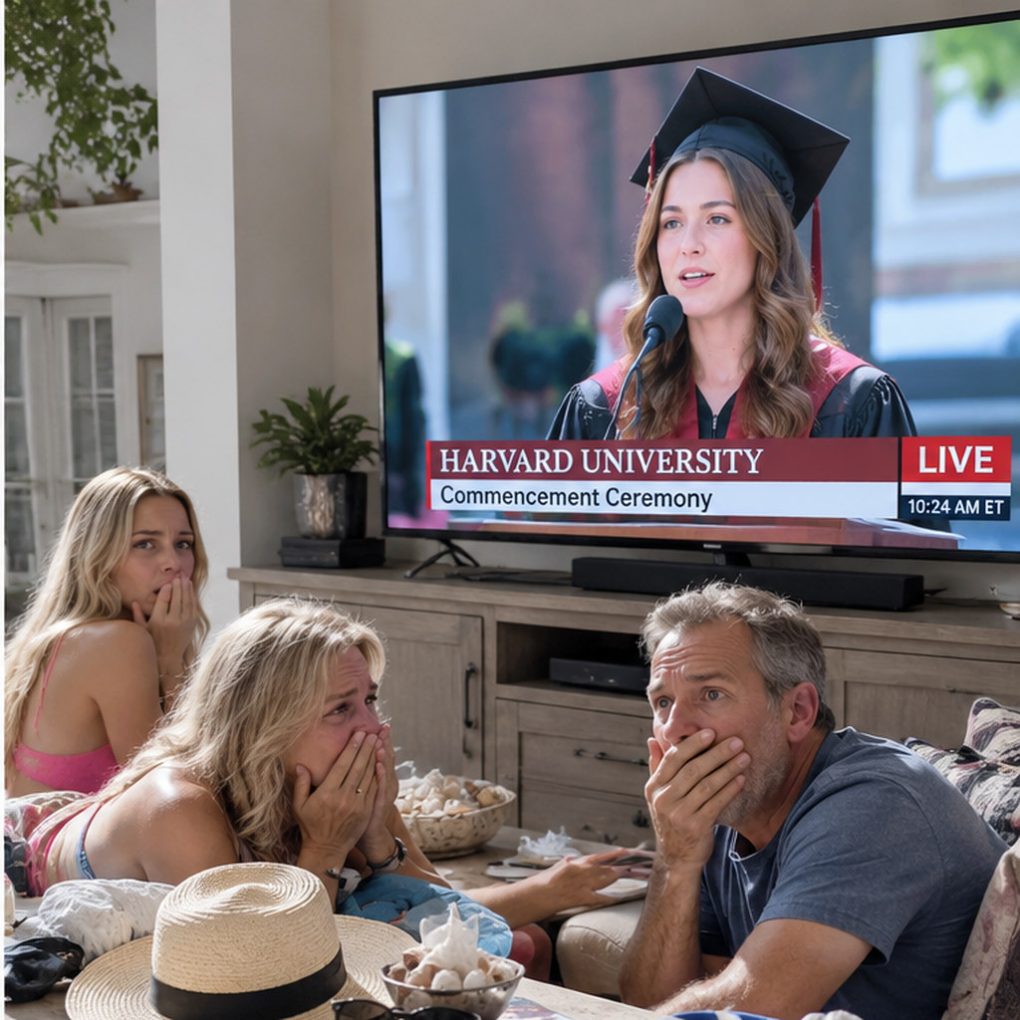
“You did.”
“We’d just flown back from Mexico.”
“You knew when my ceremony was.”
He exhaled.
“Your sister needed that vacation. She’d been having a difficult year.”
I looked toward Mrs. Reed, who was quietly asking the waitress for another napkin.
“So did I, Dad.”
He didn’t answer.
Then Mom took the phone.
“Listen carefully. We’re going to arrange professional graduation pictures next weekend. You’ll wear your gown, and we’ll explain that the family celebrated privately.”
“I’ve already graduated.”
“Don’t be difficult, Emily. We’re trying to make things right.”
“No, you’re trying to make it look like you were there.”
Her voice sharpened.
“After everything we’ve done for you?”
I thought about the financial aid forms I’d completed alone, the Thanksgiving shifts I’d worked on campus, and the winter afternoon I’d eaten instant noodles because sending money home for Madison’s car repair had emptied my account.
“Mom, I need to go.”
She hung up first.
Mrs. Reed watched me set down my phone.
Then she reached into her handbag and removed her own.
“Emily, there’s something I wasn’t going to show you today.”
On her screen was a message Mom had sent two weeks earlier.
Please don’t go to Emily’s graduation. It’ll only encourage her to make a big production out of it.
I looked up.
Mrs. Reed’s eyes filled.
“Sweetheart, there’s another message. Your mother sent it after she saw us together on television.”
She turned the phone toward me.
And what Mom had written made me realize she wasn’t merely ashamed of missing my graduation. She was angry that someone else had shown up.
Mom’s second message was worse.
Delete those graduation pictures with Emily. People are going to think you’re her mother. You had no right to make us look like we abandoned her.
Mrs. Reed had replied with one sentence.
I wasn’t trying to replace anyone. I came because Emily invited me.
I read the exchange twice.
Across the restaurant table, Mrs. Reed was folding her paper napkin into smaller squares. She looked uncomfortable, as though she’d betrayed a confidence by showing me.
“I’m sorry,” she whispered. “I didn’t want to spoil your day.”
I reached across the table and covered her hand with mine.
“You didn’t.”
Then I looked at the white daisies beside her plate.
“You were the best part of it.”
Mrs. Reed had taught me English for three years. When my parents missed my first debate tournament, she’d driven me home afterward. When I couldn’t afford application fees, she’d helped me request waivers. When my Harvard acceptance arrived, she was the first person I called.
She’d never bought me expensive gifts.
She’d simply kept showing up.
That night, I posted one graduation photograph.
It showed Mrs. Reed standing beside me, holding the daisies, her face crinkled with the same proud smile I’d seen at my high school graduation.
I wrote:
Four years ago, this woman told me I belonged at Harvard before I believed it myself. Today, she came to watch me graduate. Thank you, Mrs. Reed, for never letting me feel alone.
I didn’t mention my parents.
I didn’t need to.
By the following morning, the photograph had been shared by former classmates and teachers. People left messages about mentors who’d changed their lives.
Mom called twice.
I didn’t answer.
Dad finally sent a text.
I watched your entire speech. I didn’t realize how much you’d accomplished.
I sat on my bed for a long time, staring at those words.
Then I replied.
Dad, you didn’t know because you stopped asking.
He didn’t respond for three days.
When he finally called, his voice sounded different.
“Emily, I found the graduation invitation on the kitchen counter.”
I closed my laptop.
“Okay.”
“Your mother said it was probably just a small ceremony.”
“It was my college graduation, Dad.”
“I know.”
There was a long silence.
“I should’ve been there.”
My throat tightened.
“Yes. You should have.”
He began to explain the trip, how Madison had been struggling, how everyone was exhausted. Then he stopped himself.
“None of that changes anything, does it?”
“No.”
For once, he didn’t ask me to make him feel better.
Mom was less willing to acknowledge what happened. She sent messages accusing me of embarrassing the family, then suggested we take photographs together so she could post them online.
I declined.
Madison eventually wrote, It’s not like you graduated without anyone there.
I looked at the picture of Mrs. Reed on my desk.
You’re right, I answered. Someone was there.
I didn’t argue further.
Three months later, I began a research fellowship in Boston. I rented a small apartment, bought secondhand furniture, and framed my graduation photograph above the bookshelf.
Dad occasionally called to ask about my work. Our conversations were awkward, but he listened more than he used to.





