“She is smiling,” he said.
Mrinalini was silent for a moment.
Then she whispered, “Good.”
Avinash took a slow breath.
“Didi, I know I failed her.”
“Yes,” she replied.
He closed his eyes.
“But I’m trying to change.”
Mrinalini’s voice softened.
“Then keep trying. Especially when nobody is watching.”
A year later, Sulochana celebrated her seventy-ninth birthday.
There were no expensive decorations.
No grand party.
Just family, homemade food, and a small cake.
Mrinalini came from Ahmedabad.
The grandchildren decorated the courtyard.
Avinash made tea.
Devyani prepared Sulochana’s favourite vegetable dish.
And Sulochana sat in her old chair, wearing the gold chain Harivansh had kept safely in the metal box.
When Avinash fastened it around her neck, she began crying.
“Your father gave me this on our tenth anniversary.”
Avinash smiled sadly.
“I know.”
She touched the chain.
“I thought it was gone.”
He kissed her forehead.
“Some things should never have been taken away from you.”
Later that evening, Sulochana stood beside Harivansh’s photograph.
She touched the frame gently.
“You were right,” she whispered.
Avinash heard her.
“About what, Amma?”
She smiled through tears.
“That a home is not truly yours unless you can grow old in it without fear.”
Avinash lowered his head.
For the first time, he understood that his father had not hidden those documents to protect money.
He had hidden them to protect the woman who had spent her life protecting everyone else.
And Sulochana finally understood something too.
She did not have to earn her place in the house by cooking, cleaning, staying silent, or making herself smaller.
She belonged there because she was a person.
Because she had helped build that home.
Because she had loved her family.
And because dignity does not expire with age.
The next morning, at six, she woke to the sound of temple bells.
She washed her face in her own bathroom.
Then walked slowly into the courtyard.
Avinash was waiting with two cups of chai.
He handed her one.
“Good morning, Amma.”
She smiled.
“Good morning, beta.”
They sat together beneath the neem tree.
For a long time, neither spoke.
There was no need.
The silence was no longer the silence of neglect.
It was the quiet of two people learning how to love each other better.
And as the morning sunlight touched the walls of the house, Sulochana whispered a prayer.
Not for wealth.
Not for property.
Not even for more years.
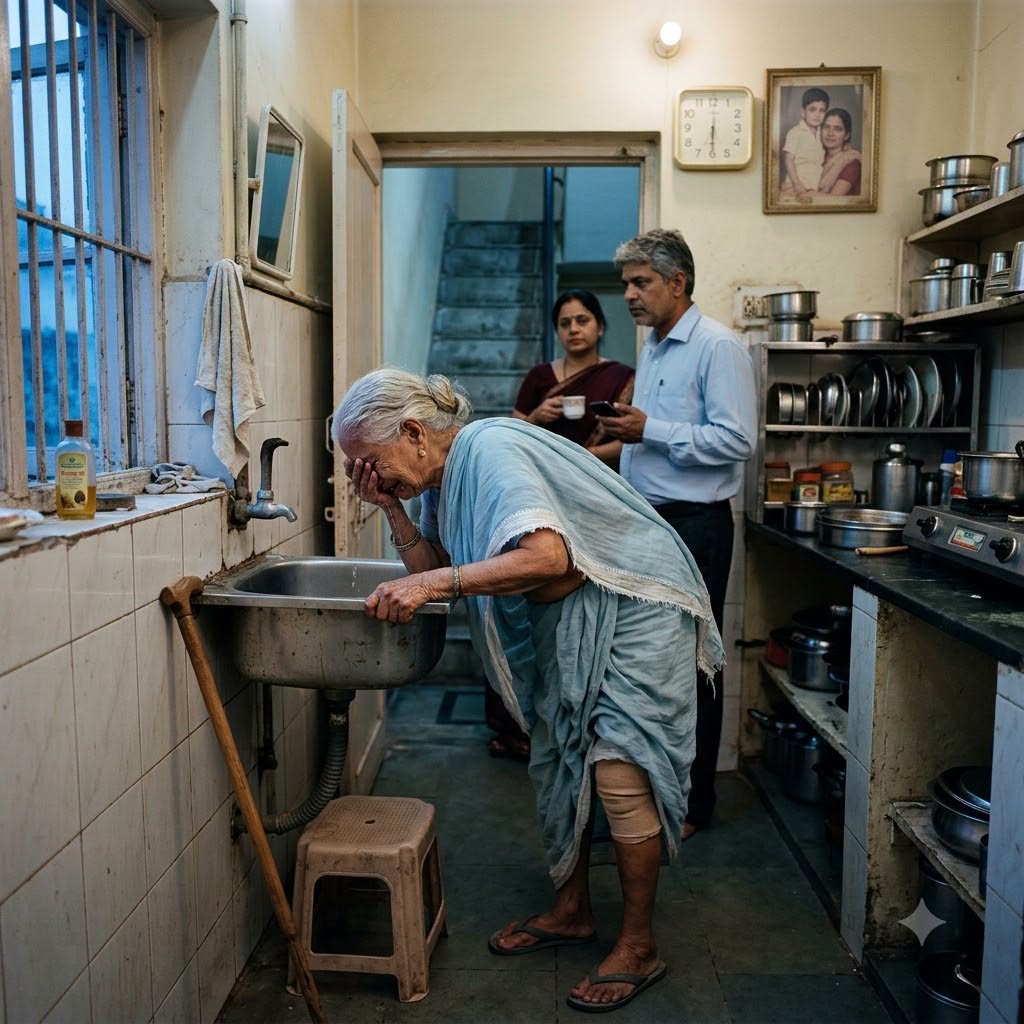
Only that no parent should ever have to collapse beside a kitchen sink before their children remember that they deserve a place at the table.
If you were Sulochana, could you forgive a son who allowed you to live in a storeroom for eight months while others occupied your bedroom? And should Devyani be forgiven after helping her father pressure an elderly woman over property? Share what you feel in the comments, and follow the page for more unforgettable stories about family secrets, elderly parents, betrayal, and the dignity every mother deserves.





