“…el mismo hombre. Pradyumna Mehta. Pero el nombre que usó cuando entró en nuestras vidas no era el que figuraba en su partida de nacimiento.”
Me quedé mirando la pulsera del hospital.
El nombre impreso debajo del número de identificación era Mahendra Sethi.
Nunca lo había oído antes.
Pero la fotografía que acompañaba a la carta mostraba un rostro conocido.
Pradyumna.
Más joven, bien afeitado, con una camisa blanca en lugar de los trajes caros que recordaba.
Me empezaron a temblar las manos.
“Charulata ji”, susurré, “por favor, mire esto”.
El trabajador de protección infantil examinó los documentos sin tocar la pulsera.
“Bhairavi ji, debemos conservarlos con cuidado. Podrían ser pruebas.”
Afuera, los gritos se hicieron más fuertes.
“¡Soy el padre del niño! ¡Tráiganlo de inmediato!”
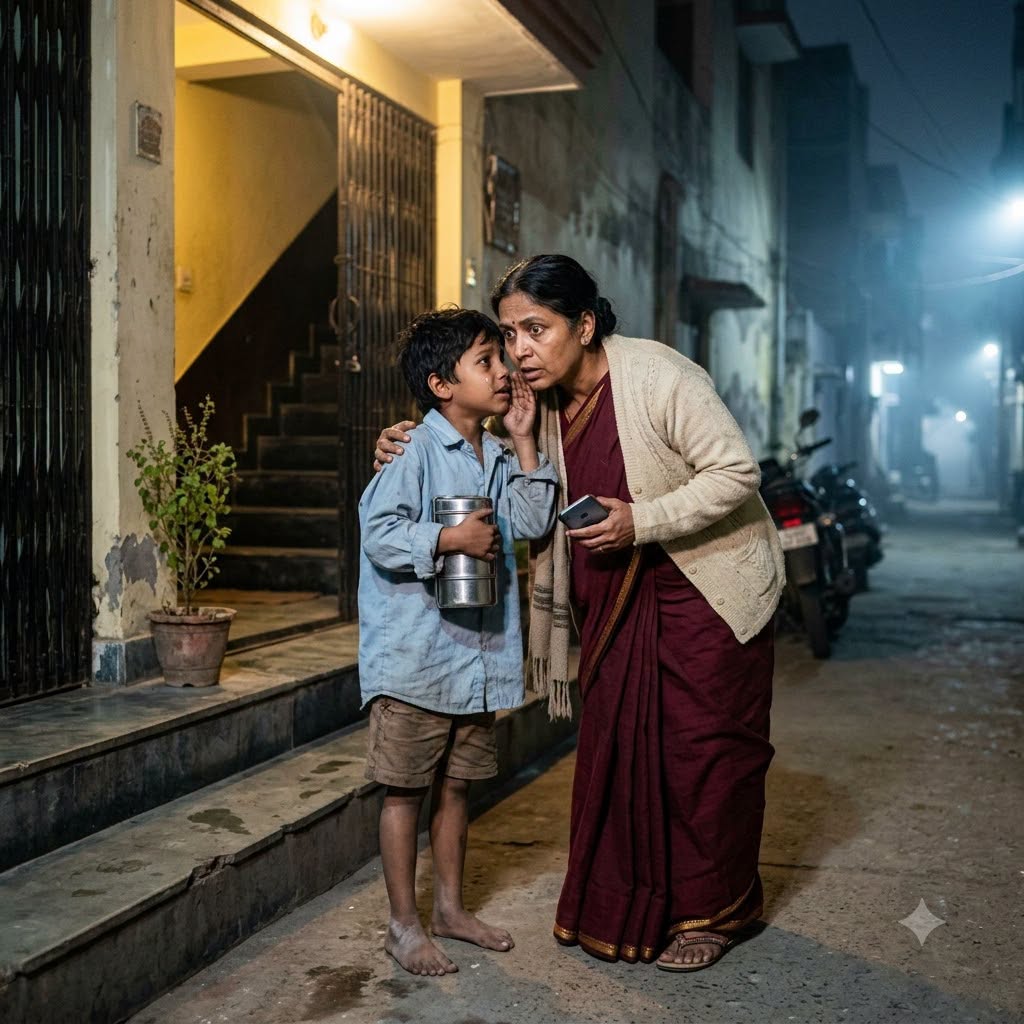
Chirag se pegó a mi costado.
“Tía, por favor, no deje que me vea.”
Me arrodillé junto a él.
“Chirag, mírame.”
Sus ojos asustados se encontraron con los míos.
“No va a bajar. La policía está aquí y nos aseguraremos de que esté a salvo.”
Él tragó.
“¿Encontrarán a mamá?”
Sentí que se me acumulaban las lágrimas.
“La están buscando ahora mismo.”
Él estudió mi rostro.
Luego susurró: “Te pareces a ella”.
Se me rompió el corazón.
Quería decirle que yo era su abuela.
Quería abrazarlo y recuperar los siete años perdidos.
Pero esa noche ya había experimentado demasiado miedo.
Así que simplemente dije: “Tu madre y yo pertenecemos a la misma familia”.
Él asintió.
“Por eso me envió.”
Antes de que pudiera contestar, sonó el teléfono de Charulata.
Ella se hizo a un lado.
Observé cómo cambiaba su expresión.
Luego se giró hacia el agente de policía.
“Han localizado a una mujer en la propiedad industrial.”
Me levanté tan rápido que mi silla rozó el suelo.
“¿Es Ishwari?”
Charulata dudó.
“La han trasladado a un hospital. Está viva, pero su estado es grave.”
Me flaquearon las rodillas.
Vivo.
Mi hija estaba viva.
Me agarré al borde de la mesa.
“Por favor, llévame con ella.”
“Nos encargaremos de eso”, dijo Charulata. “Pero primero, los agentes necesitan hablar con el hombre de abajo”.
Miré hacia la entrada.
Durante ocho años, me imaginé qué le diría a Pradyumna si alguna vez volvía a verla.
Había ensayado las acusaciones.
Preguntas.
Amenazas.
Pero ahora, con mi nieto temblando a mi lado, solo deseaba una cosa.
Para mantenerlo alejado de nosotros.
La policía llevó a Pradyumna a una habitación aparte, cerca de la oficina de seguridad.
Podía verlo a través de la mampara de cristal.
Era más pesado de lo que recordaba.
Su cabello había comenzado a debilitarse.
Pero su expresión permaneció inalterada.
Impaciente.
Con derecho.
Convencido de que alzar la voz haría que todos obedecieran.
Señaló hacia el vestíbulo.
“¡Esa mujer se ha llevado a mi hijo!”
El agente le pidió que se identificara y explicara las circunstancias.
Pradyumna produced a driver’s licence.
The name on it was Pradyumna Mehta.
Then he produced a birth certificate listing himself as Chirag’s father.
I felt a terrible chill.
Charulata examined the documents.
“Sir, the child has expressed fear of returning with you. There are concerns about his mother’s safety. We cannot simply hand him over without appropriate checks.”
Pradyumna’s face darkened.
“My wife is mentally unstable. She fills the boy’s head with nonsense.”
I stepped forward.
“Where is Ishwari?”
He turned.
For one brief second, genuine fear crossed his face.
Then he smiled.
“Bhairavi Aunty. After all these years.”
I felt sick hearing him use that familiar name.
“Where is my daughter?”
“She left home.”
“She’s in a hospital.”
His smile disappeared.
The police officer looked sharply at him.
Pradyumna recovered quickly.
“She has been ill. I was trying to arrange treatment.”
I held up the letter.
“Then why did she send her son barefoot into the December cold to escape you?”
He said nothing.
I continued.
“Why did she tell him not to reveal where they lived?”
His jaw tightened.
“She’s confused.”
I looked at him.
“No. She was frightened.”
The officer asked us to stop arguing.
Pradyumna was taken aside for further questioning.
Chirag remained with the child protection team.
And I was escorted to the hospital where my daughter had been admitted.
During the drive, I opened the remaining document.
It was a copy of a complaint written by Ishwari several months earlier.
The pages were filled with dates, addresses, and descriptions of incidents.
She had documented threats.
Financial restrictions.
Repeated attempts to prevent her from contacting relatives.
She described being moved between rented houses whenever she tried to seek help.
Then came the paragraph that made my blood run cold.
I believe the man living with me as Pradyumna Mehta is actually Mahendra Sethi, formerly employed as an administrative coordinator at the private hospital where my father died.
I stopped reading.
The hospital.
Shashidhar’s final weeks.





