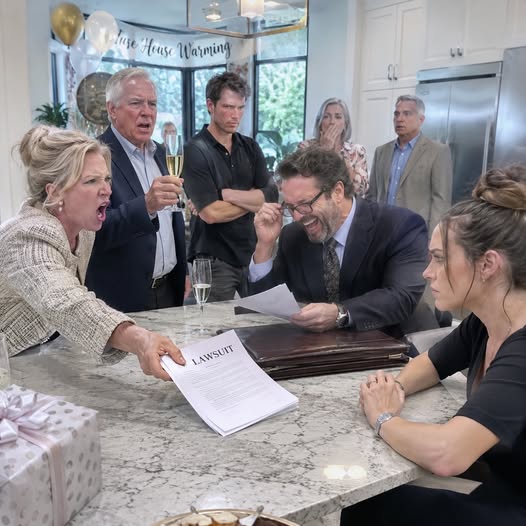
“The house is going to Tyler,” Dad announced, raising his champagne glass in my kitchen. “He needs a fresh start, and Emma has always been good at sharing.”
Twenty-three guests turned toward me. My unemployed brother stood by the back door with a suitcase I hadn’t noticed when he arrived.
“No,” I said.
Mom slid a packet across my new quartz island. “Then we’ll sue. You don’t have a choice.”
The top page said Complaint for Equitable Ownership. Underneath sat an agreement bearing my signature, promising to transfer my $500,000 house to Tyler.
I had never signed it.
Three months earlier, I’d bought this Columbus, Ohio, home after eleven years of saving. It had a narrow porch, a maple tree that shaded the upstairs bedroom, and a kitchen window over the sink. I could finally wash a coffee mug without staring at the brick wall of another apartment building.
My name was the only one on the deed. I paid the down payment and carried the mortgage.
Yet Mom smiled at our guests as though she were merely settling a seating arrangement.
“Tyler’s been through enough,” she said. “You can rent somewhere.”
At thirty-five, I was apparently old enough to fund my own house but not old enough to decide who lived in it.
For four years I’d also sent my parents $1,600 a month when Dad’s hours were cut. I’d skipped a vacation, replaced worn tires one at a time, and eaten leftovers at my desk while they assured me the support was temporary.
At Christmas, Tyler received a new television. I received a card reminding me to be grateful for family.
Now he was inspecting the hallway, discussing where his gaming setup would go.
“Emma, don’t make a scene,” Dad warned.
I looked at the little brass key I’d set beside the housewarming cake. I’d tied a blue ribbon around it on closing day because my grandmother used to say a home should be somewhere you could finally exhale.
“Put down the suitcase,” I told Tyler.
Mom tapped the packet. “Our attorney will make you.”
I photographed every page and called Rebecca Cole, the lawyer who’d handled my purchase. When she opened the attachment, she gave one startled, disbelieving laugh.
“Emma,” she said, “they’ve listed me as the attorney who prepared this transfer agreement.”
Dad straightened.
Rebecca’s voice grew cold. “I have never seen this document.”
Before anyone answered, my phone flashed with an alert from my mortgage lender.
Someone had just submitted that same agreement to request information about borrowing against my house.
Rebecca told me not to argue about ownership in my kitchen. “Tell them to leave. Save the documents and call the lender’s fraud department.”
Dad laughed. “Fraud? It’s a family arrangement.”
“It’s my house,” I said. “And you just tried to use it for a loan.”
Tyler stepped forward. “You don’t understand what I owe.”
Mom seized his arm, but he shook her off. “The landscaping business failed. Dad guaranteed the equipment loan. They can come after his savings.”
He looked at the floor. “I need the equity.”
The words stayed between us while the refrigerator hummed. Mom had spent months telling me Tyler only needed a quiet place to rebuild his confidence. Apparently, he also needed my largest asset.
“So you planned to put the house in his name,” I said, “then borrow against it?”
Dad reached for the papers. “We would’ve made the payments.”
“You told me that about your mortgage four years ago.”
My neighbor Leah, who’d brought a casserole, quietly gathered the other guests toward the front door. Tyler refused to move his suitcase until Rebecca spoke through my phone.
“An agreement isn’t a deed, and forged signatures don’t give anyone ownership. Emma is asking you to leave.”
He took the suitcase. Mom left the paperwork.
I didn’t sleep much. At 8:30 the next morning, a lender fraud specialist confirmed that someone had uploaded the purported agreement and a copy of my closing statement, asking how Tyler could obtain financing secured by the property. No loan had been approved, and nobody had changed the title. The inquiry was flagged, and I secured my accounts.
I remembered Mom photographing the closing folder beside my blue-ribbon key, saying she wanted to show her friends what I’d achieved. For the first time, that memory felt different.
Then Dad sent a message: Withdraw your accusation or we’ll file the lawsuit for real.
Rebecca reviewed the closing records and drafted a formal response. She also instructed me to preserve Mom’s packet for a possible police report.
That afternoon, Tyler posted online that I’d cheated my parents out of their “investment.” I answered nobody. Instead, I printed four years of transfers that had helped keep their own house afloat: $76,800, not counting repairs.
At six, Mom appeared at my front window while I was washing dishes. I kept the door locked.
“Your father might lose everything!” she called.





