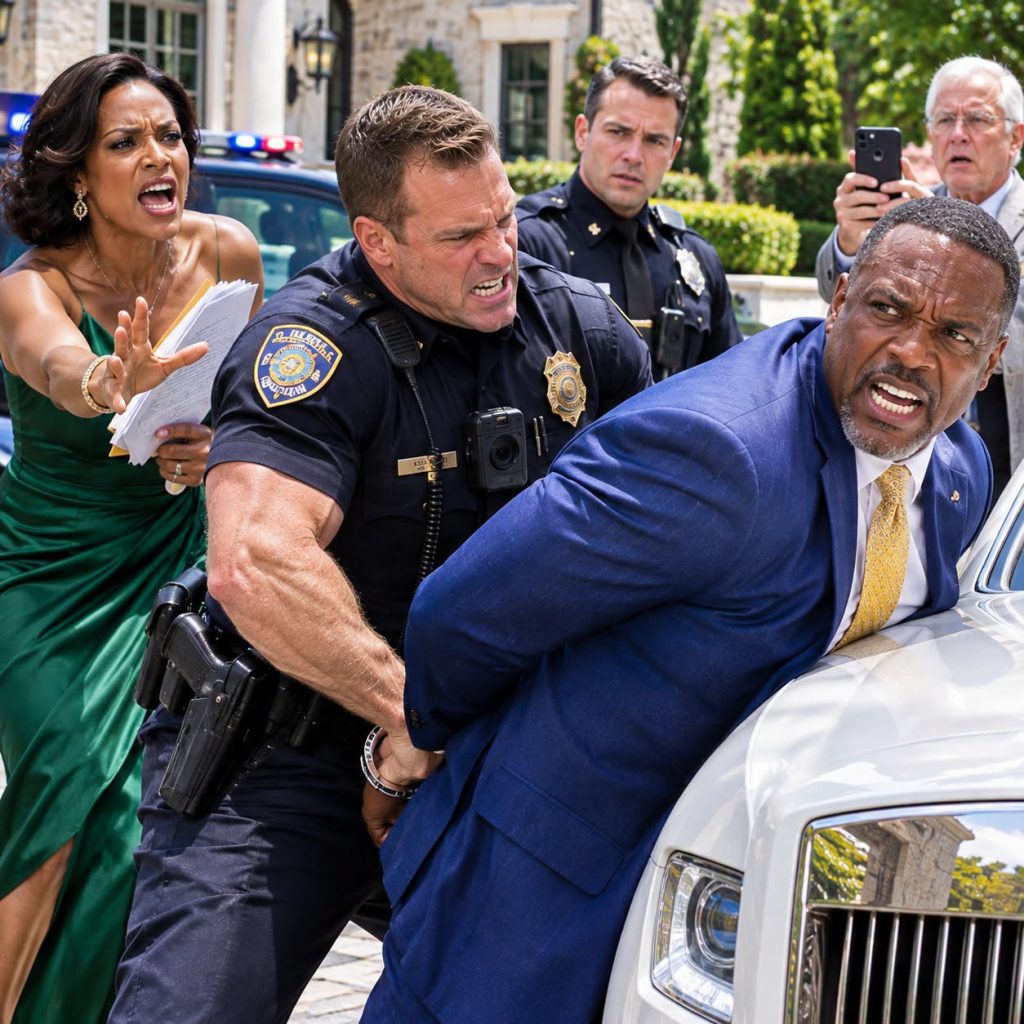
PART 2 — THE EVIDENCE THEY THOUGHT THEY HAD DESTROYED
Snow’s finger hovered over the switch. “Don’t,” I warned. Captain Derver stepped between us. “You don’t give orders here, Whitfield.” “You’re ordering an officer to disable security cameras while a prisoner is in custody. Think carefully.” Derver smiled. “I’m thinking about how easily a judge’s career can end.” He nodded. Snow flipped the switch. The red recording light disappeared. Two officers grabbed my arms and marched me into a holding cell. One shoved me so hard that I stumbled against the metal bench. “Watch yourself,” he muttered. I turned toward Derver. “I want my attorney and a phone call.” He leaned against the bars. “You’ll get both when I decide you’re ready.” Then he walked away, leaving me alone with a question that chilled me more than the handcuffs: How did he know about the Booker case before I did?
Nearly an hour passed before the station’s television suddenly displayed my photograph. A local news anchor announced, “Federal Judge Miller Whitfield was arrested outside his newly purchased home this morning.” Rebecca stood beside journalist Dana Kirby on the broadcast, holding our property documents while my neighbor’s recording played behind them. Snow entered the hallway and froze. “Captain!” he shouted. Derver stormed from his office, saw the screen, and slammed his fist against the counter. “TURN THAT OFF!” But it was too late. Every officer in the room had heard my name. Derver approached my cell. “Here’s what happens next,” he said. “You sign a statement admitting you became confrontational. We release you quietly.” “And Officer Snow?” “He made an understandable mistake.” I stepped toward the bars. “You call this an understandable mistake?” Derver’s eyes hardened. “Sign it, or the resisting charge stays.”
I refused. Within hours, the department released an eight-second body-camera clip showing me raising my voice while Snow restrained me. The footage began after Snow had grabbed my arm. By evening, prosecutors had added an allegation that I’d assaulted an officer, citing Snow’s claim that I deliberately struck him with my elbow. A judicial conduct complaint arrived at the courthouse the following morning, and my chief judge temporarily removed me from active assignments while the allegations were reviewed. Rebecca met me outside the station after my attorney secured my release. She threw her arms around me. “They’re trying to destroy you,” she whispered. “They’re trying to keep me away from something,” I answered.
That afternoon, my law clerk Pamela Reed called from the courthouse. “Judge, I found something strange.” “Tell me.” “The Booker civil rights case was assigned to you yesterday. Today, someone sent an anonymous complaint demanding your recusal. The complaint includes details from your arrest report that weren’t public.” My stomach tightened. “Who received it?” “The court’s administrative office. But there’s more. The department uses automatic cloud backups for body cameras. Even deleted local clips may have complete copies stored with timestamps.” I straightened. “Can we get them?” “Not without legal process. And Judge, whoever edited that video may not realize the original still exists.”
Before I could answer, tires screeched outside our house. Rebecca looked through the living-room window. “Miller… there’s a car at the curb.” Two men in dark jackets stepped out. One moved toward our front door; the other slipped around the side of the house. Then Pamela’s voice sharpened through my phone. “Judge, listen carefully. I found an email attached to the recusal complaint. It’s from Captain Derver, dated before your arrest paperwork was completed.” “What does it say?” I whispered. “It says, ‘Whitfield must be removed from Booker before discovery begins.’”
A violent crash erupted from the kitchen. Rebecca screamed. I grabbed her wrist and pulled her behind the hallway wall as glass scattered across the floor. A stranger stepped through the broken back door, holding a black tactical flashlight. “Where’s the judge?” he demanded. I shoved a wooden chair into his path. He lunged, caught my shoulder, and drove me against the refrigerator. I struck his wrist, twisted free, and pushed him backward through the doorway. Rebecca had already called 911. The man stumbled, looked toward the street, and fled when sirens sounded nearby.
My phone buzzed again. Pamela had sent me a photograph of a document bearing Derver’s signature. Beneath it was a list of officers implicated in the Booker case.
Officer Grant Snow’s name was at the top.
Then an unfamiliar number called.
“Judge Whitfield,” a voice whispered, “I’m inside the department. I know what happened. But if you want the original recording, you have to get to it before midnight.”
The line went dead.





