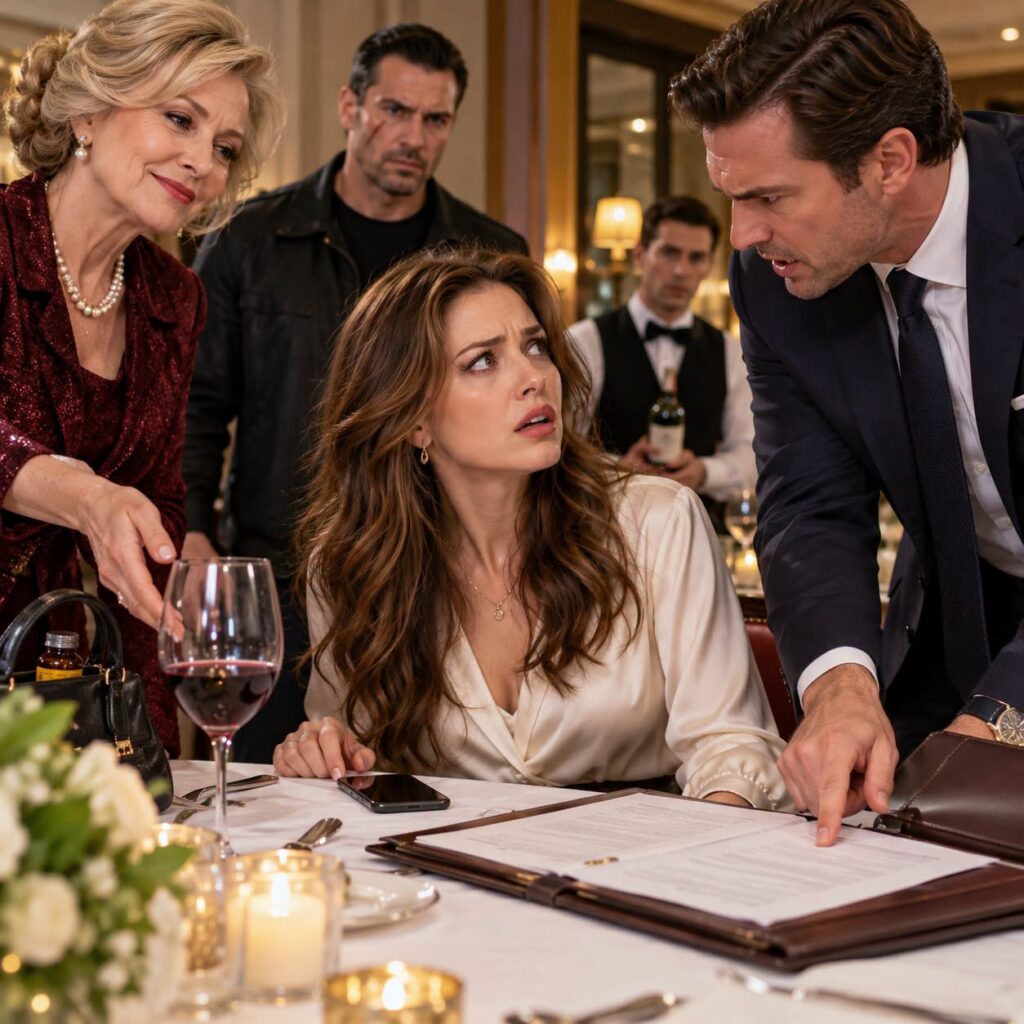
The metal hinge on my knee brace snapped just as my sister shoved me toward the stage. I hit the marble floor at her engagement party, and pain ripped through the leg surgeons had spent six hours rebuilding.
Vanessa pointed at me and laughed.
“Oh, come on, Claire! It was a sick prank!”
Three guests rushed forward. Someone shouted for a chair. I grabbed my knee before anyone could straighten it.
“Don’t move me,” I gasped. “Call 911.”
My mother stood beside the champagne tower, staring at my twisted brace as though it were an embarrassing centerpiece.
“You’re making a scene,” she whispered.
I stared back. “I didn’t fall by myself.”
Vanessa’s smile hardened. She looked stunning in her red silk gown, with a diamond the size of a grape on her finger. For weeks, she’d called this party her fresh start. Apparently, humiliating me was part of the celebration.
Eleven weeks earlier, a railing had collapsed at the loading dock of Glenmere Events, the Columbus event company our father left us. My knee had shattered against concrete. Two surgeries later, I could walk only with a locked orthopedic brace and a cane.
Vanessa knew the surgeon’s instructions. She’d driven me to physical therapy once, complaining the entire way about parking fees.
And she’d insisted I change into my green dress in the bridal suite that evening.
“Let me hold your brace while you fix the bandage,” she’d offered sweetly.
I’d left it on the vanity for less than five minutes.
Now one hinge hung sideways. A small screw rolled across the floor and stopped against a man’s polished shoe.
Daniel, Vanessa’s fiancé, crouched to pick it up. He was usually soft-spoken, the kind of man who apologized when someone else bumped into him. His face had gone white.
“Was this attached to your brace?” he asked.
“I don’t know.” I swallowed another cry. “Put it in a napkin. Please.”
Vanessa stepped toward him. “Baby, stop treating her like she’s dying. Claire loves attention.”
I looked past her toward the photographer, whose camera was still raised. Then toward the ceiling camera over the ballroom entrance. Our father had taught me one thing about running a business: when people start changing their stories, preserve the records.
“Don’t delete a second of that footage,” I told the photographer.
Vanessa spun around. “Excuse me?”
I wasn’t supposed to be managing company business that night. On Monday, an outside accountant was scheduled to review payments I’d found in our books. Vanessa knew about the review. She didn’t know I’d already copied the records to my attorney.
My mother bent toward Vanessa. The two of them exchanged a frantic look.
Then, beneath the chatter and the scrape of chairs, Vanessa muttered something I couldn’t catch.
Daniel did.
He stood so abruptly that the screw nearly slipped from his fingers.
“What did you just say about the loading dock?” he demanded.
Vanessa stopped laughing.
And for the first time that night, my mother looked genuinely afraid. Somewhere behind us, a waiter stopped pouring champagne. Nobody moved.
The brace might not have been her first sabotage.
I could barely breathe, but Daniel’s question had changed everything. If Vanessa had said what I feared, the accident that put me in surgery wasn’t an accident at all. And the people who’d helped me recover might have helped put me there.
“Answer me,” Daniel said. “Why did you tell your mother the brace was supposed to fail, just like the railing?”
Vanessa’s eyes flickered toward my mother.
“I said nothing of the sort.”
“You said it right beside my ear.”
My mother seized his wrist. “This isn’t the place.”
“Then where is?” I asked from the floor.
Paramedics arrived before anyone answered. I gave them my surgery date, described the sideways collapse, and asked them not to adjust the damaged brace unnecessarily. Daniel handed the loose screw to a police officer who’d responded with the ambulance. The officer photographed it first, then recorded where Daniel had found it.
Vanessa tried to leave through the catering corridor. I watched her disappear around the corner with my mother behind her.
“She’s getting rid of something,” I told the officer.
He didn’t promise an arrest. He asked for names, camera locations, and the address of the bridal suite. I gave him all three.
At the hospital, imaging showed a fracture near the previous surgical repair. My surgeon would need to determine whether another operation was necessary. I cried after the doctor left, not because I was weak, but because I’d spent eleven painful weeks learning to trust that leg again.
Daniel arrived after midnight with a folded sheet of paper and the photographer’s contact information.
“I need to tell you something,” he said.





