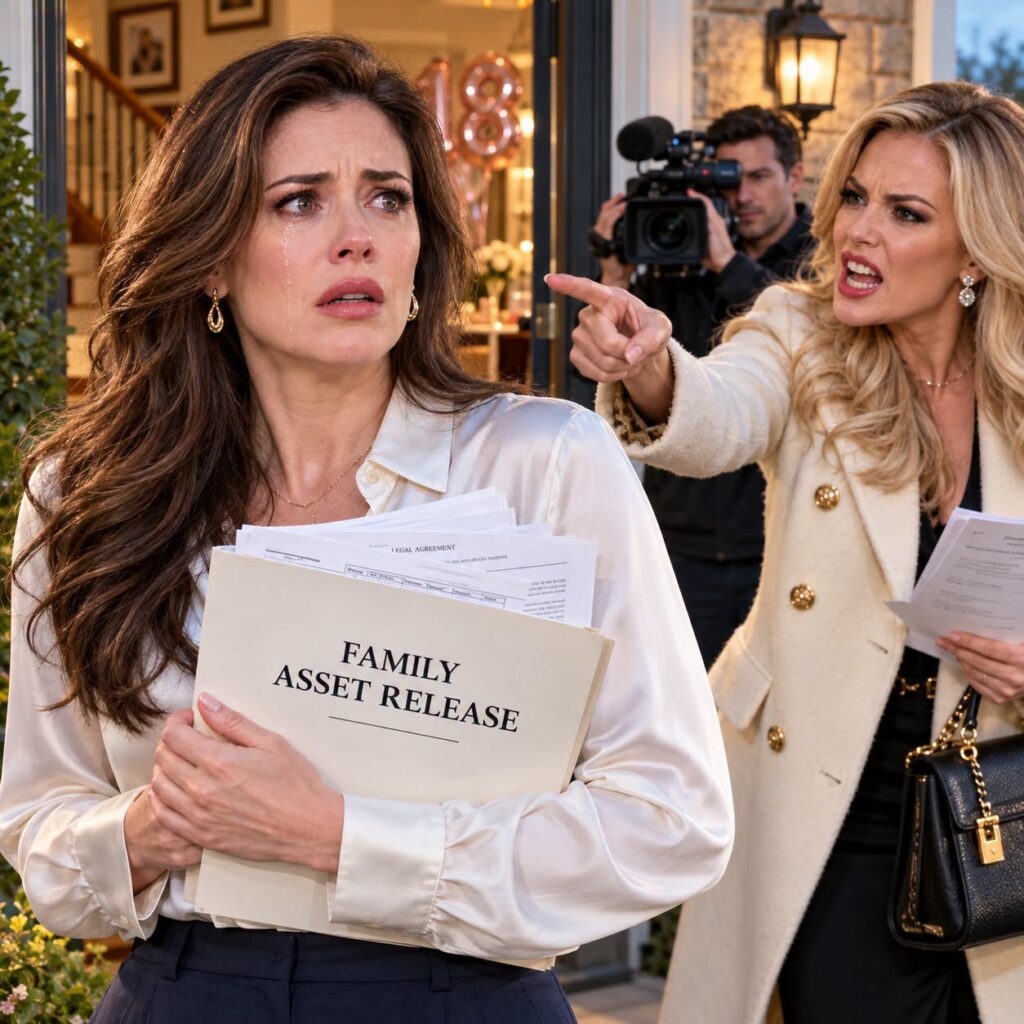
The first thing I saw on my father’s porch was my dead mother’s cedar chest, lying on its side in the rain.
The second was his text.
“Don’t come home anymore. The front door lock has been changed. We no longer trust you.”
I stood in the driveway, holding the groceries he’d asked me to buy that morning. Through the front window, I could see my younger sister, Claire, pouring wine into Mom’s good crystal.
My father watched from behind her.
I called him. He declined.
Then Claire opened the door just far enough to show me the new brass deadbolt.
“Dad’s done being controlled by you, Angela.”
“Controlled?” I held up the grocery bags. “I just paid his property insurance.”
She smiled. “Exactly. You keep reminding everyone what you’ve done. We don’t need your charity anymore.”
My father finally stepped forward.
“You’ve had your hands on this house long enough,” he said. “Claire’s helping me take my life back.”
I felt the old, familiar sting.
Seven years earlier, his construction business had collapsed. Foreclosure notices came in red envelopes. He’d begged me not to tell anyone, especially Mom, whose heart couldn’t handle another crisis.
So I’d used my savings to buy the house and satisfy the lender. He’d signed the sale paperwork himself. I paid the taxes, insurance, and every major repair afterward, while he stayed under a written month-to-month agreement.
I never told the neighbors. I let him keep his dignity.
Apparently, he’d mistaken my silence for weakness.
“Dad,” I said, “you can’t just—”
“Get off my property.”
Claire laughed. “See? She still thinks she gets a vote.”
Then she shoved Mom’s cedar chest down the porch steps. Its lid split against the concrete. Christmas photographs scattered across the wet driveway.
I knelt and gathered them before the rain could ruin her face.
“There’s a real estate appointment tomorrow,” Claire called. “Don’t embarrass us by showing up.”
I looked up.
“A real estate appointment for what?”
Neither answered. My father shut the door.
I carried the chest to my car and sat behind the wheel, shaking. Not because I’d lost access to the house.
Because anyone familiar with the county records would know my father couldn’t legally sell it.
And Claire knew that. I’d shown her the deed three months earlier when she demanded I transfer the property to Dad.
I opened my messages and typed:
“Perfect. That was a clever move. But you forgot one thing…”
Then I called my attorney, Denise Harper.
She answered on the third ring.
“Angela? It’s almost midnight.”
“They changed the locks,” I said. “And apparently they’re meeting someone about the house tomorrow.”
There was a pause. Then I heard her desk chair scrape.
“Forward me the text. And don’t go back there.”
Before hanging up, she asked one question that turned my stomach.
“Angela, did your father ever have access to your signature records?”
I remembered the locked filing cabinet I’d kept in his basement.
At 10:26 the next morning, my phone showed 190 missed calls.
Then Denise called.
“Angela,” she said, “we stopped the closing. But you need to hear whose name appears on the authorization.”
I gripped the phone.
“Yours,” she whispered. “As the person who supposedly gave your father permission to sell.”
I had never signed that authorization. Yet someone had produced a notarized document convincing enough to reach a closing table. My father wasn’t calling to apologize. He was calling because the paperwork had just become evidence.
“Email it to me,” I told Denise.
The first page carried my name, my address, and a signature that looked disturbingly familiar. The document claimed I’d granted my father power of attorney six weeks earlier, authorizing him to sell my home.
I zoomed in on the notary stamp.
“Claire knows that notary,” I said. “He handled paperwork at her old office.”
Denise was quiet.
Then she said, “Look at the attached disbursement instructions.”
The sale price was $486,000. After the mortgage payoff and expenses, the proceeds were supposed to land in an account belonging to CMW Holdings LLC.
Claire Margaret Whitcomb.
My sister.
I read the name three times, hoping it would change.
The title company had flagged the account mismatch during its final review. Denise had reached its fraud department before any money moved. The closing was on hold, not magically erased, and the property was still mine.
Then my father called again.
I finally answered.
“Angela, you’ve made a terrible mistake.”
“Did I sign that document, Dad?”
Silence.
“Claire said it was legal. She said because you bought the house for us, you couldn’t hold it over our heads forever.”
“That’s not an answer.”
His voice cracked. “She said if the sale didn’t happen today, we’d lose everything.”





