**It is your responsibility.**
I continued reading.
**Money can be spent. Buildings can be sold. Machines can be replaced. But the people who work beside you cannot be treated as numbers.**
**If you ever inherit this company, remember that your mother did not build it alone. Workers built it with their hands. Your father built it with hope. Your mother kept it alive with courage.**
I wiped a tear from my cheek.
Then came the final paragraph.
**And if the person standing beside you claims to love you while asking you to surrender your family, remember this: love does not require you to abandon the people who made you who you are.**
I folded the letter.
For the first time that morning, I understood why my father had hidden everything.
He hadn’t been preparing me to become wealthy.
He had been preparing me to recognize betrayal.
My mother touched my shoulder.
“What will you do now?”
I looked at the factory.
At the old house.
At the workers standing nervously near the workshop.
Then I looked at Julián.
“I don’t know what will happen to my marriage.”
He looked at me.
“But I know what happens to the company.”
“What?”
I held up the trust agreement.
“It stays with the people who built it.”
The lawyer smiled.
“We should begin the audit immediately.”
I nodded.
“Tomorrow.”
Then I looked at the old desk visible through my mother’s office window.
The desk had been my father’s.
The desk where he had hidden the truth.
The desk that had waited for me for thirty-nine years.
I walked toward it.
My mother followed.
I placed my hand on its worn wooden surface.
“Dad knew.”
My mother nodded.
“He always knew you would find your way.”
I smiled through my tears.
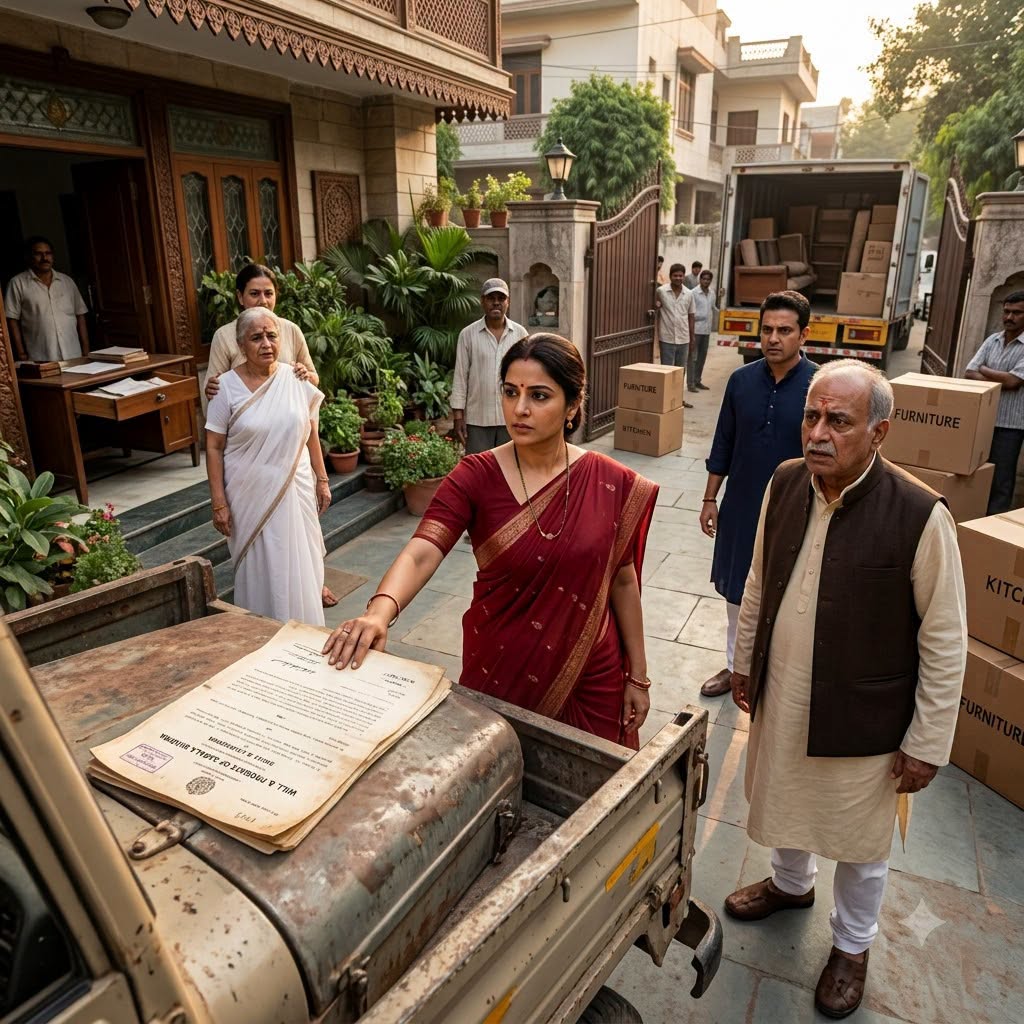
Outside, the morning sun fell across the empty driveway.
The moving truck was gone.
My father-in-law was leaving.
My husband stood alone.
And for the first time in my life, I understood that the quiet woman they had mistaken for obedience had never been powerless.
She had simply been waiting for the truth to give her a voice.
Three months later, the investigation uncovered dozens of unauthorized transfers.
The money was recovered where possible.
The forged documents were submitted to the authorities.
My brother-in-law resigned.
My father-in-law faced legal proceedings.
And Julián?
He confessed.
Not because he suddenly became brave.
Because there was nowhere left to hide.
Our marriage ended quietly.
No screaming.
No revenge.
Just a final conversation in which he looked at me and said:
“I should have protected you.”
I answered:
“You should have protected what was right.”
He nodded.
“I know.”
Then he left.
My mother kept the house.
The company remained under the trust.
And I became its managing director.
But I changed one thing immediately.
I put my father’s old desk in the main office.
Not because it was valuable.
Because every morning, when I sat behind it, I wanted to remember the lesson hidden inside its drawers.
People may underestimate you because you are quiet.
They may mistake kindness for weakness.
They may assume that because you trusted them once, you will never discover what they did behind your back.
But sometimes the person they dismiss is the person holding the one document capable of changing everything.
And sometimes the greatest revenge is not destroying the people who betrayed you.
It is building a life they can never control again.
If you were Mariana, would you have forgiven Julián after learning the truth—or would you have walked away forever? Tell me what you would have done, because sometimes the hardest part of betrayal isn’t discovering the lie… it’s deciding what kind of person you want to become after the truth finally sets you free.





