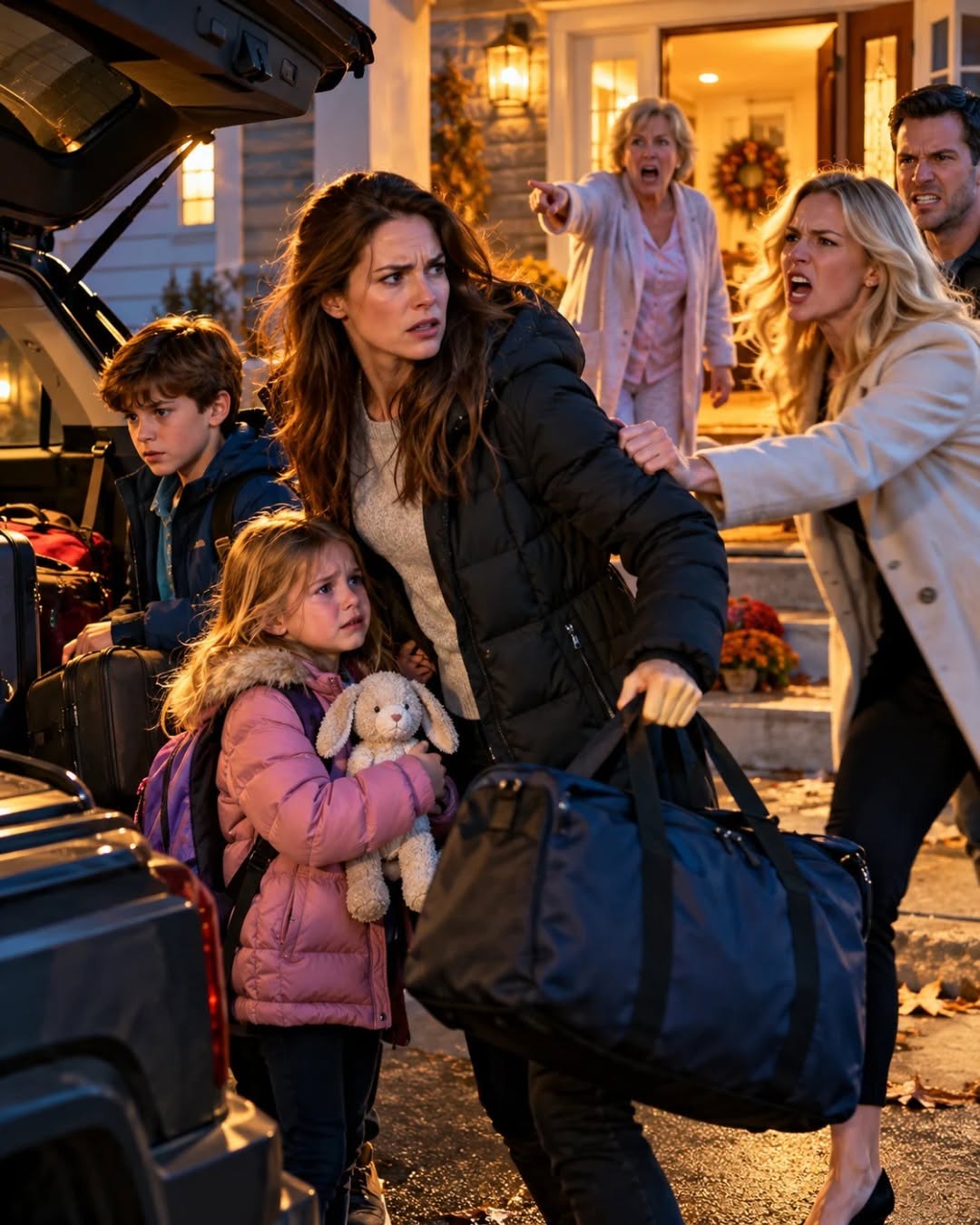
The first ten minutes of the drive were silent.
Lily fell asleep almost immediately, her stuffed rabbit pressed beneath her chin. Noah stared out the window, watching the dark Ohio countryside slide past beneath the headlights.
I kept both hands on the steering wheel.
At 10:18 p.m., my phone began vibrating in the cup holder.
Mom.
I let it ring.
At 10:21, Amanda called.
At 10:23, Mom called again.
Then a text appeared.
Mom: Claire, come back. You’re making a ridiculous situation out of nothing.
I glanced at the message at a red light.
Nothing.
That was what she called it when my five-year-old daughter was handed a sleeping bag instead of the bed she’d been promised. Nothing when my nine-year-old son watched his cousins receive the room his grandmother had told him would be his. Nothing when his own aunt laughed at him for being there.
I turned the phone facedown.
We found a family-friendly hotel near Columbus just before eleven. The lobby smelled like coffee and cinnamon, and the young man behind the desk smiled warmly when he saw the children.
“Rough travel day?”
“Something like that,” I answered.
He gave Lily a small packet of crayons while I checked us in. Noah carried both backpacks upstairs without being asked.
When I opened the door to our room, Lily woke up.
“Mommy, is this our house?”
“No, sweetheart. It’s a hotel.”
“Do we have to sleep on the floor here, too?”
My throat tightened.
“No, baby. Here, you have your own bed.”
She smiled, climbed onto the nearest mattress, and immediately began arranging her rabbit and blanket.
Noah remained near the door.
“Mom?”
I looked at him.
“Did Grandma not want us there?”
Children have a terrible way of asking the questions adults spend years avoiding.
I crossed the room and knelt in front of him.
“Grandma made a decision that wasn’t fair. But that decision doesn’t mean there’s anything wrong with you or Lily.”
He looked down at his shoes.
“Aunt Amanda said we should’ve booked a hotel.”
“That wasn’t kind of her.”
“Are we still going to Thanksgiving?”
I hesitated.
For six months, I had imagined this weekend as something special. Twenty-three relatives gathered around a long table in a beautiful lodge. Children running through the leaves. My mother laughing beside the fireplace. A professional photographer capturing the family picture we’d been missing since Dad died.
I had wanted to give my children memories of a family that loved them.
But perhaps the memories they needed most were the ones I had never intended to create.
“We’re going to have a wonderful Thanksgiving,” I told him. “I just haven’t decided what it will look like yet.”
He nodded and hugged me.
After the children fell asleep, I opened my laptop.
The lodge reservation confirmation sat at the top of my inbox.
Hocking Hills Family Lodge. Eleven bedrooms. Three nights. Total payment: $8,640.
Below it were confirmations for the catered dinner, grocery delivery, horseback riding, family photographer, and two passenger vans.
Every reservation was under my name.
Every deposit had come from my credit card.
I opened the lodge’s booking portal and reviewed the cancellation terms. The reservation was fully refundable until Saturday at noon, less a modest administrative fee.
I checked the caterer’s contract next. The cancellation window closed at ten the following morning.
The vans could be canceled without penalty before Sunday.
The photographer’s deposit was refundable until Saturday morning.
I didn’t cancel anything.
Not yet.
Instead, I opened the family group chat.
Mom had sent a message.
Mom: Everyone needs to remember that Thanksgiving is about gratitude, not selfishness.
Amanda had added a laughing emoji.
My brother, Ethan, hadn’t said anything.
I stared at the screen for a long time.
Then I opened a new message and typed:
I’m sorry the sleeping arrangements didn’t work out. The children and I are safe. I’ll let everyone know tomorrow what we’re doing about the weekend.
I sent it to the group.
Mom responded within seconds.
Mom: Don’t you dare punish the entire family because you didn’t get your way.
I closed the conversation.
For years, my family had mistaken my willingness to help for an obligation to obey.
When Dad died, I paid the remaining funeral expenses because Mom said she couldn’t manage them. When Amanda’s husband lost his job, I covered their mortgage for two months. When Ethan needed help with his daughter’s medical bills, I sent money without asking for it back.
I had never kept a list.
I had never expected applause.
But somewhere along the way, my family had stopped seeing my help as a gift.
They had begun treating it as something they were entitled to.
At 12:06 a.m., another text arrived.
This one was from Amanda.





