When I was eleven, my parents left me $20 and flew to Europe for an entire month. I survived alone in our house, counting every penny. But when they finally returned and opened the front door, my mother screamed, “No! This can’t be happening!” She hadn’t expected what awaited them.
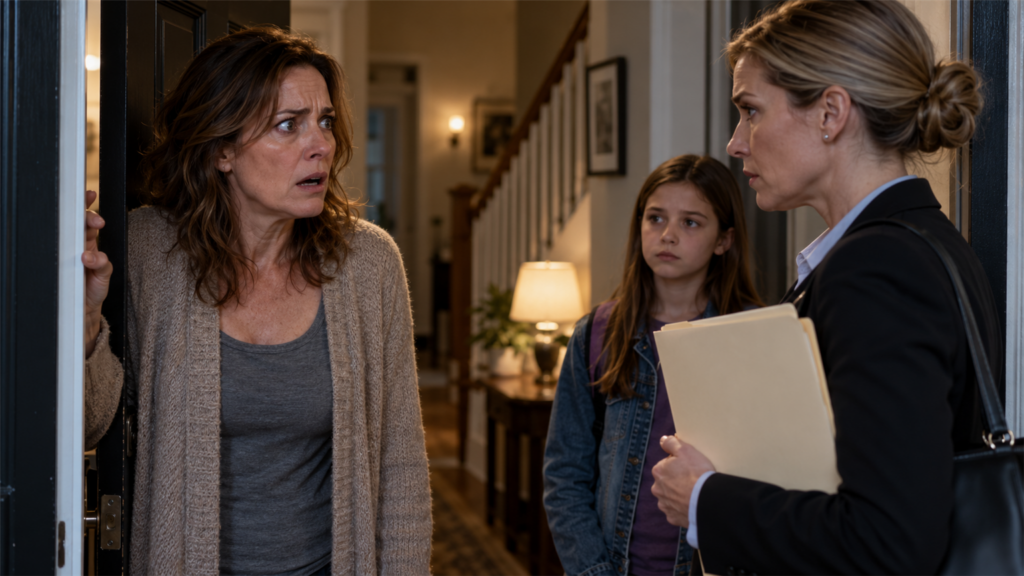
My parents went to Europe for a month and left me with twenty dollars when I was eleven. When they finally came home, my mother opened the front door, saw a woman standing beside me with a folder, and screamed, “No! No! This can’t be happening!”
But the strangest part wasn’t her screaming.
It was that I hadn’t heard her voice in thirty-one days.
My name is Hannah Miller. I’m twenty-eight now, but I still remember the morning my parents left our house outside Columbus, Ohio.
Mom was dragging a blue suitcase across the kitchen while Dad checked our passports. They’d been planning their European vacation for almost a year.
I wasn’t going.
“You’re old enough to manage yourself,” Mom said, placing a twenty-dollar bill beside my cereal bowl. “There’s food in the pantry. Don’t make a mess.”
I looked at the money.
“For a whole month?”
She sighed. “Hannah, don’t start. Your father and I deserve some time together.”
Dad barely looked up from his phone.
“Keep the doors locked. We’ll call when we can.”
They didn’t.
By the fourth day, the milk had spoiled. By the seventh, I’d eaten the last can of soup. I started dividing crackers into little piles so I’d know how many I could have each day.
At night, I slept with the hallway light on.
Every time a car slowed outside, I ran to the window.
It was never them.
On the ninth morning, I walked to the neighborhood grocery store with eleven dollars left. I bought bread, peanut butter, and a small carton of milk.
The cashier, Mrs. Evelyn Carter, noticed I was alone.
“Where’s your mom, sweetheart?”
“Europe.”
She smiled uncertainly. “And who’s watching you?”
I stared at the receipt curling out of the register.
“Me.”
Her smile disappeared.
She asked a few more questions. I tried answering without crying, but when she asked what I’d eaten for dinner the night before, I couldn’t remember.
Mrs. Carter called the police.
That afternoon, a social worker named Rebecca Hayes sat at our kitchen table while I showed her the twenty-dollar bill’s remaining change, my parents’ travel itinerary, and the calendar where I’d crossed off each day.
“Did your parents arrange for anyone to stay with you?” she asked.
I shook my head.
Rebecca looked toward the empty refrigerator.
Then she gently closed her notebook.
“Hannah, you’re not staying here alone tonight.”
Twenty-two days later, my parents returned.
And the first thing my mother saw wasn’t me.
It was a court document Rebecca was holding.
Mom grabbed the doorframe.
“What have you done to our family?”
Rebecca stepped forward.
“Mrs. Miller, before you say anything else, there’s something you need to understand about your daughter.”
My mother pushed past Rebecca and looked around the living room.
The house was clean. My backpack sat beside the couch. The dishes were washed.
For some reason, that seemed to make her angrier.
“See?” she snapped. “She’s perfectly fine. We told you she could take care of herself.”
Rebecca didn’t raise her voice.
“Your daughter was found buying groceries alone after being left without adult supervision for nine days.”
Dad set down his suitcase.
“Nine days? We were gone a month.”
“I know,” Rebecca answered.
Mom folded her arms. “We left her food and money.”
“Twenty dollars,” I whispered.
She turned toward me.
“Hannah, enough.”
I looked down at my shoes. They were the same sneakers I’d worn to the grocery store, except Mrs. Carter had washed them after noticing the soles were separating.
Rebecca explained that I’d been placed temporarily with my aunt Sarah, my mother’s younger sister, while child protective services investigated.
Mom immediately demanded that I come home.
“She’s my daughter. You can’t just give her away.”
“No one has given Hannah away,” Rebecca replied. “A temporary court order determines where she stays while the investigation continues.”
Dad finally looked at me.
“Why didn’t you call somebody?”
I opened my mouth, then closed it.
I’d called their phones seventeen times. I’d left messages on the hotel number written on the refrigerator. On the sixth day, Dad had sent one text.
We’re busy sightseeing. Only contact us for emergencies.
I had read that message so often I could still picture the tiny blue bubble.
“I did call,” I said.
Dad looked away.
Mom insisted I’d exaggerated everything for attention. She said I’d always been dramatic, that I’d probably thrown away perfectly good food, and that Mrs. Carter had overreacted.
Rebecca listened without interrupting.





