My sister left two crying toddlers on my porch at 6:12 on a freezing November morning and laughed when I begged her not to drive away.
“Emma turns eighteen in fifteen years,” Melissa called through her open window. “I’ll come back when the expensive part is over.”
Then her red SUV disappeared around the corner.
Emma was three. Noah was two. Neither had a coat. Their entire childhood fit inside one grocery bag: diapers, two stuffed animals, and a half-empty box of crackers.
I was twenty-seven, single, and working double shifts at a dental office outside Charlotte, North Carolina. I had eighty-six dollars in checking and a landlord who hated children.
Emma wrapped both arms around my leg. “Is Mommy coming after breakfast?”
I crouched so she couldn’t see me cry. “You’re safe with me, sweetheart.”
I called the county’s child protective services hotline before sunrise. A caseworker arrived, documented everything, and helped me apply for emergency kinship placement. I kept Melissa’s voicemail, the grocery bag, even the security footage from my neighbor’s camera.
For weeks, I called my sister. Every number went dead. The court sent notices to her last known addresses. She didn’t answer one.
Nine months later, I was granted guardianship. Three years after that, following the required hearings and efforts to locate her, I adopted both children.
Melissa never appeared.
I learned how to braid hair from videos and how to stretch one chicken across three dinners. I sat through Noah’s asthma attacks and Emma’s school concerts. I worked nights after they slept and applauded loud enough for two parents when they crossed graduation stages.
When our father died, he left Emma and Noah a trust for education and a start in adult life. I became its trustee. I never touched a cent for myself. Every statement went into a locked filing cabinet beside their birth certificates.
And I told the children the truth without making them carry my anger.
“Your mother left,” I said when they were old enough to ask. “That was her choice. It was never because of you.”
Fifteen years passed.
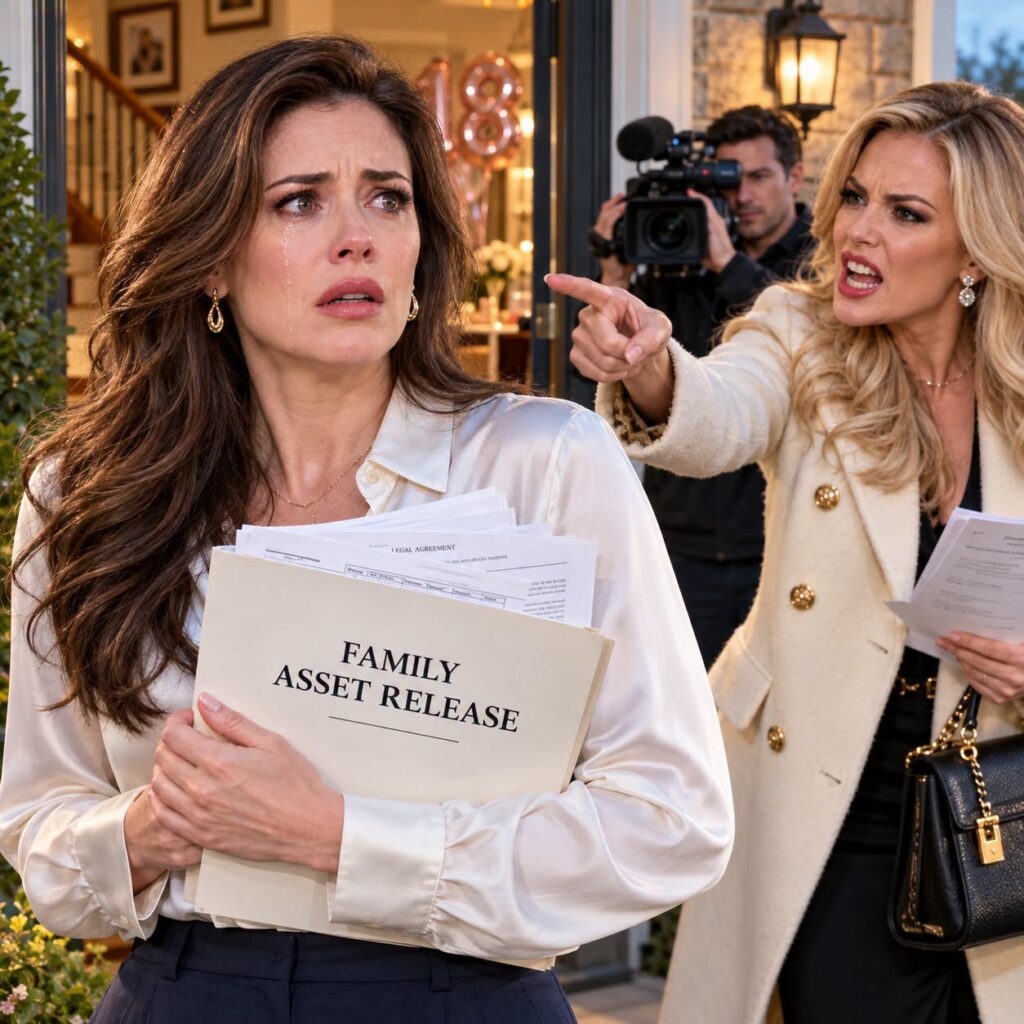
The evening before Emma’s eighteenth birthday, a champagne-colored SUV pulled into my driveway. Melissa stepped out wearing a designer coat, followed by a man carrying a camera.
She looked straight through Noah, now seventeen, and smiled at Emma standing behind me.
“My beautiful baby,” she announced. “I’ve waited so long for this reunion.”
Emma didn’t move.
Melissa’s smile tightened. “Don’t be shy. We’re filming a special announcement for my foundation.”
I stepped between them. “Put the camera away.”
She handed me a folder bearing the words FAMILY ASSET RELEASE.
“Emma will be legal tomorrow,” she said softly. “And I know exactly what Dad left her. Sign the paperwork, Kate, or I’ll tell the whole world you stole my children.”
I opened the folder. The first page wasn’t a custody petition.
It was a declaration that Emma and Noah had been living with Melissa for years.
Behind me, Emma made a strangled sound.
“Aunt Kate,” she whispered, “she didn’t come back for me. She came because I found out what she did.”
There was something in Emma’s voice I’d never heard before. Not fear of the woman who abandoned her—fear of what that woman had already set in motion. I looked at the camera, the folder, and Melissa’s calm smile, and realized this reunion had been planned like a trap.
I shut the front door in Melissa’s face. The cameraman kept filming until Noah pulled down the blinds.
Emma opened her laptop with shaking hands.
Six weeks earlier, she’d received a message from a woman named Diane Porter. Diane had donated to Melissa’s organization, the Home Again Project, and wanted to congratulate Emma on “overcoming homelessness with her mother’s help.”
Emma had never been homeless. Not since the morning Melissa left her on my porch.
On the screen were photographs stolen from my old Facebook posts. Emma’s fifth birthday. Noah in a hospital bed after an asthma attack. Their first day of high school.
Beneath each picture, Melissa had written a different lie.
My babies and I survived years of instability. Your donations keep families like ours together.
I felt sick. Those were the pictures I’d shared because I was proud of my children.
Diane had sent Emma screenshots of fundraising appeals, payment confirmations, and a pitch deck Melissa used to solicit corporate sponsors. The total Diane could document exceeded $300,000. Melissa had presented herself as a single mother raising two vulnerable children, then promoted their supposed rescue as proof her program worked.
“Why didn’t you tell me?” I asked.
“I wanted to know if she was lying about everything,” Emma said. “And I didn’t want her deleting the evidence.”
Noah sat beside his sister. “We saved copies. Every page. Every video.”





