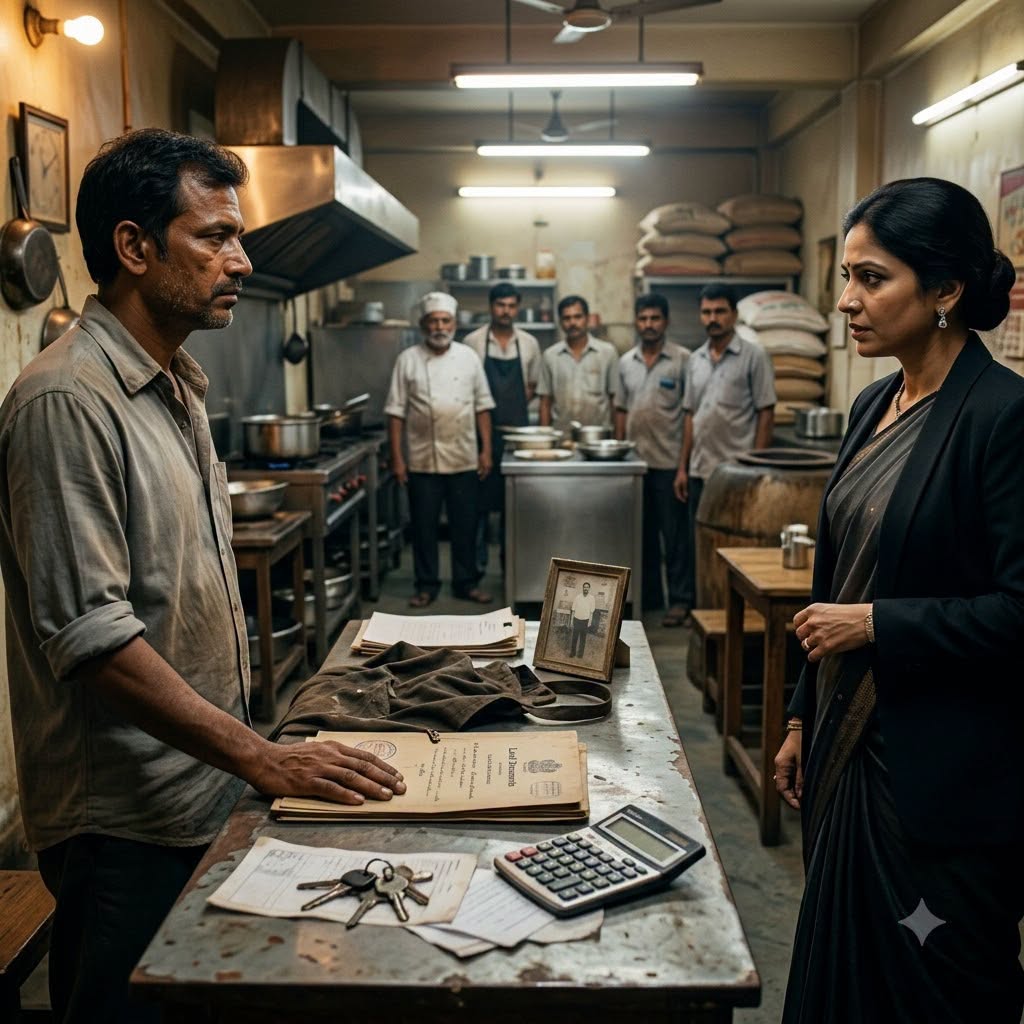
My sister went pale.
“Thirty-one lakh?” she whispered.
Triveni tai adjusted her glasses.“Thirty-one lakh, forty-six thousand, eight hundred rupees, to be precise. That is what we can document.”
Bhaskar laughed nervously.
“Anyone can collect old bills.”
“Certainly,” Triveni replied. “But not everyone can produce bank transfers, supplier confirmations, tax records, and invoices matching the restaurant’s accounts.”
I had never heard her speak so sharply.
Devyani looked at me.
“You were keeping records against your own sister?”
“No, Didi. I was keeping records for our restaurant.”
Ishwari Aunty opened the second file.
“And that distinction is exactly why Harivansh ji created this arrangement.”
She spread three documents across my small dining table.
The first was Ma’s registered will.
The second was Papa’s will.
The third was a family settlement deed signed by both parents and registered while Ma was still alive.
I stared at the signatures.
They were real.
I knew my mother’s handwriting better than my own.
When I was little, she wrote grocery lists on the backs of old calendars. She always made the letter K unusually large.
There it was.
Kaveri Kulkarni.
Ishwari looked at us.
“Your mother owned an undivided half of this property. Under her will and the registered family arrangement, her interest was placed in a trust for the preservation of the restaurant and the benefit of the family member actively managing it.”
Bhaskar interrupted.
“Who decides who that person is?”
“The trustees, according to the deed and the evidence of continuous management.”
Triveni raised her hand slightly.
“I am one trustee.”
Ishwari nodded.
“And I am the other.”
Devyani leaned forward.
“You’re telling me my brother owns half my restaurant?”
“No,” Ishwari said. “I’m telling you that you have confused ownership of a business with ownership of the land beneath it.”
She turned another page.
“Your father subsequently left his own half of the property to Nandkumar under his registered will.”
I stopped breathing.
“What?”
Devyani stood so abruptly her chair scraped the floor.
“Impossible!”
Ishwari handed me the document.
There was Papa’s signature.
Two witnesses.
A registration number.
And a date.
Six months before he died.
I could barely hold it.
“Why didn’t he tell me?”
Triveni’s eyes filled.
“Because he knew you would tell your sister.”
I looked up.
She smiled sadly.
“Your father knew you, Nandu. You would have surrendered everything to keep the peace.”
That hurt because it was true.
For ten years, I had treated sacrifice like proof of love.
Apparently Papa had been watching.
Ishwari continued.
“Under the trust arrangement, the active manager can be granted long-term occupation and operating rights over the trust’s half, subject to its terms. Nandkumar also owns the other half outright. Devyani cannot simply remove him from the premises.”
Bhaskar stared at the documents.
“So what happens to the restaurant?”
“That depends on what your wife decides to do next.”
Devyani turned toward me.
For the first time since her return, she looked uncertain.
“Nandu.”
I said nothing.
“We can discuss this like family.”
I almost laughed.
Three days earlier, family had been the reason I deserved nothing.
Now family was the reason I should negotiate.
I looked at the cardboard box beside my sofa.
Papa’s calculator was still inside.
“So let’s discuss it,” I said.
Devyani relaxed slightly.
Then I asked, “Why did you pack my things before telling me I was fired?”
She looked away.
“Bhaskar thought it would be easier.”
“For whom?”
Silence.
“Why did you refuse even one month’s salary?”
“Nandu, don’t start again.”
“Why did you tell sixteen people I was no longer needed?”
Her eyes flashed.
“Because I own the business!”
“And you believed that meant you owned me.”
Nobody spoke.
Ishwari quietly closed her file.
“Before anyone makes a decision, I suggest an independent valuation and a full review of the accounts.”
Bhaskar stood.
“This is ridiculous.”
I looked at him.
“No. What was ridiculous was working ten years for a business that could afford air-conditioning but apparently couldn’t afford to pay its manager.”
He opened his mouth.
Then closed it.
They left without the keys.
That evening, I walked past Kaveri Bhojanalaya.
The lights were on.
Customers were waiting outside.
Through the window, I saw Shashidhar Kaka arguing with someone near the kitchen.
For ten years, I would have rushed inside.
I would have checked the problem, calmed everyone, and stayed until the last plate was washed.
Instead, I stood on the pavement.
Then walked home.
It was one of the hardest things I had ever done.
The next morning, Meena tai called.
“Nandu baba, the vegetable supplier won’t deliver.”
“Why?”
“Bhaskar sir says the prices are too high.”
I closed my eyes.
Our supplier, Ramesh, had worked with us for fifteen years. His prices were fair because he brought fresh produce before sunrise and accepted delayed payment during difficult months.





