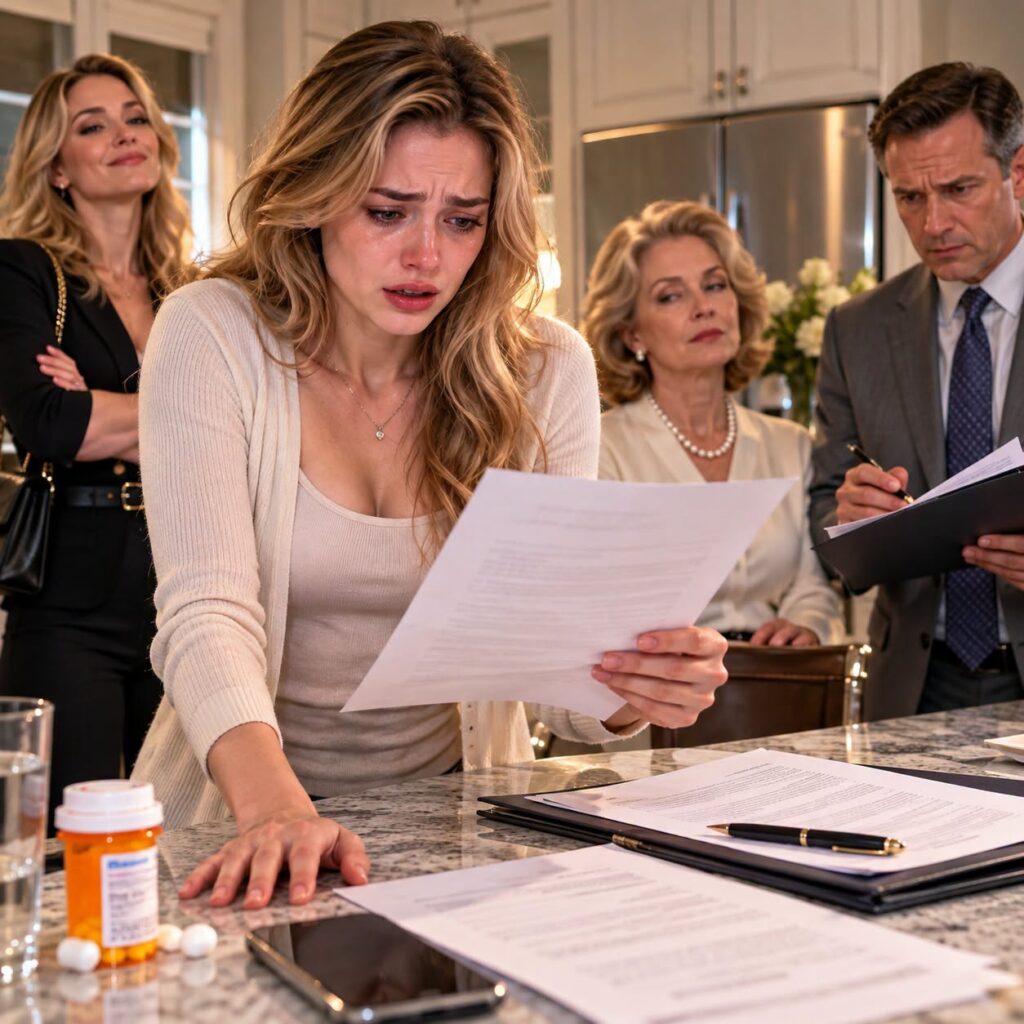
The first handful of pills hit the toilet while I was still begging my sister to stop.
“Brooke, please. Those are the medications keeping my transplanted lungs alive.”
She shook the amber bottle harder. White capsules rattled against porcelain like hail.
“Stop acting sick. You just want attention.”
Then she flushed.
I stood in my bathroom outside Cleveland, gripping the doorframe because my knees wouldn’t hold me. Thirty days of specialty medication. Nearly $20,000 before insurance assistance. Gone in one spiteful second.
Brooke, my older sister, had moved into my guest room three weeks earlier after losing her apartment. I paid for her groceries. Let her borrow my car. Even gave her the bigger bedroom because she claimed her back hurt.
Now she was destroying the drugs I took every day to protect the lungs a stranger’s family had given me.
“You have no idea what you’ve done,” I whispered.
She rolled her eyes. “Call Mom. She’ll tell you the same thing.”
I didn’t tell her my phone was recording from the shelf behind a stack of towels. I’d pressed the button when she marched upstairs, shouting that I was ruining her life by refusing to sell my house.
That house was the last thing my father had left me. Not Brooke. Not our mother, Diane. Me.
Dad had watched me struggle through years of oxygen tanks and hospital corridors. When he died, his will gave me the modest brick house because, as he’d written, “Claire deserves somewhere safe to heal.”
Brooke slammed the empty bottle onto the sink.
“Now maybe you’ll stop hiding behind your diagnosis whenever this family needs something.”
She walked out laughing.
I locked the bathroom door, retrieved my phone, and called the transplant team’s emergency line. The coordinator told me not to miss a dose and arranged an urgent call with the specialty pharmacy. I had two days of backup medication in a travel case Brooke didn’t know existed.
My breathing eased a fraction. My hands didn’t.
For two weeks, mail had vanished from my porch. A realtor had called asking whether I wanted staging photos. When I confronted Brooke, she accused me of confusing dreams with reality.
I had started recording because I was tired of being told my own eyes couldn’t be trusted.
At 6:47 the next morning, I came downstairs to find Mom standing in my kitchen wearing her church pearls.
Beside her sat a man in a gray suit, holding a folder embossed with the name of a local title company.
Brooke stood behind him, smiling.
“Claire,” Mom said softly, “we need to discuss what’s best for you.”
The man opened his folder. On top was a document titled DURABLE POWER OF ATTORNEY.
Under the words PRINCIPAL SIGNATURE was my name.
Except I had never signed it.
Brooke leaned close enough for only me to hear.
“Don’t make a scene,” she whispered. “The buyer is wiring the money at two.”
I looked down at the signature again.
And saw the one detail that made my blood run cold.
The witness listed beside my forged name was my mother.
I had thought Brooke acted alone. I was wrong. The person who should have protected me had apparently helped build the trap.
I still hadn’t shown either of them the recording.
But the man in the gray suit was reaching for his pen.
One signature would become a weapon. And the clock was already running.
“I’m not signing anything,” I said.
The man stopped uncapping his pen. “Ms. Miller, I’m a closing coordinator. I was told your family wanted you to acknowledge the arrangement.”
“Then you’ve been lied to.”
Mom’s smile tightened. “Claire gets overwhelmed. Her doctors have concerns.”
“Which doctors?”
No one answered.
I held up my phone. Brooke’s face changed before I even pressed play.
Her voice filled the kitchen: Stop acting sick. You just want attention.
Then came the unmistakable splash of bottles emptied into the toilet.
The coordinator stood. “I need to call our attorney.”
Mom stepped between him and the door. “This is private family business.”
“Not when somebody forged my signature,” I said.
I called my friend Nora, a paralegal, and asked her to connect me with a real-estate attorney. Then I phoned the police nonemergency line and requested an officer to document the destruction of my medication and suspected fraud.
Brooke lunged for my phone. I backed into the hallway and locked myself in Dad’s old study until she stopped pounding on the door.
Forty minutes later, attorney Rachel Benton called.
“Send me the document,” she said. “Every page. And don’t let anyone talk you into an informal agreement.”
I photographed the folder while the coordinator watched. On page three, the power of attorney claimed I’d signed before a notary during a rehabilitation stay in June.





