PART 2
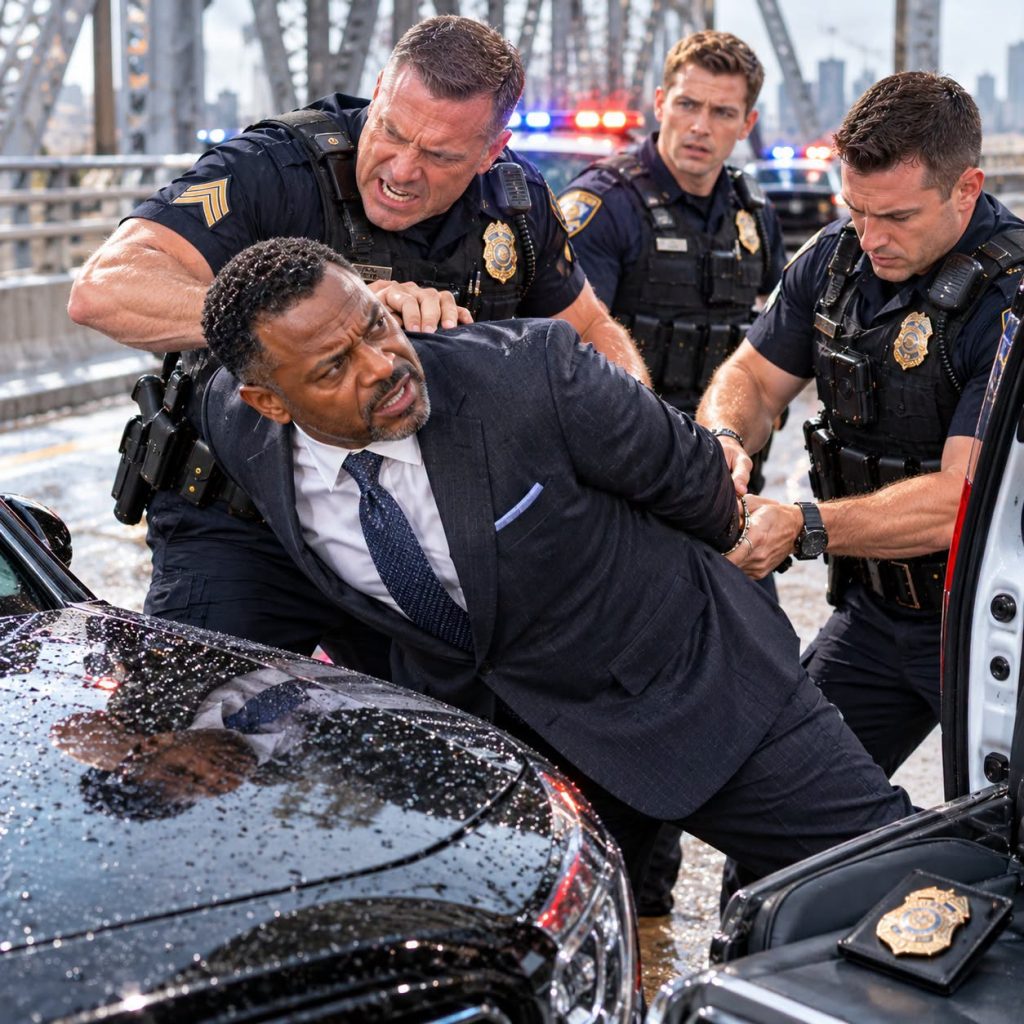
I hit the side door two seconds behind the man in the gray coat. He slipped on the steps, recovered, and sprinted toward a black pickup behind the station. I caught his coat at the driver’s door. He spun and drove an elbow into my ribs. “Let go!” “Who are you?” He shoved me into the truck. Holt came through the door. “Gary! Stop!” Gary Puit, manager of Dockside Recovery. Puit froze long enough for me to twist his wrist against the truck. The envelope dropped. Cash spilled across the pavement. Brener stormed outside with Mercer behind him. “Commissioner, step away!” Brener barked. I stared at the money. “You knew who he was.” Brener’s hand moved toward his belt. Holt stepped between us. “Don’t.” Everything stopped. “Move, Ryan,” Brener said. “No.” For the first time, Brener looked afraid. Puit tore free, jumped into the pickup, and accelerated away. I picked up one wet bundle of cash. “Seal this,” I told Holt. Brener laughed. “You don’t give orders here.” “I do in six hours.”
At City Hall the next morning, I walked onto the stage with a bandage above my eyebrow and my father’s badge back in my pocket. Mayor Albright introduced me. Brener, Mercer, and Holt stood in the third row. I took the oath, shook the mayor’s hand, then faced the department. “My first order is to preserve every dispatch log, tow authorization, body-camera file, dashcam file, and report from the Calder Bridge unit for five years.” A murmur rolled through the room. Brener stood. “Commissioner, there’s already a report regarding last night.” “Interesting. I haven’t given a statement.” By noon, that report claimed I had been intoxicated, combative, and injured while resisting lawful detention. Its timestamp showed it had supposedly been filed before I ever reached the station. Backdated.
By three, Councilman Victor Kesling appeared in my office with a lawyer. “This city needs stability,” he said. “Withdraw the preservation order.” “No.” “You’re new here.” “So were the numbers in Brener’s report.” That evening, the council placed me on temporary suspension pending a Friday removal hearing. Holt found me in the parking garage. “I signed the false report,” he said. “Why?” “Brener said if I refused, Dockside would take my brother’s truck, his tools, everything.” He handed me a key. “Courthouse archive room. Box 1989-C.” Inside that box the next morning, I found my father’s handwriting. Victor Kesling. Dockside’s original owner. One address circled three times: 41 Pier Road. Underneath: THEY ARE TOWING CARS THAT WERE NEVER ILLEGAL. MONEY GOES UP THE CHAIN. My father had not resigned in disgrace. He had been pushed out for finding the same racket.
Then someone behind me said, “Your father was right.” I turned. Tow driver Tommy Reyes stood in the aisle holding a memory card and nine spiral notebooks. “Three thousand one hundred forty illegal tows,” he said. “Payments, dates, officers, council names. Everything.” A crash exploded outside the archive room. The lights went out. Tommy whispered, “They followed me.” Then the door handle began to turn.
PART 3
I shoved the archive table against the door just as someone hit it from the other side. “Back exit?” I asked. Tommy shook his head. “None.” The door slammed again. I grabbed a metal document cart and angled it beside the frame. “When it opens, stay behind me.” “Commissioner, you’re suspended.” “Tonight I’m just a stubborn old cop.” The third hit broke the latch. Mercer stumbled through first in civilian clothes, with Gary Puit behind him. “Give us the notebooks,” Mercer said. Tommy backed away. “You’ve taken enough.” Puit lunged. I caught his arm and drove him into the cart. Mercer grabbed my jacket from behind. We crashed into a shelf, files spilling around us. Tommy slammed the archive door and shouted into his phone, “Now!” Footsteps thundered down the corridor. Holt entered with two state investigators and Mayor Albright. Mercer released me immediately. Puit reached for the notebooks. Holt stepped forward. “Gary, don’t.” Puit glared at him. “Coward.” “No,” Holt said. “I was a coward last week.” The investigators cuffed both men.
Friday’s removal hearing was standing-room only. Victor Kesling sat at the council table pretending he had never heard of Dockside Recovery. Brener sat behind his attorney. Holt waited outside to testify. I stood at the microphone. Kesling said, “This hearing concerns your judgment, not ancient allegations involving your father.” “Then let’s start with something new.” I inserted Tommy’s memory card. The bridge dashcam footage filled the screens. Brener’s voice echoed through the chamber: “Respect is earned. Tonight, you’re gonna learn some.” The video showed my father’s badge thrown into the cage, the unnecessary detour, and Gary Puit entering the station with the envelope. Then Tommy opened his notebooks. “Every illegal tow,” he testified. “Every cash payment I witnessed. Three thousand one hundred forty vehicles.” He pointed to a page. “Councilman Kesling received a percentage through shell vendors.” Kesling stood. “That is a lie!”





