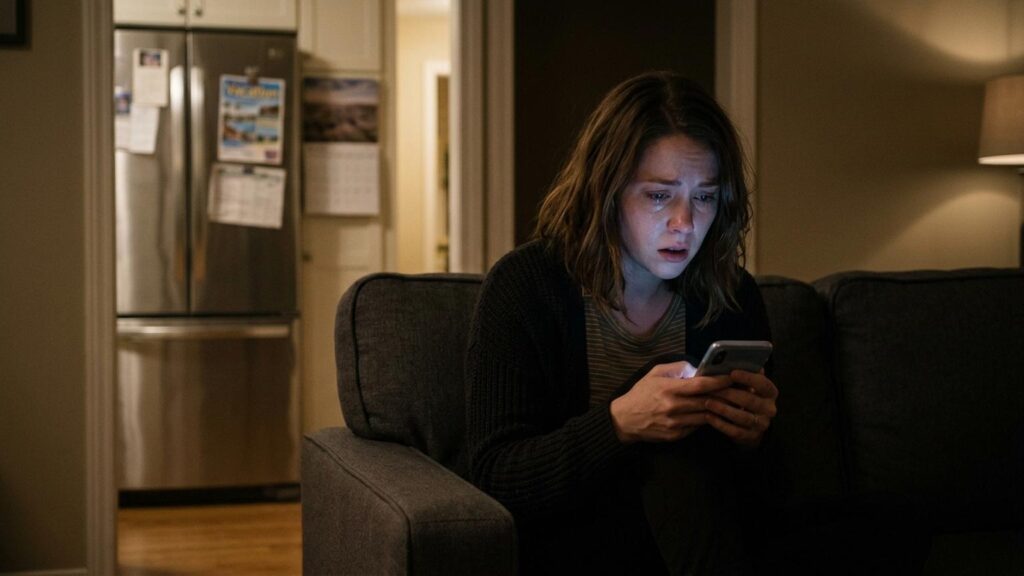
At the airport, I begged my family to postpone their Caribbean cruise until my cancer test results came back. My sister laughed. “We’re not wasting thousands because you’re scared.” They boarded without looking back. Three days later, my father received a phone call that made him collapse…
“We already paid for the cruise, Emily. Your doctor’s appointment can wait.”
My sister Lauren said it while folding a white linen dress into her suitcase. She didn’t even look up when I told her the oncologist had moved my appointment forward because the biopsy results were concerning.
“Lauren, they wouldn’t change it unless something was wrong.”
She pulled the zipper closed.
“Then you’ll find out what’s wrong. You’re thirty-two, not twelve.”
My father, Dr. Robert Mitchell, stood in the kitchen doorway holding two passports. He had practiced internal medicine for twenty-eight years. My mother, a retired family physician, was checking the weather in the Bahamas.
Neither said a word.
“Dad?” I asked.
He rubbed his forehead. “Emily, we’ve been planning this trip for eight months. Your sister’s right. We’ll talk when we get back.”
I looked at the refrigerator, where my mother had taped our cruise itinerary beside a photograph of me graduating from nursing school. In the picture, Dad’s hand rested proudly on my shoulder.
I couldn’t remember the last time he’d touched me that way.
For six weeks, I’d been dealing with unexplained bleeding, exhaustion, and a pain deep in my abdomen. My primary care doctor had ordered imaging, then a biopsy. When the oncology office called to schedule an urgent consultation, I asked my family to stay home.
I wasn’t asking them to cancel the cruise.
Just to postpone it until we knew.
Lauren laughed when I explained that.
“You always find a way to make everything about you.”
The next morning, I drove them to Tampa International Airport.
Mom hugged me quickly. Dad reminded me to water the plants. Lauren rolled her suitcase toward security without turning around.
I watched them disappear into the crowd, then sat in my car until the parking garage lights switched off automatically above me.
Three hours later, I was sitting across from Dr. Rebecca Collins.
She placed the pathology report on her desk.
“Emily, the biopsy confirms cervical cancer. Based on your imaging and examination, we’re looking at stage three. We’ll complete the staging workup and discuss treatment immediately.”
I stared at the paper.
There was a small coffee stain on my sleeve from that morning. I kept rubbing it with my thumb.
“Can I call someone?” I whispered.
“Of course.”
I called Dad.
Voicemail.
Mom.
Voicemail.
Lauren answered on the fourth attempt.
“Emily, we’re boarding the ship.”
“Lauren, it’s cancer. Stage three.”
A pause.
Then she sighed.
“Please don’t do this right now. Mom’s already stressed.”
The call ended.
That evening, Lauren sent a message to our family group chat.
I read it three times.
Then I noticed something underneath her name that made my hands go cold.
She hadn’t just dismissed my diagnosis.
She had already contacted someone at my hospital.
And she’d done it before I even knew I had cancer.
PART 2
The message appeared at 8:43 p.m.
“Emily, I spoke with Dr. Harris yesterday. He knows how anxious you get. Please stop making this into a family emergency.”
Dr. Daniel Harris was the medical director of the clinic where I worked as a registered nurse.
I stared at his name.
Why would my sister contact my employer about my private medical appointments?
I opened my laptop and searched through the emails I’d received that week. One from Human Resources, sent the previous afternoon, had been buried beneath shift notifications.
Subject: Confidential Employee Wellness Concern.
The email said a family member had contacted the clinic expressing concerns about my emotional stability and my ability to perform clinical duties safely.
My stomach tightened.
Lauren wasn’t just a physician. She was a cardiologist at another hospital in Tampa. She had used her professional title to make her accusations sound credible.
I called Dr. Harris.
He answered after several rings.
“Emily, I was planning to speak with you Monday.”
“Did my sister call you?”
Silence.
“Yes. She said you’d been behaving erratically and might be experiencing severe health anxiety.”
“Did she tell you I was awaiting biopsy results?”
“No.”
I looked down at the hospital bracelet still wrapped around my wrist.
“I was diagnosed with stage-three cancer today.”
His voice changed.
“Emily, I’m so sorry.”
I explained the calls, the cruise, and the messages. He listened without interrupting.
Then he said something I hadn’t expected.
“Your sister also suggested we consider temporarily removing you from patient care. We haven’t taken any action, but I want you to forward those messages to HR.”
After we hung up, I sat at my kitchen table and opened a folder on my computer.





