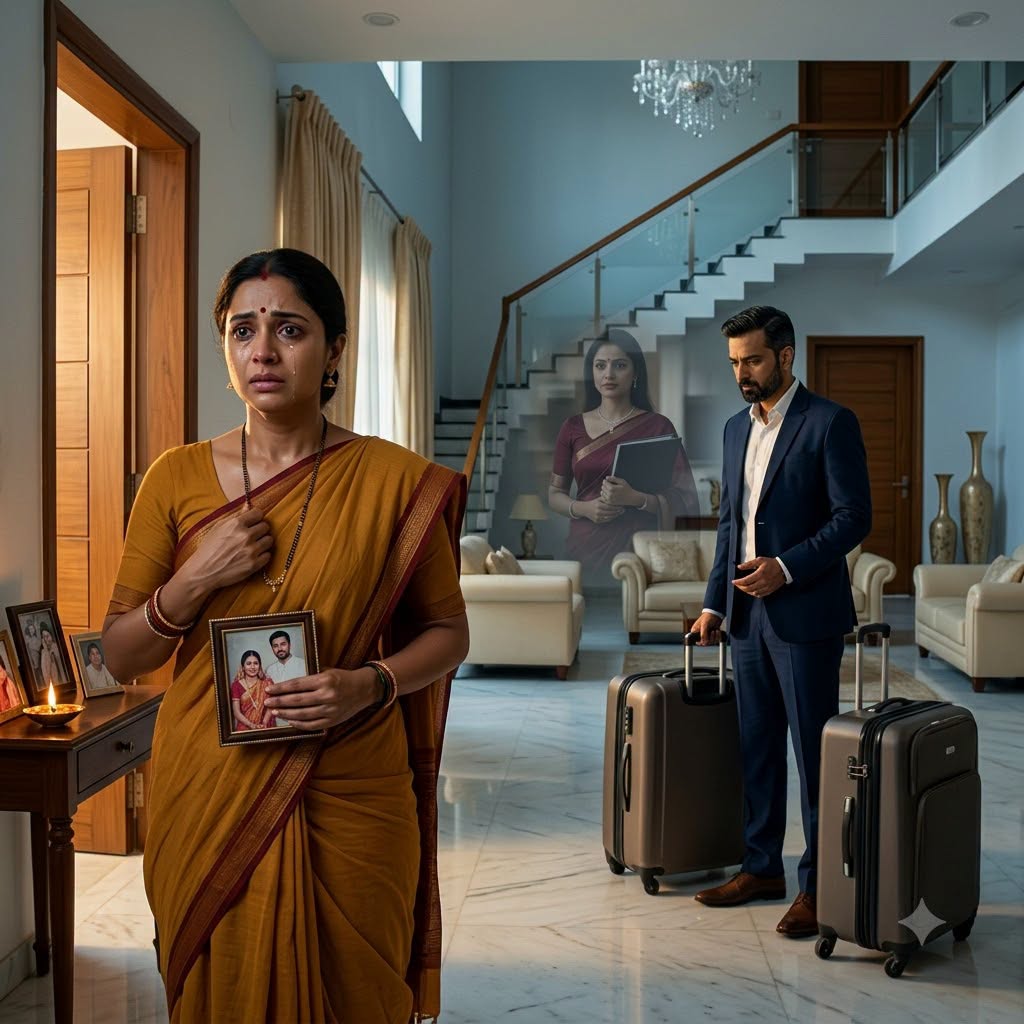
Yamini looked frightened.
“Avinash told me he was creating a scholarship fund for underprivileged children.”
My stomach turned.
“He used our daughter’s name?”
The investigator nodded.
“The records suggest some money was transferred into an entity carrying her name. We’ll need to determine who controls it and whether the funds remain there.”
I thought of Ishwari upstairs.
She had spent the evening arranging her schoolbooks.
She believed her father had come home to stay.
She had no idea adults were using her name in financial arrangements she could not understand.
I pressed my hand against my mouth.
For the first time, anger overcame heartbreak.
“Find out everything.”
That evening, Ishwari came downstairs.
“Where is Papa?”
I looked at her.
My daughter was twelve now.
She had waited three years for this reunion.
I had imagined her running into her father’s arms.
Instead, she was standing in a half-furnished living room, asking why he had disappeared again.
“He’s staying somewhere else for now,” I said gently.
Her expression changed.
“Because of that lady?”
I sat beside her.
“Ishwari, grown-ups have made some serious mistakes.”
She lowered her eyes.
“Is Papa leaving us?”
I wanted to lie.
I wanted to promise her everything would become normal.
But I had already spent too many years living inside false promises.
“I don’t know what your father will choose,” I answered.
She began crying.
I held her close.
“But I know what I will choose.”
She looked up.
“What?”
“You.”
She wrapped her arms around my neck.
And I promised myself that whatever happened next, she would never be made to feel responsible for her father’s choices.
Three weeks later, the investigation uncovered something unexpected.
The education trust had been established legally, but its purpose had been misrepresented.
Avinash had used it as part of a proposed financial arrangement involving overseas investments and construction payments.
Ishwari was listed as a future beneficiary, but the account was controlled by adults connected to him.
The trust’s existence did not prove that every transfer was unlawful.
But the surrounding agreements contained serious inconsistencies.
Several authorisations appeared to carry signatures neither Yamini nor I recognised as our own.
When Bhaskar finally attended a meeting with the lawyers, he looked exhausted.
His hands trembled as he placed a folder on the table.
“I made a mistake,” he whispered.
I stared at him.
“Which mistake?”
He lowered his head.
“Avinash told me you knew everything.”
I felt a bitter laugh rising.
“He told everyone that.”
Bhaskar began crying.
“Your father helped me when my business failed. He gave me work when nobody else would.”
I nodded.
“And you repaid him by deceiving his daughter?”
He covered his face.
“I thought the money would be returned.”
Yamini leaned forward.
“Where did it go?”
Bhaskar swallowed.
Then he told us.
Avinash had used a portion of the funds to invest in a commercial property project outside Pune.
The investment had failed.
To conceal the losses, he had requested additional transfers under the explanation of rising construction costs.
Bhaskar had helped issue invoices that did not correspond to the work actually completed.
When the losses continued, Avinash tried to raise money by presenting my land as part of his property portfolio.
That was why he needed the forged ownership documents.
That was why he had returned to India.
He planned to secure financing using a property he did not legally own.
And he expected both women to cooperate because each believed she was protecting her future.
Yamini began sobbing.
I sat in silence.
For years, I had believed my husband was building a house.
Now I understood he had been building a lie.
Over the following months, formal complaints were filed concerning the disputed signatures and financial transactions.
Investigators reviewed the records.
The lawyers pursued recovery of funds where the evidence supported it.
Bhaskar cooperated and provided additional documents.
Avinash denied some allegations, admitted others, and tried repeatedly to negotiate privately.
I refused to make any agreement without legal advice.
Yamini returned to America temporarily to deal with her finances.
Before leaving, she came to see me.
We stood in the courtyard beside the tulsi plant.
“I don’t know how to thank you,” she whispered.
“For what?”
“For not treating me like your enemy.”
I looked at her.
“You hurt me, Yamini.”
She lowered her head.
“I know.”
“But he lied to you too.”
She began crying.
“I thought I had finally found someone who wanted a future with me.”
I looked toward the house.
“So did I.”
We stood there quietly.
Then she said, “I wish we had met under different circumstances.”
I smiled sadly.
“Perhaps we would have been friends.”
She embraced me.
It was awkward.
Painful.
But genuine.
And for the first time, I understood that sometimes another woman is not your greatest enemy.





