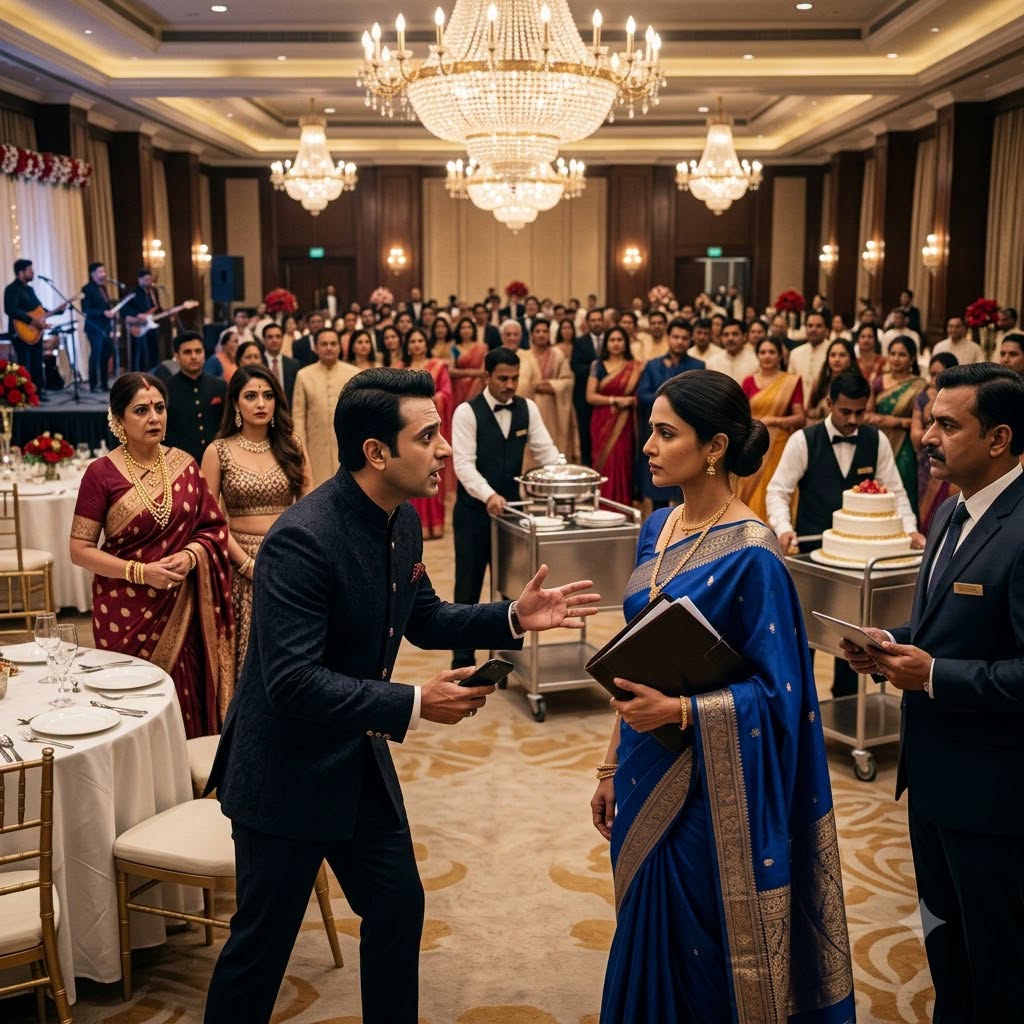
The bank suspended consideration of the disputed warehouse security.
The company still owed its lenders money.
That had not disappeared.
But for the first time, my husband’s debts were being separated from my assets.
Shashidhar called seventeen times that evening.
I answered the eighteenth.
“You’ve turned my own bank against me.”
“No,” I said. “I told them I never signed the papers.”
“You could have spoken to me first.”
I looked at the photograph of my father.
“I tried speaking to you for twenty-eight years.”
He began shouting.
I ended the call.
A month later, the handwriting examination found significant differences between my known signatures and those on the disputed documents.
The date of my mother’s death was independently verified through hospital records.
An investigation began into how the papers had been prepared and submitted.
Shashidhar blamed his accountant.
The accountant produced emails.
Bhairavi claimed she knew nothing.
Then investigators found messages discussing the warehouse valuation and how to persuade me to sign the revised documents.
My sister-in-law had known far more than she admitted.
The most painful discovery concerned Devyani Maaji.
Among the recovered correspondence was a letter she had written to Shashidhar shortly before our wedding.
The Kulkarni property arrangement will eventually pass through the daughter. Keep relations with her father cordial. Once the marriage is secure, there will be time to settle the commercial questions.
I read those lines sitting beside Ishwari.
My daughter held my hand.
“Amma, don’t read any more.”
But I did.
I needed to know.
For twenty-eight years, Maaji had called me an outsider.
Yet she had welcomed me into the family precisely because of what I might bring inside it.
I remembered the maroon saree.
The empty chair.
The order to leave the family table.
And I finally understood.
They had never believed I belonged at that table.
They believed my property did.
Rathore Textiles entered a formal restructuring process.
Its lenders demanded reliable accounts and a realistic repayment plan.
The lavish anniversary party had not fooled anyone who mattered.
Several buyers had already noticed delayed deliveries.
The company was carrying expensive debt.
Shashidhar had concealed losses, hoping one more season of orders would rescue everything.
Pradyumna eventually came to Pune and told me the full truth.
He brought a folder containing purchase orders, outstanding invoices and stock records.
“I want to help save the workers’ jobs,” he said.
I looked at him.
“And your father’s reputation?”
He shook his head.
“I don’t know how to save that.”
For the first time, he sounded like my son rather than his father’s spokesman.
We spent the afternoon reviewing the accounts.
I recognized suppliers I had negotiated with twenty years earlier.
Some had not been paid in months.
One was a small weaving cooperative outside Bhilwara.
Its owner had written three unanswered letters asking for payment.
I remembered his father bringing fabric samples to our old showroom.
I put the letters aside.
“These people deserve their money.”
Pradyumna nodded.
“But we can’t save everyone.”
“I know.”
He looked surprised.
For years, I had always found a way.
Sold jewellery.
Broken deposits.
Borrowed from myself.
But this time, I would not turn my life into emergency funding for someone else’s refusal to face reality.
I agreed to help Pradyumna develop a viable plan for the business.
As an independent adviser.
With written terms.
No personal guarantees.
No use of my inherited property as collateral.
No hidden transfers.
And no interference from Bhairavi or Devyani.
Shashidhar refused at first.
He said he would never accept conditions from his wife.
Ishwari Menon sent the terms again.
This time, the lenders reviewed them.
A smaller business could survive.
The old showroom would have to close.
Unprofitable product lines would end.
Certain assets would be sold.
Creditors would take negotiated settlements.
Pradyumna would manage operations under professional oversight.
Shashidhar would step back.
He called me that night.
“You’re taking my company.”
I looked at the agreement.
“No. I’m refusing to lose my property saving it.”
He was silent.
Then, for the first time in our marriage, he asked instead of ordered.
“Will you come back?”
I closed my eyes.
“To the company?”
“To me.”
I thought of twenty-eight years.
The hospital corridors.
The stock registers.
The children.
The loans.
The anniversary party.
Four hundred guests watching him call me useless.
“No, Shashidhar.”
His breathing caught.
“Vaidehi…”
“I don’t hate you.”
“Then why?”
“Because I finally know what peace feels like.”
He began crying.
Once, that sound would have brought me running.
This time, I stayed where I was.
The divorce was not quick.
There were disputes over finances and property.
There were attempts at reconciliation.
There were relatives who called to tell me that women of my age should not break families.
One aunt said, “What will people think?”





