And then Gus called his first witness. Her name was Maret Soulberg.
She was 89 years old and she had been Ammonson Cardiac Systems’ first bookkeeper from 1982 until her retirement in 2004. She came into the courtroom in a wheelchair pushed by her granddaughter.
Gus asked her if she remembered Dolores Mercer. Maret Soulberg smiled.
“Of course I remember Dolly,” she said. Everyone at that company remembered Dolly.
Felix told the story at every Christmas party for 20 years. The soup lady.
He used to say, “Without Dolly, we’d all be selling vacuum cleaners.” Then Gus asked her about 1999.
Her smile disappeared. She told the court that in 1999, Felix was ill for the first time, and his son Henrik, then in his mid-20s, had begun taking over the company’s finances.
Henrik came to her desk one day with a list of small shareholders and asked her to prepare $500 checks for each of them with a letter saying the shares were worthless and the company was buying them back as a courtesy. I told him it wasn’t right,
Maret said. That company was making money that year. Good money.
He told me to mind my own business. She looked across the courtroom at Henrik sitting at the defense table in a dark suit.
So I did, and I’ve been ashamed of it for 27 years. The courtroom was completely silent.
Then Gus lifted the uncashed check out of a plastic sleeve and handed it to the clerk. Exhibit 4, not for sale.
Judge Raskque held that check for a long time. She read the three words in blue ballpoint.
Then she set it down very gently on the bench, as if it might break. There was one more thing.
The night before the hearing, the forensic accountants that Detective Asanti had brought in finally finished tracing the company’s books from 1999 to the sale. When Henrik had erased my mother’s shares from the records, he had also erased her dividends.
For 26 years, Ammonson Cardiac Systems had paid dividends to its shareholders every year. My mother’s 3% should have received $4.1 million, $4.1 million paid instead into the account of Henrik Ammonson.
P.S. Ask about the dividends.
Something isn’t right. My mother had known.
Somehow in her last weeks, sitting in Arin Iverson’s office with her cup of coffee, she had figured it out. Victoria Ashkam asked for a recess.
Judge Raskque gave her 20 minutes. When she came back, she stood very straight and announced that her client was withdrawing his claim.
All of it, the invalid certificate, the board authority, the repurchase gone in one paragraph read in a clipped voice from a single sheet of paper. Judge Raskque issued her written ruling anyway a month later because Gus asked her to.
14 pages. The 1981 certificate was valid.
The 1982 board resolution was valid. The 1999 check had never been accepted and the repurchase had never happened.
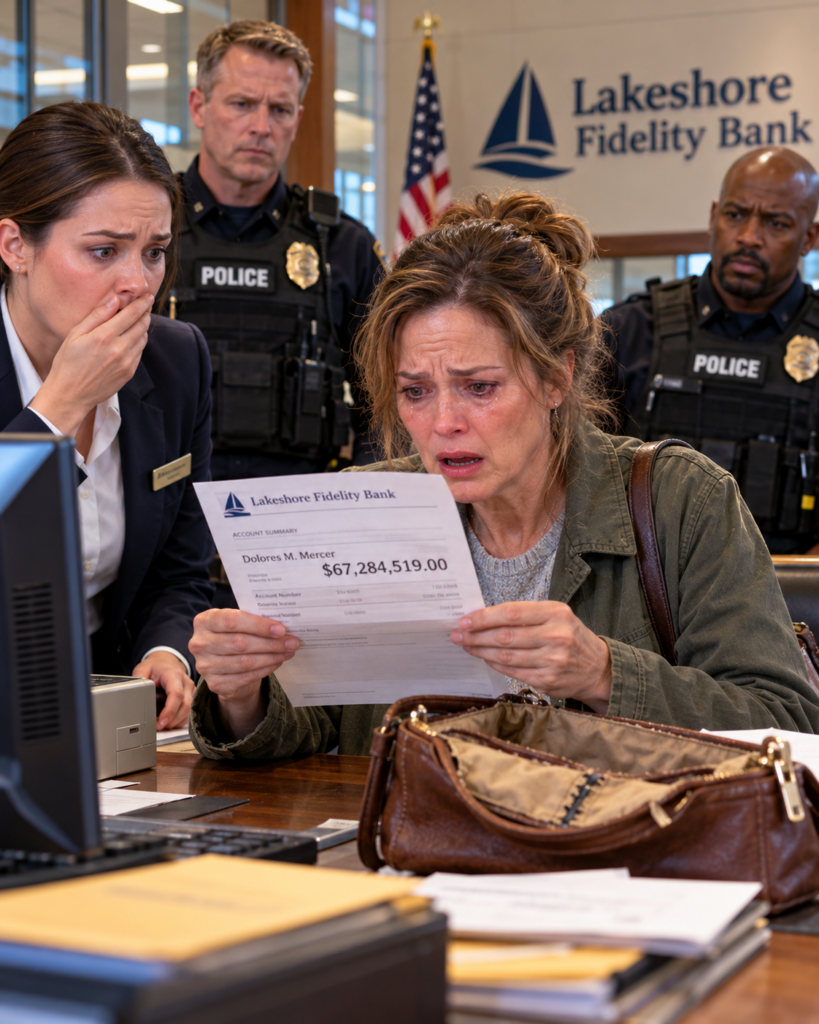
The funds at Lakeshore Fidelity Bank belonged to the estate of Dolores M. Mercer to be distributed according to her will of July 11th, which the court found to be her true and final testament. The will of June 3rd was declared a forgery, and Henrik Ammonson was ordered to repay my mother’s estate every dollar of the diverted dividends, $4.1 million plus interest and all legal costs.
On the last page, the judge wrote one sentence that wasn’t legal at all. Gus had it framed for me.
The court notes that Mrs. Mercer was offered $500 for her faith in a stranger and declined. This court declines as well.
In the criminal case, Henrik Ammonson pleaded guilty in May to forgery, theft by swindle, and financial exploitation of a vulnerable adult. He was sentenced to 7 years in state prison.
Conrad Vale received four. The two employees who signed as witnesses on the forged will received probation in exchange for their testimony.
I felt no joy about any of it. I sat in the courtroom on the day Henrik was sentenced, and I watched him take off his father’s gold ring and hand it to his lawyer before the officers led him away.
And all I felt was tired. Finished.
My mother would have called it done. Done is better than happy.
Done lets you sleep. There was one last thing I needed to do.
In July, I went back to Lakeshore Fidelity Bank and asked for Arin Iverson. He took me up to his office and brought me a cup of coffee without my asking.
I held it in both hands. I asked him the question I’d been carrying since November.
When my mother came in that day in June, the day of the receipt, what was she like? Arin thought about it for a long time.





