3 weeks later, she was gone. In September, Conrad Vale called him.
He had done his research. He knew Ray was behind on his rent.
He offered Ray $500,000 to help him get mom’s papers from me and to testify if necessary that mom had talked about wanting to leave her money to charity. He thought I was the weak one, Ray said.
And he was right, Joe. For about 20 minutes, he was right.
I sat in my apartment and thought about what half a million dollars would do. And then he remembered his mother’s voice on the phone.
You watch out for your sister. The next morning, Ray called the Duluth Police Department and asked for whoever handled fraud.
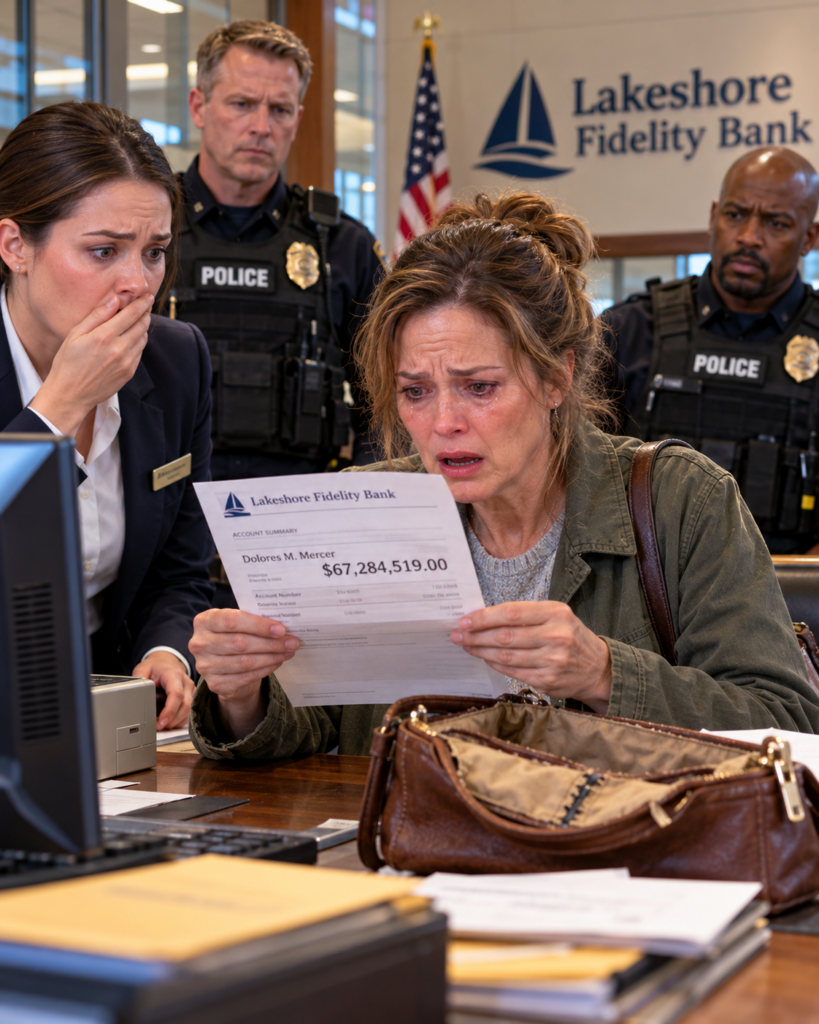
He got Detective Wendell Asani. It was Ray’s call in part that led Asanti to ask Arin Iverson to flag the account so that anyone who came asking about it would be held until the police could arrive.
The meeting in the hotel bar in Canal Park, the one in the photograph that had broken my heart, Ray had attended, wearing a police wire. “Then why didn’t you tell me?”
I asked, “Why did you let me think?” “Because they told me not to,” he said.
Wendell said that until they knew who forged the will, everyone in the family had to be treated as a possible suspect, including you. And I figured if you thought I was a crook, you’d act normal around Vale.
You’ve always thought I was a little bit of a crook.” He tried to smile.
It wasn’t hard to sell. I laughed and I cried and I hit him on the shoulder hard the way I used to when we were kids.
Then I hugged him so tight. He said I was cracking his ribs.
Why’d you ask about the purse? I said into his shoulder at the funeral.
Because she always said everything important was in her purse. He said I didn’t know what was in it.
I just knew if anything was going to save us, it had to be in there. Within 48 hours, after his lawyer heard the recording from under my kitchen table, Vale asked for a deal.
He gave Detective Asanti everything. The names of the two witnesses on the forged will, both employees of an Ammonson subsidiary, the St. Paul print shop where a copy of a dead man’s notary stamp had been made, and three years of text messages and emails between himself and Henrik Ammonson, including one sent in July, the day after Henrik visited my mother’s apartment.
The old woman won’t sign. Draft the other version.
We’ll need it if she dies before she spends anything. At her age, it won’t be long.
When Detective Asanti read me that message, I asked the question I’d been afraid to ask since the first day. Had they done something to my mother?
He had already asked the medical examiner to review her death. It was her heart, Joe, he said.
Nobody touched her. But Henrik Ammonson was sitting in her kitchen planning for her to die.
I want him to answer for that. Henrik Ammonson was arrested on a Thursday in December.
Wendell asked me if I wanted to be there. I said yes.
That Thursday was the dedication ceremony for the brand new Ammonson Heart Pavilion at Lake View Regional Hospital. A cardiac wing Henrik had paid for with a donation of $12 million.
There were television cameras. There was a string quartet.
There was a long red ribbon stretched across the glass doors of the lobby and a pair of giant silver scissors on a velvet pillow. I stood at the back of the crowd in my good navy blazer with Gus on one side of me and Ray on the other.
Henrik Ammonson stepped up to the podium and on the little finger of his right hand, he wore a heavy gold signet ring with the letter A, his father’s ring.
Conrad Vale had worn a copy. Wendell later told me Henrik had given them to his closest people like a little club.
Henrik spoke for six minutes about his father’s vision, about his father’s belief that no family should lose someone they love to a heart that failed without warning. He spoke beautifully.
People dabbed their eyes, and not one word of his speech mentioned a woman with a mop who had given his father her dead husband’s money in an envelope. He picked up the giant silver scissors.
And Detective Sergeant Wendell Asanti stepped out of the crowd with two officers behind him and a folded piece of paper in his hand. “Henrik Ammonson,” he said loudly enough for every television microphone to hear.





