I also asked whether she wanted her parents informed.
She nodded.
“Please call them, Bauji.”
Her mother arrived from Nashik the next morning.
When she saw Charulata, she began crying.
“Beta, why didn’t you tell us?”
Charulata embraced her.
“I didn’t want to worry you.”
I looked away.
How many women had been taught that their suffering was an inconvenience to everyone else?
Over the next few weeks, Charulata received treatment.
Her doctors investigated the cause of her symptoms and adjusted her care.
She began eating regularly.
Sleeping more.
And slowly regaining some energy.
But recovery was not immediate.
There were difficult days.
Appointments.
Fatigue.
And moments when she cried without knowing exactly why.
Her mother stayed with her.
I visited often.
Avinash asked to come.
At first, Charulata refused.
I respected her decision.
He was devastated.
But I told him something he needed to hear.
“Beta, her recovery is not a punishment designed to teach you a lesson. It belongs to her.”
He nodded.
Then asked, “What should I do?”
I looked at him.
“Start by becoming a father who knows how to run his own home.”
For the first time in his life, Avinash learned how much work happened before he returned from the office.
He began preparing breakfast.
Packing tiffins.
Washing uniforms.
Attending school meetings.
Scheduling vaccinations.
Remembering grocery lists.
At first, he called me constantly.
“Bauji, where does Charulata keep the extra bedsheets?”
“Ask the children.”
“Bauji, how do I remove turmeric stains?”
“Search for a solution and try it.”
“Bauji, the school wants a costume for Pradyumna’s annual day.”
“Then make sure he has one.”
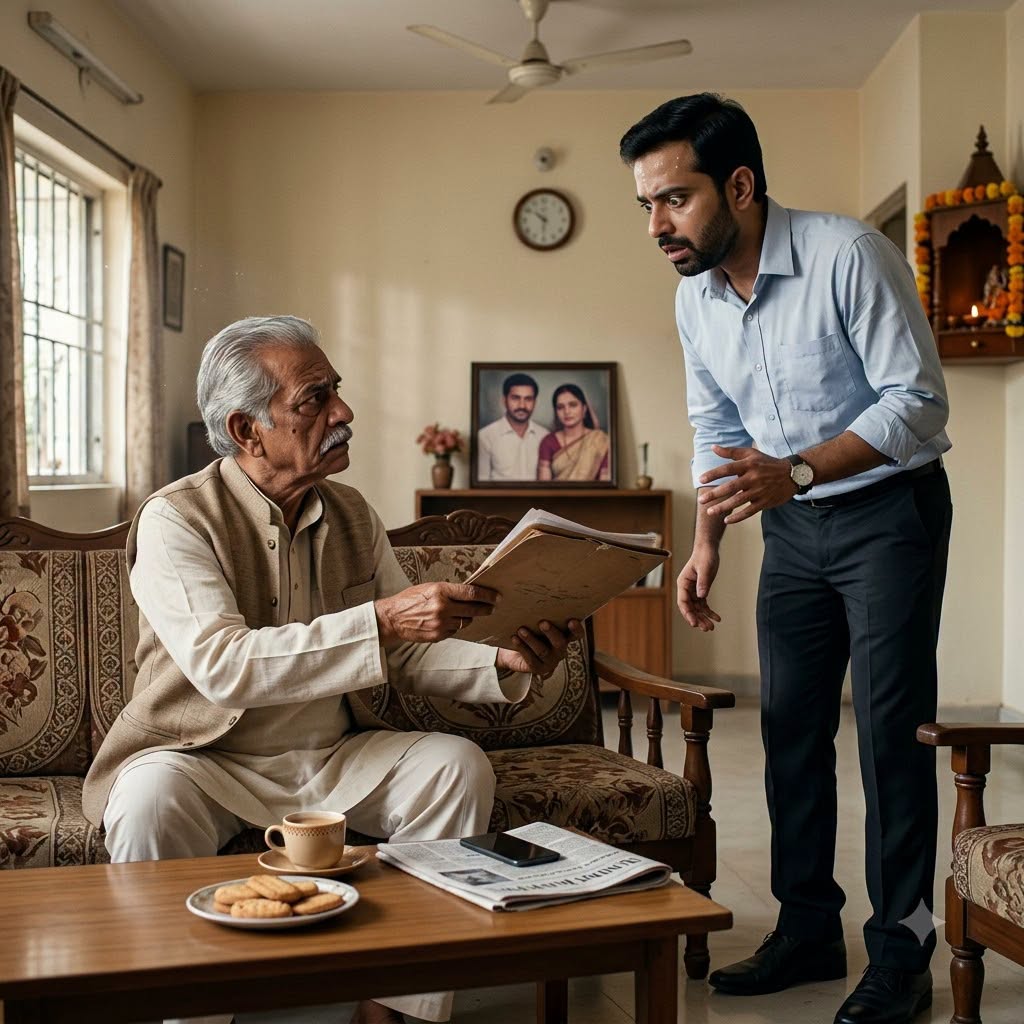
After ten days, he arrived at my house looking exhausted.
I offered him tea.
He sat down heavily.
“Bauji, I don’t know how she did everything.”
I looked at him.
“She shouldn’t have had to.”
He began crying.
“I was terrible to her.”
I nodded.
“Yes.”
He looked startled.
Perhaps he had expected me to comfort him.
But I was finished protecting my son from the consequences of his choices.
My wife, Devyani, struggled even more.
At first, she insisted that Charulata was exaggerating.
Then one evening, Ishwari refused to visit her.
“Dadi makes Mamma sad,” the little girl said.
Devyani cried for hours.
I sat beside her.
“Do you remember when we first married?” I asked.
She nodded.
“My mother used to criticize your cooking.”
Her eyes filled.
“Yes.”
“And I told you to ignore her.”
She looked down.
“You did.”
“I should have defended you.”
Devyani began crying.
I continued.
“Instead, I taught you that a daughter-in-law should endure humiliation quietly.”
She covered her face.
“And then I treated Charulata the same way.”
I took her hand.
“We cannot change what happened. But we can stop repeating it.”
Two months later, Charulata agreed to meet Avinash.
They sat in a family counselor’s office.
I was not present.
That was their marriage, not mine.
But afterward, Avinash came to see me.
His eyes were red.
“She said she doesn’t know whether she wants to remain married.”
I nodded.
“That is her decision.”
He began crying.
“I love her, Bauji.”
I looked at him.
“Then you must learn that love is not measured by how much someone sacrifices for you.”
He lowered his head.
“It’s measured by whether you notice when they are suffering.”
Over the following months, Avinash continued counseling.
He changed his work schedule where possible.
He took responsibility for the children’s routines.
And he stopped asking Charulata to return simply because he missed having someone manage his life.
He also apologized to her parents.
Not with excuses.
Not with promises that everything would become perfect.
But by admitting what he had done.
Charulata listened.
Then told him she needed more time.
He accepted it.
Six months after that Sunday morning, we gathered for Ishwari’s birthday.
Charulata had agreed to celebrate at a small restaurant.
No elaborate decorations.
No huge guest list.
Just family.
The children were laughing.
Pradyumna had chocolate on his shirt.
Ishwari was wearing a paper crown.
And Charulata sat beside her mother, eating a warm meal.
I noticed it immediately.
Her food was still steaming.
Nobody had asked her to serve everyone first.
Nobody had complained about the salt.
Nobody had told her to hurry.
She looked up and caught me watching.
“Bauji?”
I smiled.
“Nothing, beta.”
She smiled back.
For the first time in months, she looked peaceful.
After dinner, Avinash approached me.
“Bauji, can I ask you something?”
“Of course.”
He looked toward Charulata.
“Do you think she’ll forgive me?”
I took a slow breath.
“I don’t know.”
His eyes filled.
“But I’m trying.”
“I know.”
He looked down.
“Isn’t that enough?”
I placed my hand on his shoulder.
“Trying is necessary. It doesn’t guarantee the outcome you want.”
He nodded slowly.





